
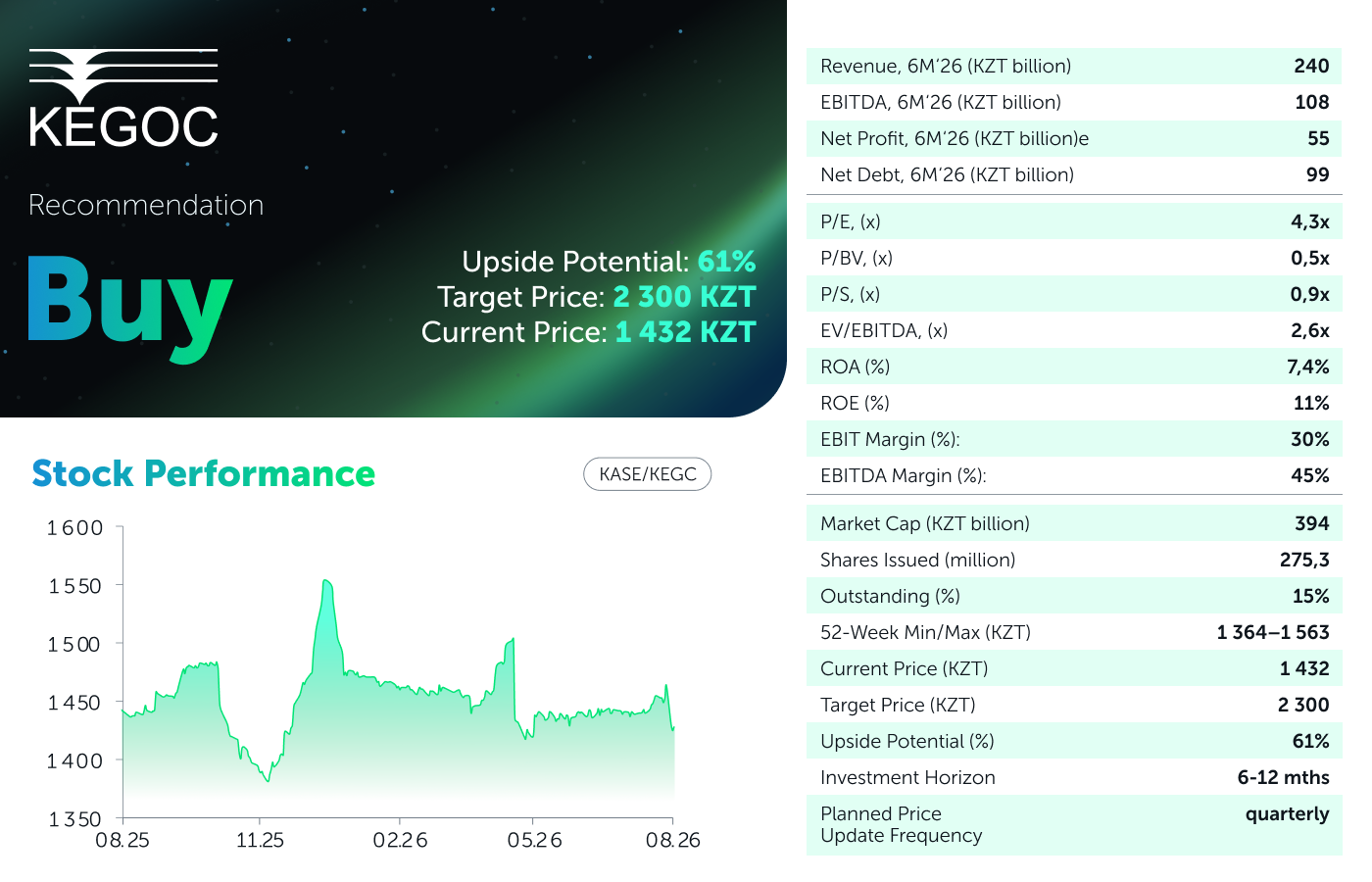
KEGOC JSC Publishes Financial Results for Q2 2026. We assess the report as positive and in line with our previous expectations. Quarterly revenue continued to grow amid a significant increase in tariffs, resulting in higher margins for the third consecutive quarter. On the other hand, capital expenditures (CAPEX) continue to increase, and the company is likely entering a new large-scale investment cycle that will require substantial spending on new projects. Net profit continued to grow but was somewhat reduced by non-cash losses related to the fixed assets revaluation. We also expect an increase in the first-half dividend, although we do not expect it to exceed ₸100 per share. In our valuation model, we increased our CAPEX forecasts and lowered the WACC. As a result, we raised the target price for KEGOC shares from ₸2,180 to ₸2,300, with 61% upside potential from current levels. Recommendation: Buy.
Key Valuation Factors. High tariffs remain the main valuation driver. From May 1, the following tariffs were increased: the electricity transmission tariff rose to ₸5.575/kWh (+11% vs. April), while the tariff for the use of the National Grid increased to ₸3.216/kWh (+11%). These increases drove significant revenue and margin growth in the second quarter. The key risk remains the approval of a new five-year tariff schedule, as the current tariffs expire on September 30, 2026. This means the regulator’s decision will be the key catalyst for the stock over the coming months. Historical experience and examples of other regulated companies suggest that tariffs could remain unchanged or even decline when the new cycle begins. The scale of the investment cycle remains the main structural risk. Capital expenditures continued to increase in the second quarter, and the company has already started construction of two major transmission lines. One project is aimed at strengthening the Southern Energy Zone, while the other will connect the Western Region to the Unified Power System. Against this backdrop, borrowings on the balance sheet increased from ₸5 billion to ₸57 billion (₸32 billion from the Development Bank of Kazakhstan at 12.6% and ₸20 billion from the Asian Development Bank). In July, the company additionally drew ₸31.4 billion under the EBRD facility and ₸19.4 billion under the ADB facility. Nevertheless, net debt/EBITDA remains relatively low at 0.53x.
Revenue: continued growth driven by tariffs. Quarterly revenue reached ₸114 billion (+20% YoY), down from the first quarter due to seasonal factors. The largest revenue stream, National Grid usage services, increased by 31% YoY to ₸56.9 billion, driven by a 27% increase in tariffs and a 3% increase in volumes. Electricity transmission revenue increased by 25% YoY to ₸22.3 billion. The tariff rose by 26%, while transmission volumes declined by 0.7% YoY, although this was significantly better than in previous quarters. Dispatching services increased by 27% YoY, driven by a 23% tariff increase and a modest 2.8% increase in volumes. Revenue from the sale of balancing electricity on the balancing electricity market (BEM) declined by 23% YoY to ₸10.2 billion. Balancing services increased by 35% YoY, while revenue from compensation for cross-border electricity flows declined by 0.5% YoY. Overall, electricity generation in Kazakhstan increased by 3% YoY in the second quarter, accelerating compared with the first quarter.
Margins: continued improvement in profitability. The past quarter once again demonstrated the resilience of the recovery in profitability that began in Q4 2025. Gross margin reached 35.4%, compared with 25.6% a year earlier. Cost of sales increased by only 3.8% YoY, while revenue grew by 20%, resulting in faster growth in gross profit. This quarter marked the strongest year-on-year improvement in cost of sales in the past three years. The cost of electricity transmission losses increased by 24% YoY to ₸21.3 billion, although this was significantly lower than in the seasonally strong first quarter (-23% QoQ). Expenses for purchasing electricity to compensate for cross-border electricity flows decreased by 36% YoY. Depreciation and amortization increased by only 1.8% YoY to ₸14.3 billion, while employee expenses rose by 13% YoY. EBITDA amounted to ₸50.6 billion (+43% YoY), while the EBITDA margin expanded to 44.5% from 37.1% a year earlier. However, we note a significant non-cash loss of ₸11.5 billion related to the revaluation of property, plant and equipment, which negatively affected net profit. Net profit nevertheless increased by 35% YoY to ₸21.3 billion, or ₸77 per share. Net margin reached 18.7%, compared with 16.5% a year earlier. Quarterly free cash flow declined and turned negative at -₸12.8 billion. The main reason was a sharp 46% YoY increase in capital expenditures, which likely marked the beginning of a more intensive investment cycle. At the same time, operating cash flow increased by 29% YoY.
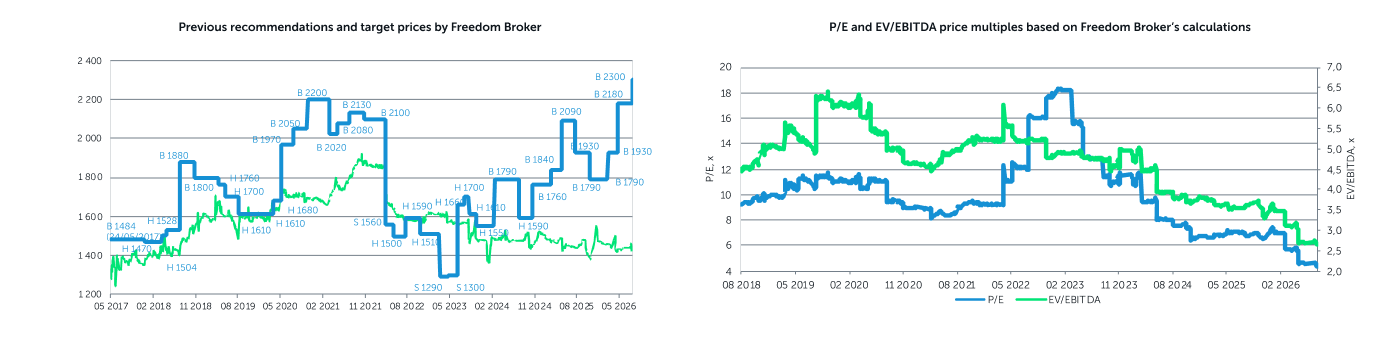
Our Opinion and Changes to the Valuation Model. The second-quarter report, as expected, was fairly positive in terms of continued growth in financial performance and margins, supported by higher tariffs. Nevertheless, the investment cycle is gaining momentum, weighing on cash generation, while significant non-cash revaluation losses could limit first-half dividends due to lower net profit. Still, we expect first-half 2026 dividends to increase. If the dividend payout ratio remains at last year’s level, dividends could rise by 50–60% YoY. However, we consider this scenario unlikely given the high level of capital expenditures, and expect dividends to remain below ₸100 per share. In previous years, the company paid out 25–30% of the cash and financial assets held on its balance sheet. At a 25% payout ratio, the dividend would amount to approximately ₸100 per share. In our valuation model, we continue to assume the current tariffs and maintain conservative expectations for tariff growth. At the same time, we increased our CAPEX forecasts. Profitability expectations remained unchanged. The valuation was also positively affected by a lower WACC, driven by declining government bond yields. Following all changes to our valuation model, we raised the target price for KEGOC shares from ₸2,180 to ₸2,300, implying 61% upside potential. Recommendation: Buy.

Author: Daniyar Orazbayev,
CFA, Investment Analyst
(+7) 727 311 10 64 (688) | [email protected]