
Financier №1 (41) 2026

Ilya Zubkov
Senior Analyst, Freedom Finance Global
The Surprise Box
How Subscription Services Emerged as a New Trend - and the Role of Women
The subscription economy - a business model in which consumers regularly pay for access to a product or service - has become one of the key trends of the past decade. According to data from FinTech company Bango, which specialises in managing various types of payments, the average US resident will spend around $900 on five subscriptions in 2025. The most widespread category is video‑streaming platforms: three out of four Americans use them. Consumers also readily opt for music services with recurring payments and subscribe to retail goods deliveries. According to McKinsey estimates, the share of women among users of these services is approaching 60 %.
A Format with Potential
Subscription boxes refer to the regular delivery of a curated selection of products, organised around a specific theme (or tailored to the customer’s preferences). According to Bango, nine out of every hundred people in the US pay for such services. This particular model is currently growing faster than any similar service. Consultants from Root Analysis project the subscription box market to expand from $24.7 billion to $144.5 billion over the next ten years.
The secret of this service’s popularity lies in the combination of individual consumer habit tracking with technological capabilities. Modern shoppers prioritise convenience: automatic delivery saves time and eliminates the need to manually select and order products at regular intervals.
To achieve personalisation, companies analyse customer preferences, leverage past purchase data, and gather feedback to tailor the contents of the boxes to each individual. This approach enhances consumer loyalty.
Buyers subscribe not only for the product, but also for the emotion: the anticipation and unpacking of the box activates the same pleasure mechanism as a gift
Social media has played a distinct role in promoting subscription box services. Unboxing - the act of unpacking a product - has evolved into an independent media format. Videos showcasing the contents of a delivery create an engagement effect and stimulate demand, encouraging viewers to try the service themselves. This content goes viral, effectively serving as free marketing.
Finally, subscription services are often built around shared interests, which foster communities of like‑minded individuals. Members of these communities discuss the products they receive, exchange tips and impressions on social media platforms or forums. As a result, a subscription becomes more than just a purchasing method - it turns into a lifestyle element and a tool for self‑expression.
What’s Inside
Demand in the subscription box market is driven primarily by women: according to Root Analysis projections, they will account for up to 66 % of users of such services by 2035. Even now, studies show that women are more likely than men to use subscription boxes in the food, cosmetics, fashion, and home goods categories. It is in the first two segments - food boxes and cosmetics - that the bulk of the market is concentrated.
Demand for food subscriptions is supported by additional services. For example, pre‑packaged ingredients come with a simple recipe for dishes based on them. The service saves time and simplifies meal planning, which is especially valued by the female audience. It is expected that food boxes will account for nearly half of the subscription box market in ten years.
Steady growth is projected in the cosmetics segment, where the service effectively originated. In 2010, Harvard Business School classmates Katia Beauchamp and Hayley Barna launched the Birchbox service. Their idea was simple yet ground-breaking: instead of buying an expensive product, they offered women $10‑per‑month access to carefully curated samples of skincare and makeup products from premium brands. This format lowered the entry barrier into the category and turned discovering cosmetics into a regular experience. By 2015, Birchbox had raised over $70 million in venture capital and built a subscriber base of more than one million, becoming one of the most notable early projects in the subscription economy. Later, the service’s co‑founder Hayley Barna became a general partner at First Round Capital - one of the leading US venture capital funds. She was the first woman to hold this position in the fund’s 13‑year history.
A Subscription with a Story
Development of niche products supports the overall growth of the subscription services segment and attracts even more women to it. Here are four stories of companies founded by women who have turned subscription boxes into a successful and scalable business.
- Ipsy. In 2011, popular YouTube blogger Michelle Phan, together with Marcelo Camberos and Jennifer Goldfarb, launched a service for personalised beauty subscriptions. Phan started with makeup tutorials on YouTube and, by the time this project was launched, had amassed over 8 million subscribers - which helped Ipsy gain immediate brand recognition. The monthly Glam Bags, priced at $10, have built one of the world’s largest beauty communities around them. By 2015, the company was delivering more than 1.5 million packages per month. The startup managed to raise $100 million with a business valuation of $800 million. The Ipsy case demonstrated how the subscription box model can be strengthened by a content marketing ecosystem: more than 10 thousand bloggers regularly created media content for the service.
- BarkBox. In 2011, Carly Strife, together with Matt Meeker and Henrik Werdelin, launched a service offering dog owners monthly boxes of toys, treats, and pet accessories. BarkBox has successfully built a loyal community around its subscriptions. Pet owners actively share unboxing videos on social media, driving strong organic reach growth for the service. By 2020, the company was valued at $1.6 billion in a merger with Northern Star Acquisition Corp. and went public on the NYSE under the ticker symbol BARK. Today, the service serves more than two million dogs and their owners on a monthly basis.
- Sparkle Hustle Grow. Julie Ball created a subscription service targeting a specific niche: women entrepreneurs and freelancers. Her boxes include self‑development books by New York Times bestselling authors, planning tools, office supplies, and access to an online community of like‑minded women. This transforms the subscription box from a simple product bundle into an educational platform and a private club. Ball has already established herself as a recognised expert in launching subscription‑based businesses: her experience has been featured in Forbes, Business Insider, and USA Today.
- YearCheer. The service was created by Kathryn Richardson, a mother of four and the head of a retail chain. She wanted to help working parents overcome the guilt they feel towards their children for not spending enough time with them. Subscription boxes contain products that help busy families decorate their homes, connect with each other, and celebrate holidays throughout the year. “Creating magical memories with their families without spending time and effort on planning these moments” - this is what Kathryn Richardson offers.
A New Turn
Development of subscription services is receiving an additional boost from the use of artificial intelligence (AI). In the early stages, personalisation was primarily based on questionnaires and the manual work of curators. Today, machine learning algorithms are playing an increasingly prominent role. They analyse user behaviour and, based on this data, predict which products are most likely to suit a particular customer.
A notable example is the online styling service Stitch Fix, launched in 2011. Over the years, the company has accumulated an extensive database of customer preferences and now uses AI to generate recommendations. Algorithms create a clothing selection, while professional stylists refine it by adding human expertise to the robot’s assessments. This hybrid model ensures that the contents of each new box are more accurate than the previous one.
Technology is also enhancing the beauty segment. The merger of Ipsy and BoxyCharm in 2023 allowed the companies to combine their customer databases and scale up the personalisation system: the more data the service receives, the cosmetic product selection becomes more precise.
Subscription boxes are gradually evolving from a convenient delivery model into sophisticated platforms for personalised consumption. AI helps retain the audience, reduce churn rates, and make the subscription business more predictable and resilient.
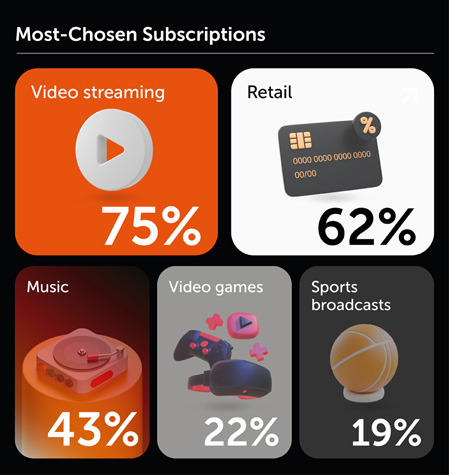
Source: Bango Subscriptions Assemble, 2025