
Financier №1 (41) 2026
Guest of the Issue – МакSим
“Victory’s true beauty and joy is understood only through the lens of defeat”
Meet Marina Maksimova - the voice behind MakSim. She opens up about journey into show business, gender stereotypes, profound shift in her worldview after battling COVID‑19, her own vocal school and life priorities.
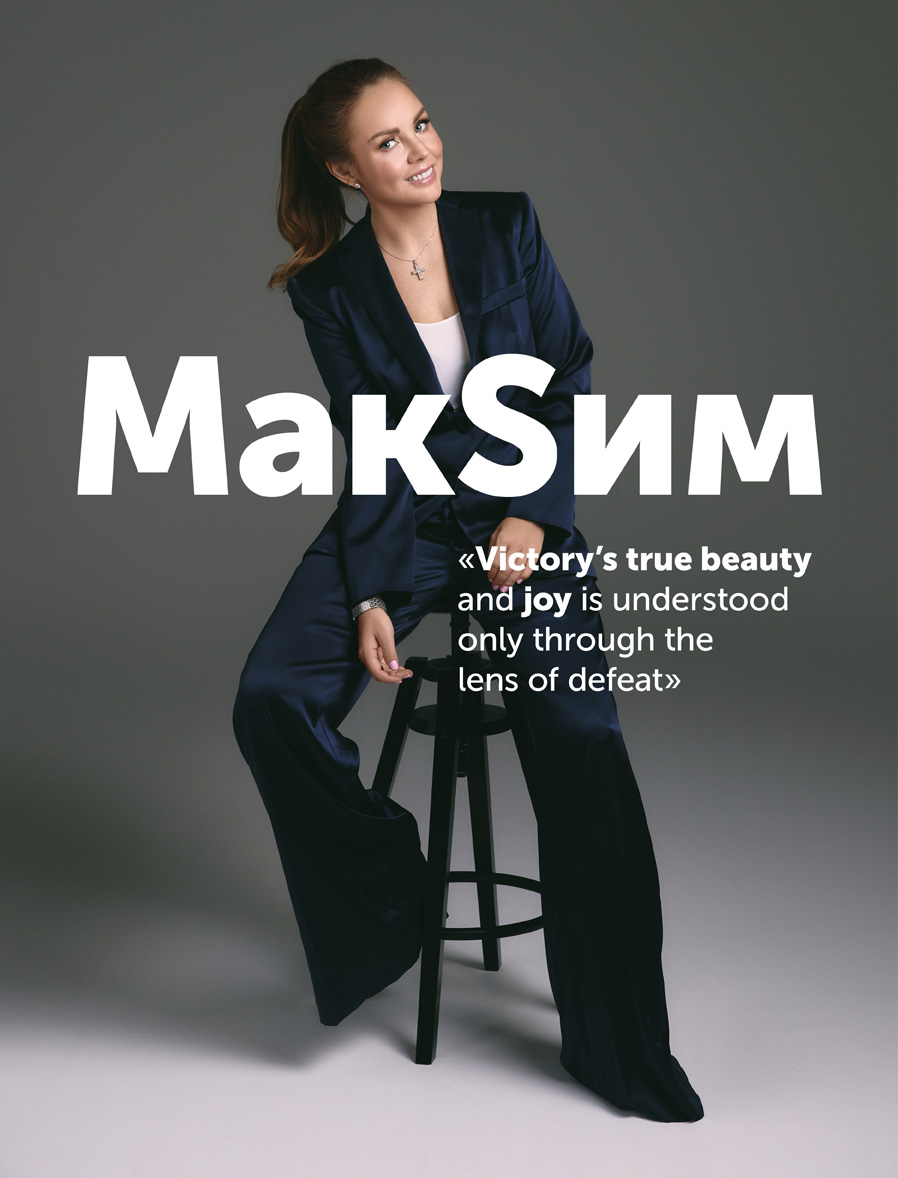
Photographers: Rita and Anton Smirnovs
How open is the music industry to women today, in your opinion?
I think it’s actually easier for women to build a career on stage today than for men. In my youth, there was a stereotype that to become a star, you had to either be the daughter of wealthy parents or have a wealthy lover.
I had neither: my parents lived well below the average level, and I didn’t have many fans at first. So, I’ve never received any indecent proposals in my life. Another factor was that I was a non‑conformist - I wore dreadlocks, so I wasn’t very typical. But today, in my view, the industry is equally open to everyone.
In 2021, you contracted COVID‑19 and spent a month in a medically induced coma. Have you fully recovered? Is it harder to perform concerts now?
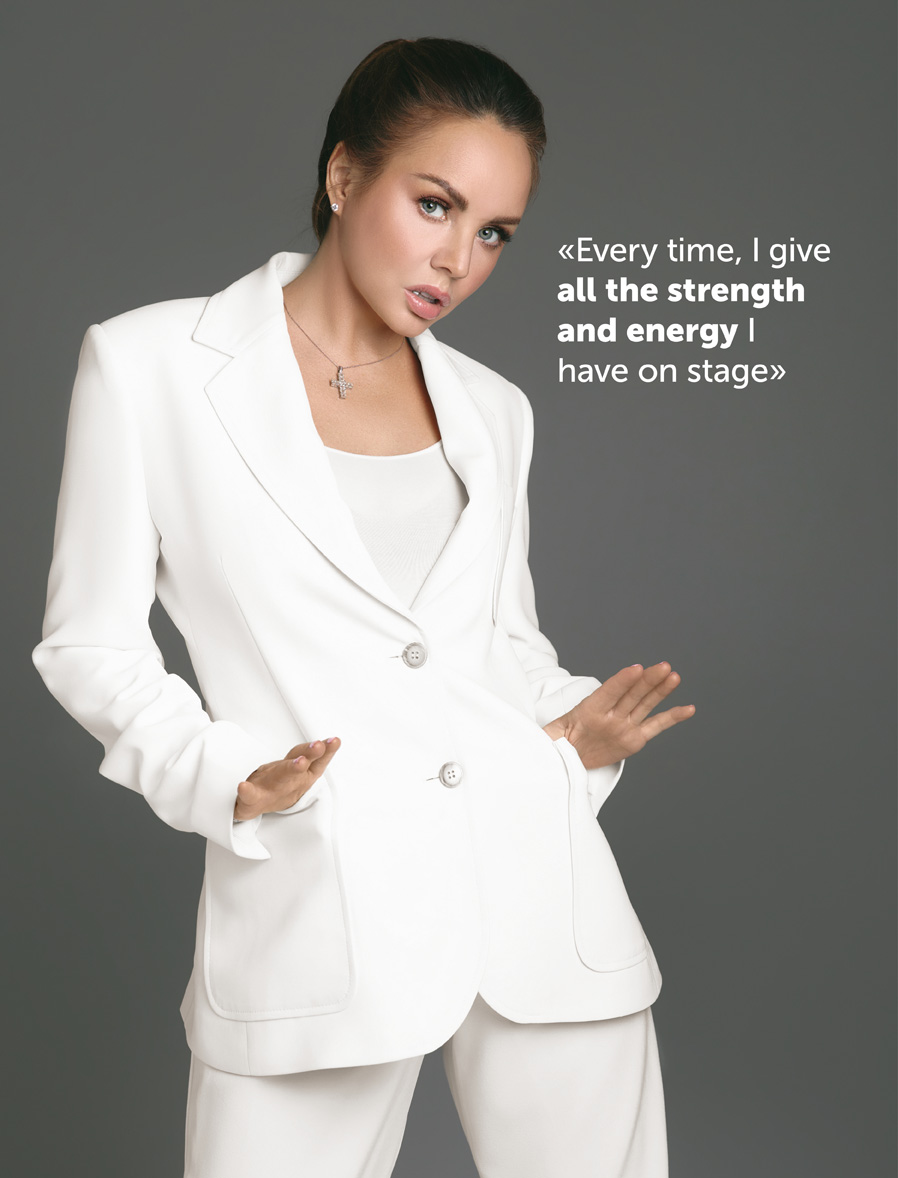
Recovering from such illnesses is very difficult. Rehabilitation will continue for several more years. Performing concerts is harder now - after them, I can’t even talk. Every time before going on stage, I tell myself: “Marina, this isn’t your last concert, don’t push yourself to the limit.” But every time, I give all the strength and energy I have on stage. Now, I try to approach my workload more consciously: I take no more than five concerts a month and always schedule breaks between them.
Has your worldview changed after what you’ve been through?
Yes, of course. First, strangely enough, I’ve become much calmer. I’ve become convinced that eternal life exists, and it’s even more real than our current life. Now I get nervous much less often. I rejoice, notice more little things, and have become more attentive to my loved ones. Overall, I live more lightly, with an even stronger sense of humour and self‑irony.
Speaking of self‑irony, do you face hate directed at you, and how do you deal with it?
I don’t see any haters. It seems there are either none at all, or fewer of them. And if someone writes that they don’t like something, it’s almost always phrased politely and delicately. I can even take note of such feedback.
What are you working on now?
Honestly, I’m trying to put together quatrain by quatrain. After my illness, my memory suffers, and the fine motor skills in my hands haven’t fully recovered. That’s also a reason for self‑irony.
Recently, I released the song “And It’s True” and shared a very personal story in it. The lyrics came five years after the single “Thank You,” which was about insights gained after what I went through. The main message of these songs is: thank you for waiting for me, for praying and hoping for my return. I say this at every concert. Overall, I want people to leave the concert not only feeling joy, but also filled with some spiritual warmth.
You have the MakSim School of Arts. Tell us more: how did the idea to create the school come about, and what’s it like to run this project now?
My mother is a teacher. We didn’t have a nanny, so I accompanied my mother to her concerts; I spent all holidays late into the night in assembly halls. I knew the roles of all the performing children. If some Pinocchio or Cipollino didn’t show up, they’d put that character’s costume on me, and I’d play the role. I had a love for both performances and children. Plus, I studied at a music school myself, and the stage and music are the things closest to my heart - I wanted to pass that on to others.
So, the idea of creating a school had been around for a long time, and when the opportunity came, I naturally took it. One thing: I’ve never seen the school as a business. At first, we opened on Tsvetnoy Boulevard. The rent was very high, and the school even had to close temporarily. Soon, I was able to afford to buy my own building, where the school operates to this day.
How does the learning process work at the school?
Besides vocals, we offer acting, playing various instruments - piano, reedpipe for children, flute, guitar - as well as dancing. We have several age groups: children, teenagers, adults. Businesspeople, parents, women, and men attend. The latter, by the way, take creativity very seriously. For some, it’s just a hobby, while others study to potentially change their profession later. I wanted to open a school where parents wouldn’t have to wait for their child in the hallway, but could do something at the same time. We’ve specially designed the schedule so that classes for adults and children run simultaneously in different rooms.
The students delight me immensely: many have been studying for years, and I joyfully watch their growth with every reporting concert. They perform increasingly complex parts and roles. We have amazing teachers, whom I selected personally. I don’t teach myself, because although I’m a musician, I don’t have a teaching degree, and that’s an important factor for me. However, I do give masterclasses and invite stars or aspiring actors and directors to share their stories - because practical knowledge is always useful alongside theory.
It seems the school is a great source of inspiration for you - is that true?
Yes. We’ve built a team where absolutely everyone wants results. The teachers don’t just come and put in their hours - they participate with the children in competitions and travel to events across the country. It makes me very happy to learn that our children win high places and receive awards.
Last year, the kids had an idea to sing my songs. They performed them in different genres and costumes, reimagined the music - it was extremely interesting.
What advice can you give to people who want to build a music career today?
If you want to be a musician, this decision must be unshakable. Creative people are often not fully confident in their abilities - I’m not an exception. It’s important to remember: if you don’t make it to the top at first try, that doesn’t mean anything. You need to keep going, developing, and finding your mistakes. If you’re passionate about your craft and work on yourself, success will inevitably come sooner or later.
There’s a stereotype that in creative fields, you must shine like a star from the very first attempt. But now it seems this is an illusion - isn’t it?
When we had just two TV channels, that was possible. Back then, producers were in charge of everything. We all remember the names and clips that started airing on some TV show and instantly became hits. Now there are countless performers, the choice is immense, and the competition level is completely different. That’s why it’s crucial to go all the way. I’ll add that you need to dream: the power of thought works wonders.
Did your parents support you in your creative pursuits? How important is such support?
My parents were divided into two camps. My mother, a teacher, was against it - she called it sloppiness. She looked at the lifestyle of my older musician friends and decided it was complete slovenliness: no regimen, night performances, night‑owl people with their heads in the clouds.
My father, on the other hand, supported me in every way: he drove me to my first performances, picked me up late at night, helped create costumes, bought some stage shoes… Such support is important and pleasant, but even if it hadn’t been there, nothing would have stopped me on this path.
What do you dream of?
I want all my dreams to turn into fully achievable goals over time. That’s usually how it works in my life.
Based on your experience, what life advice would you like to give people?
It’s important not to pretend, not to lie - first and foremost, to yourself. You need to stay as true to yourself as possible. Remember that you’re just a human being. You can’t be perfect. You can understand the victory’s true beauty and joy only through the lens of defeat So the main thing is: don’t be afraid of anything and have faith. Faith is the most important thing we have, in all senses of the word.