Financier №3 (43) 2026

Natalya Milchakova
Lead Analyst, Freedom Finance Global
The Energy Pearl Harbor
How the 1970s Oil Shocks Reshaped the US Economy and the World
In the autumn of 1973, the Western world faced what was then the largest energy crisis in its history. It was triggered by the Yom Kippur War in the Middle East. On October 6, Egypt and Syria - seeking to recover territories lost after their defeat to Israel in the 1967 Six‑Day War - launched an attack on the Jewish state. The United States supported Israel with arms supplies.
In response, on October 17, Arab countries that are members of OPEC agreed to cut oil production and soon imposed an embargo on oil supplies to the US, as well as to Canada, Japan, the United Kingdom, and the Netherlands - all of which had sided with Israel. The exporters aimed to exert economic pressure on Washington and its allies.
The war itself ended at the end of October, having lasted less than three weeks, but its economic consequences turned out to be much larger. The price of oil rose roughly fourfold, highlighting the global economy’s dependence on the energy market. This article will explore the aftermath of the 1973 commodity crisis.
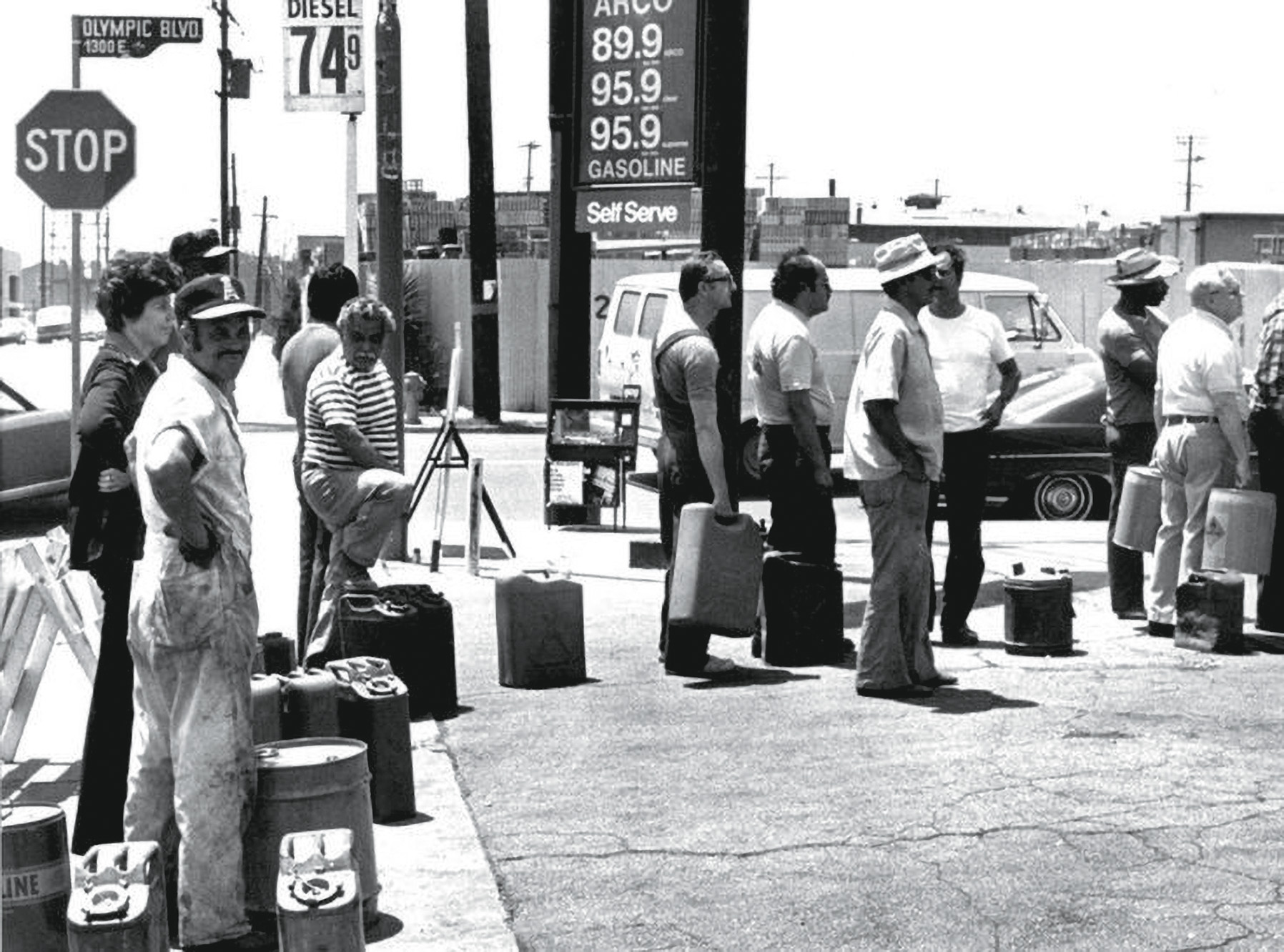
Fuel shortages persisted in the US even after the embargo was lifted. Los Angeles, 1979. Source: KPA/dpa
A New Reality
As a result of oil‑producing nations’ decision to halt exports to the aforementioned countries, the price per barrel surged from $3 to $12 throughout 1974. In the US, gasoline prices rose from 38 cents to 55 cents per gallon (3.7 liters). The situation exposed the critical dependence of advanced economies on fuel market price dynamics and export supplies.
The energy shock dealt a severe blow to the American automotive industry. In Detroit - one of the largest hubs of this sector in America - 208,000 jobs disappeared between 1970 and 1980. The Midwestern and Northeastern states, home to the country’s leading car factories, earned the informal nickname “the Rust Belt” during this period. Auto giant General Motors (GM) was forced to close 15 of its 22 assembly plants and three of its four body‑manufacturing facilities. However, the company quickly restructured its factories to produce small-capacity models. Still, GM lost its status as the most valuable public company to the oil corporation Exxon (later ExxonMobil (XOM)).
Within just one year, the US macroeconomic indicators deteriorated sharply. Unemployment rose from 4.6% in October 1973 to 7.2% by December 1974. Inflation reached double digits, and industrial output contracted due to the rapid rise in energy costs and a simultaneous drop in demand. While US GDP grew by 5.6% in 1973, official statistics show that the economy shrank by 0.5% the following year. The stock market experienced one of its deepest crashes in history: the Dow Jones Industrial Average (DJIA) plummeted by 45% over 1973–1974. The American economy entered a phase of simultaneous price growth and production decline - a phenomenon known as stagflation.
Amid the energy crisis, the US President Richard Nixon urged Americans to conserve resources. Residents were advised to use cars less frequently, reduce speed, switch to public transport, and carpool. Buildings and offices were encouraged to maintain temperatures no higher than 68 degrees Fahrenheit (20 degrees Celsius), and to save electricity. Yet these measures proved insufficient. In late November, authorities ordered restrictions on gas station operations in the evenings and on weekends. Fuel shortages, rising prices, and the deteriorating economic situation fueled public discontent and eroded support for the administration.
In August 1974, Nixon resigned. The immediate cause was the Watergate scandal - an investigation into the Republican Party’s illegal wiretapping of the Democratic Party headquarters and the administration’s attempts to cover it up. While the economic crisis alone would not have forced the president to step down, it intensified public disappointment with the political course.
Shifting the Model
With Gerald Ford taking office, the US approach to energy policy changed significantly: at the end of 1975, the Strategic Petroleum Reserve was created as a safeguard against future fuel shocks. Under the next president, Jimmy Carter, the Department of Energy was established in October 1977.
Prior to the crisis, the “Seven Sisters” - seven major transnational oil companies (five American and two European) - controlled virtually all global oil production outside the USSR
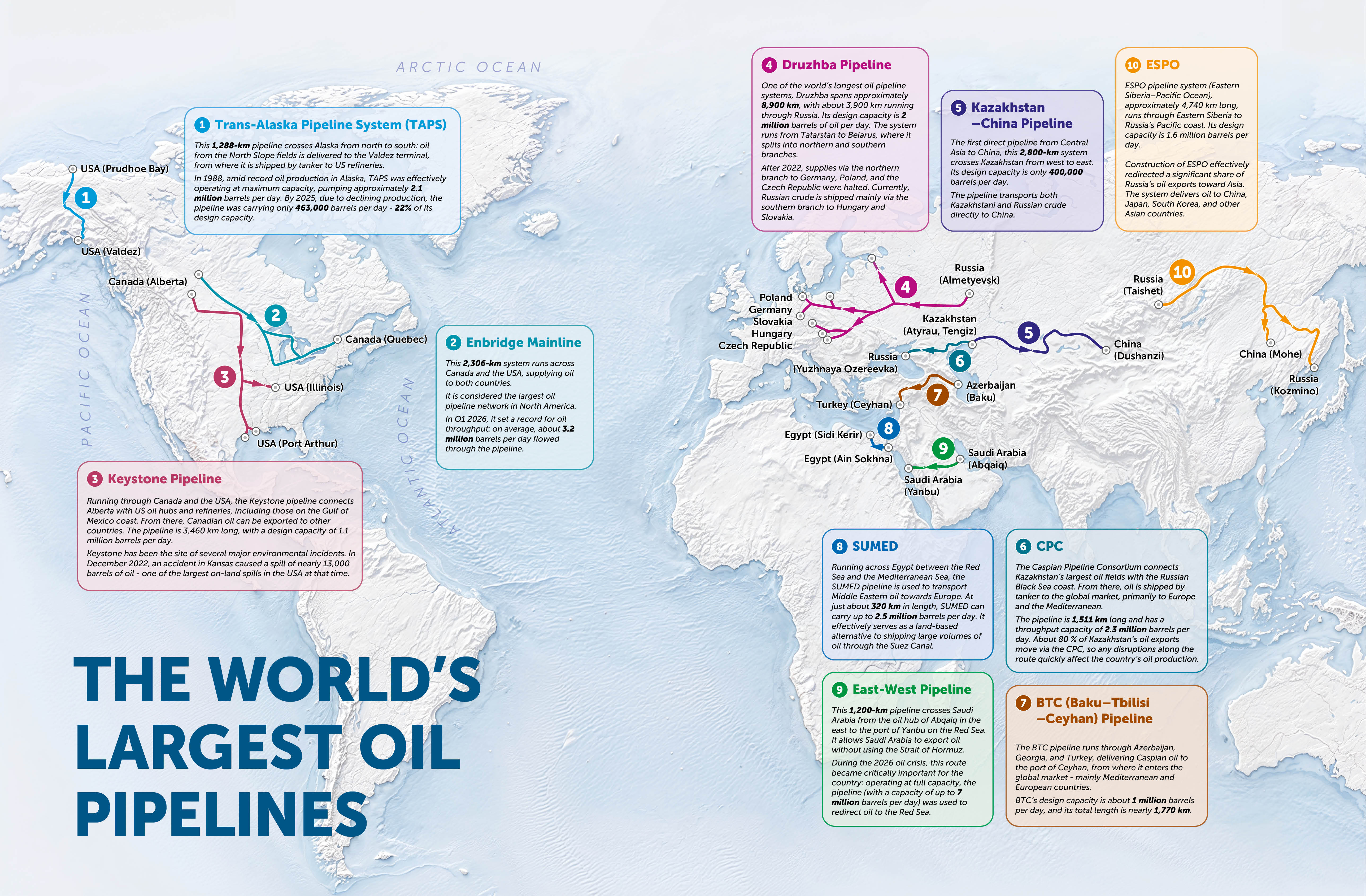
In the mid‑1970s, the US began construction of the Trans‑Alaska Pipeline, a 1,288‑km system running from the large Prudhoe Bay oil field in Alaska to the ice‑free port of Valdez on the Pacific Ocean. This infrastructure aimed to minimize America’s dependence on oil imports. At the same time, the US turned its attention to peaceful nuclear energy and renewable sources, increasing investments in these sectors. For example, the first half of the 1970s saw a wave of nuclear power plant construction, and early prototypes of large wind turbines received government funding.
Also in the mid‑1970s, at France’s initiative, the G7 alliance - the “Group of Seven” leading industrialized nations - was formed, with the US naturally playing a key role. In Europe, within the framework of the Organisation for Economic Co‑operation and Development, the International Energy Agency (IEA) was established. It brought together around 30 importing countries. The new institution’s mission was to regulate the energy resource market and coordinate efforts to prevent further shocks in the oil and gas sector.
The most significant consequence of the energy crisis was the shift in how global exchange rates were determined. The raw material shortage triggered stagflation in advanced economies, but governments adopted different strategies to combat it - from tight monetary policy to de facto money issuance*. In such conditions, maintaining fixed exchange rates became neither profitable nor safe, as it would force central banks to sell foreign exchange and gold reserves, risking national currency devaluation.
*The issue of new cash and non‑cash money by the government
In an effort to develop a unified approach to tackling the global crisis, representatives of IMF member countries (including the US, UK, West Germany, France, Japan, and more than 100 other countries) gathered in January 1976 at the Jamaica Conference in Kingston. The delegates made a historic decision: to formally abolish the Bretton Woods fixed‑exchange‑rate system**, which had been effective since 1944, and allow exchange rates to fluctuate freely based on market supply and demand. This move cemented the US dollar’s status as the world’s primary currency. By the mid‑1970s, half of all international transactions were already made in US dollars, with no equally significant alternative payment systems. Moreover, under the 1974–1975 agreements between the US and OPEC, OPEC members committed to selling oil exclusively for US dollars. The Jamaica Accords effectively locked in the dollar’s status quo. National economies gained a mechanism to adapt to new energy crises, while the US gained control over the global financial system.
**The Bretton Woods system maintained the US dollar’s stability by pegging it to gold and other countries’ currencies to the dollar. As a result, oil prices denominated in US dollars were more predictable
Stress Test
After the Yom Kippur War, the world experienced at least two more oil crises in the 20th century. Both were triggered by events in the Middle East: the 1979 Iranian Revolution and the 1980–1988 Iran–Iraq War over Iran’s oil‑rich Khuzestan province. Global energy security was put to the test, as were the economic reforms implemented after the 1973–1974 crisis.
New shocks sent gasoline prices soaring, accelerated inflation, reduced GDP, and stalled stock market growth. To fight inflation, the Federal Reserve raised the key interest rate to 20%, prompting investors to avoid stocks and instead favor safe, high‑yield government bonds.
Nevertheless, the negative effects were eventually overcome thanks to a shift from strict government regulation of oil and gasoline prices to free market mechanisms. This transition began in 1979, when President Jimmy Carter announced a phased removal of price controls on domestic crude oil, and was completed in 1981, when the new president, Ronald Reagan, signed an executive order eliminating all remaining price barriers for fuel. This helped clear the lines at gas stations and spurred a boom in domestic production in Alaska and the Gulf of Mexico, drastically reducing the US dependence on imports from OPEC countries.
Thus, the US economy - as has often been the case throughout its history - once again demonstrated its flexibility and ability to adapt quickly to new challenges.