
Financier №3 (43) 2026

Amir Uajitov
Senior Client Relationship Manager, Freedom Finance Global
A Single Rate Is Not Sufficient
Why the Central Bank’s Actions Alone Are Insufficient to Prevent a Global Surge in Prices
Inflation, in simple terms, is the rise in prices for goods and services. It occurs either due to an increase in the volume of money in the economy or due to a reduction in the supply of those goods and services while the volume of money remains unchanged.
Inflation itself is a natural phenomenon in an economy. Rapid price growth erodes the value of citizens’ incomes and savings, undermining the purchasing power of money. Businesses lose their bearings for long‑term planning, as it becomes impossible to predict future costs. This leads to a decline in investment and a flight of capital into real assets instead of funding production development.
Low inflation (or even falling prices - deflation) is dangerous because consumers start postponing major purchases in anticipation of more favorable offers. As a result, demand falls, production contracts, and companies lay off employees.
The ideal scenario for an economy is a steady price increase within a few percentage points, which stimulates consumption while preserving market predictability. Central banks in various countries use this target as a benchmark for their monetary policy. In the US and Europe, it stands at 2 %; in Russia, at 4 %; and in Kazakhstan, at 5 %.
The Key Lever
The main mechanism through which the central bank regulates inflation is the key (base) interest rate. This rate indicates the interest at which commercial banks can borrow money from the regulator to then lend it to clients (individuals and businesses) in the form of loans - albeit on more profitable terms for themselves. In addition to the rate, regulators can influence the financial system by adjusting the required reserve ratios for banks. The central bank also has the authority to withdraw excess money from the system by selling government bonds or to inject liquidity into the market by purchasing them. Sometimes, central banks try to shape business expectations through public statements or introduce strict restrictions on foreign exchange transactions.
Recently, the view on inflation has become rather one‑sided: if prices are rising, it is assumed that there is too much money in the economy, and it is time for the central bank to raise the key rate. In some cases, this measure does work. Expensive loans cool down demand: businesses and consumers borrow less, companies raise prices more gradually, and inflation gradually slows.
However, recent years have shown that price increases do not always stem from an abundance of cheap borrowed money in the economy. Sometimes the first things to become more expensive are the costs of producing goods or transporting them. The prices of oil, gas, grain, and fertilizers go up; insurance premiums for cargo and maritime shipping rates increase; electricity costs and import prices rise. In such circumstances, the central bank’s rate remains an important tool but can no longer be the sole response to accelerating inflation. The financial regulator can make borrowed money more expensive, but it cannot reopen a blocked strait, quickly build a new refinery, boost crop yields, or replace lost fuel supplies.
Global inflation in 2026 is expected to accelerate from last year’s 3.3% to 4%, while Brent crude oil prices are projected to rise by 36% and reach approximately $94 per barrel*
*According to the World Bank
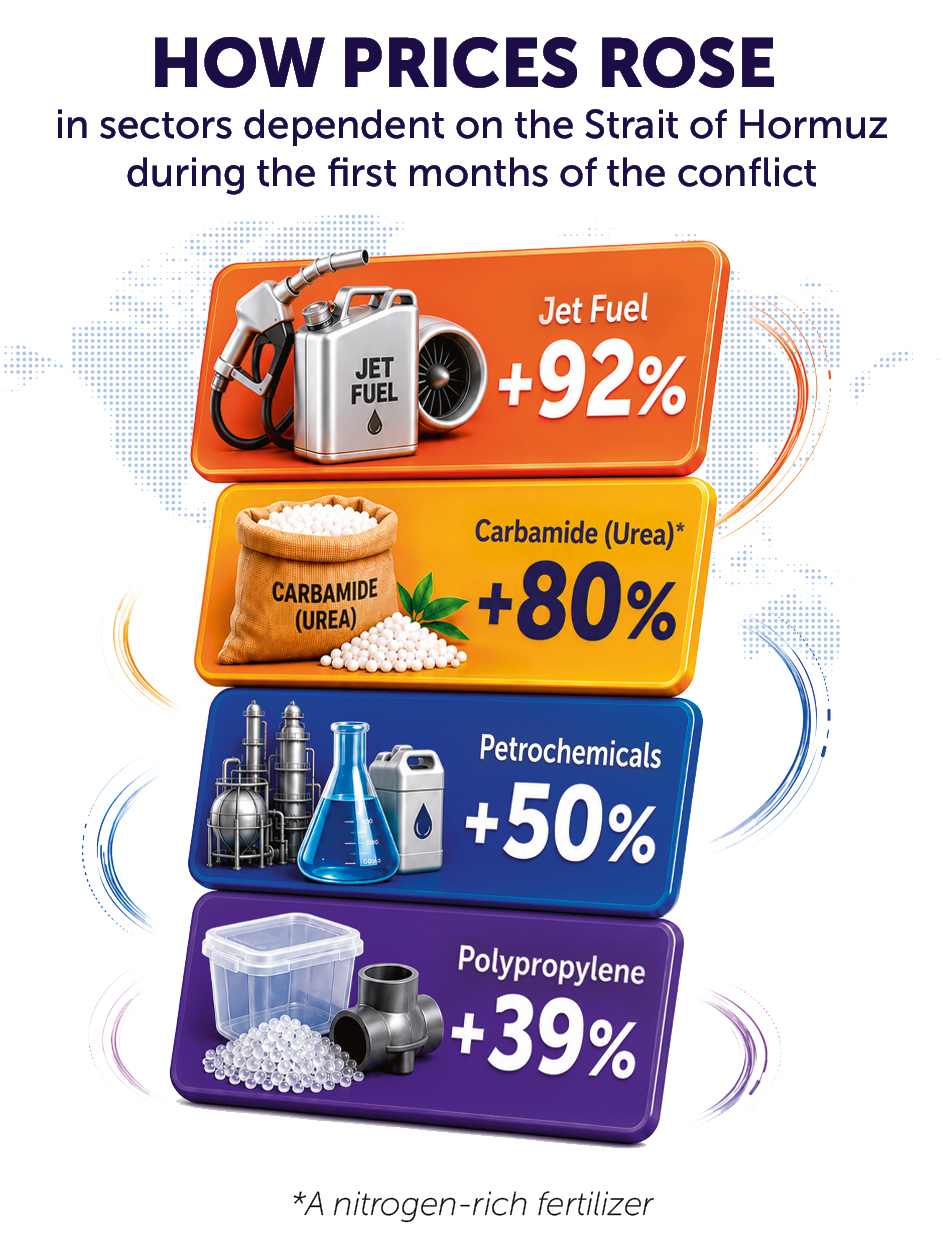
The conflict between Iran and the US has affected various sectors of the global and American economies. According to World Bank forecasts for the current year, energy prices will rise by 24 %, and the overall commodity price index will increase by 16 %. Higher oil prices almost immediately lead to increased costs for diesel, gasoline, jet fuel, maritime logistics, fertilizers, and petrochemical products. Transport companies, agricultural, and industrial enterprises are the first to record higher costs, which then translate into wholesale and retail prices.
The use of interest rate movements to combat inflation, in turn, has a reverse effect. If people are actively taking out loans and buying goods, a high rate can quickly dampen their activity. But if there is a shortage of fuel, fertilizers, port capacity, labor, or safe transport routes, a high rate is ineffective. Airlines need kerosene; farmers cannot do without diesel fuel; and retail chains cannot deliver goods to stores without gasoline.
It’s Not Just About Money
Non‑monetary inflation - when price growth is driven not by an excess of money but by other factors, including rising oil prices - is particularly challenging for countries with weaker economies. A relatively well‑off consumer retains some flexibility. For example, they might dine out less frequently, postpone buying a car, or cut back on other non‑essential expenses. For low‑income individuals, however, most of the budget is spent on food, transportation, and utilities. If these items become more expensive, there is almost nothing left to cut.
When oil prices rise, importing countries’ spending on energy resources increases, and foreign currency flows out of the economy more actively. Domestic currencies begin to depreciate, and imports overall become too expensive. As a result, prices for virtually all goods rise automatically. European countries, Japan, and many developing economies - including India and Turkey - face this problem.
Oil‑exporting countries can partially offset price increases through inflows of foreign exchange earnings, but they are not fully protected in this situation. Imported equipment, food, and logistics also become more expensive.
Source: blogs.worldbank.org, iata.org, icis.com, spglobal.com
Why the Rate Needs to Be Adjusted
The central bank’s key rate cannot reduce global oil prices or solve supply disruptions, but it can help prevent a one‑off shock from turning into persistent inflation. The main risk is that businesses raise prices in advance, employees demand higher wages, suppliers factor future risks into contracts, and the population starts buying goods in bulk, provoking shortages and further price increases. This is a risk that the central bank can actually manage.
The challenge is that financial regulators today are caught between two opposing pressures. A sharp rate hike slows economic growth, increases debt servicing costs, and weighs on investment. At the same time, an overly loose monetary policy raises the risk that higher fuel, food, and logistics costs will reinforce inflationary expectations. Under these conditions, raising the rate is not a cure for an oil shock but a safeguard against its spreading throughout the economy.
At the same time, if authorities simply prohibit businesses from raising prices, this only fuels physical shortages. Companies are forced to reduce supplies, postpone investments, or seek alternative sales channels. Here, the government’s role is to proactively reduce the economy’s vulnerability to such shocks.
Governments build strategic reserves of fuel, gas, grain, and fertilizers to withstand several months of logistics disruptions. Alternative supply routes, available port capacity, cargo insurance, and long‑term agreements with transport providers are also crucial. Logistics must be organized so that the closure of one route does not halt the entire supply chain. More predictable energy policies are needed, along with clear rules for businesses to invest in production, refining, LNG infrastructure, power grids, and renewable energy.
Supporting the population is a separate issue. If the government subsidizes fuel or electricity prices equally for both wealthy and low‑income households, budget spending rises very quickly, while demand barely decreases. It is far more effective to target assistance to those who spend the bulk of their income on food, transport, and utilities. Targeted support eases social tensions without becoming a burden on the entire economy.
Expectations vs Reality
For global financial regulators, the key lesson of recent years is that inflation has become not only a monetary phenomenon but also a resource‑driven one. It can no longer be explained solely by accommodative monetary policy or addressed only by raising rates. These measures remain important, but their efficiency improves only as part of a well‑designed economic strategy - one that includes stockpiles of critical goods, resilient supply routes, investment in energy and infrastructure, targeted social support, and balanced budget spending.