
Freedom analysts maintained a “Buy” rating on shares of Chinese technology company Alibaba Group Holding Ltd. (BABA) and a $200 target price. At the current price of $119.30, this implies upside potential of 67.64%. The main long-term driver remains the acceleration of the cloud business and AI monetization, although large-scale AI investments are still noticeably weighing on the company’s profitability and free cash flow.
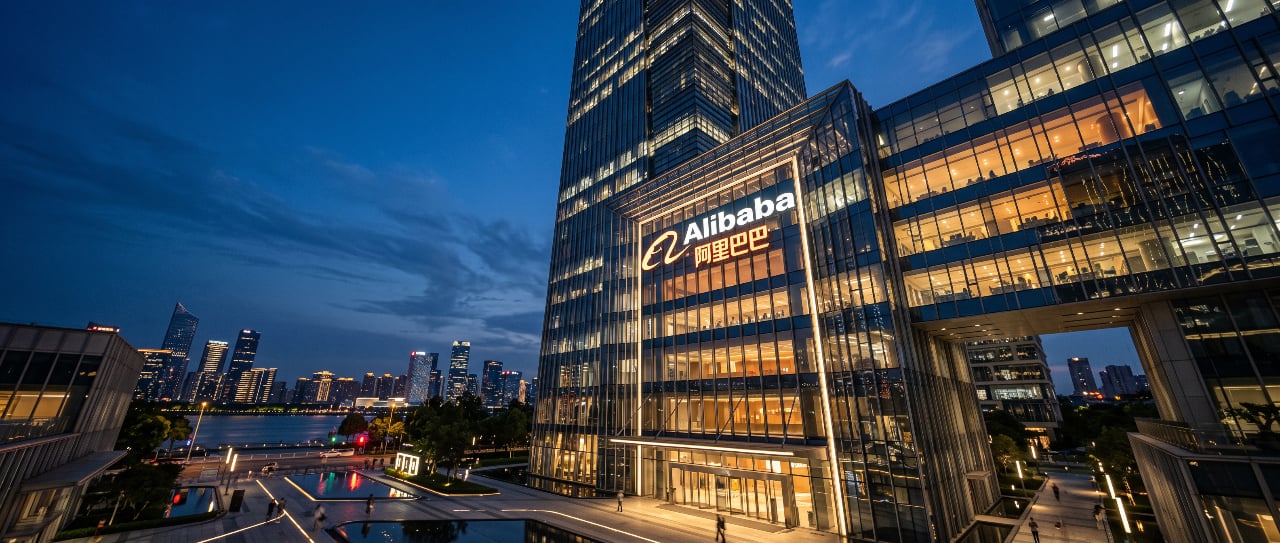
Alibaba is transforming from an e-commerce company into an AI platform
Alibaba is one of China’s largest technology companies, developing e-commerce, cloud computing, and its own AI-based solutions. The group’s ecosystem includes the Taobao online marketplace for retail shopping, the Tmall marketplace for brands, the international B2B platform Alibaba, the cross-border retail service AliExpress, and Alibaba Cloud—a cloud platform for data storage and computing. The company also owns the Alipay payment platform.
According to analysts, weakness in traditional e-commerce remains a factor pressuring Alibaba’s results; however, acceleration in the cloud segment and the gradual commercialization of AI create more meaningful long-term growth potential.
In the second quarter of 2026, Alibaba’s revenue grew 9% y/y to 268,953 million yuan ($39,639 million). Net profit fell 75% to 10,444 million yuan ($1,539 million), while adjusted net profit declined 38% to 20,715 million yuan ($3,053 million).
Cloud and AI are growing significantly faster than the core business
Revenue from AI Cloud and Compute Services increased 45% y/y to 48,437 million yuan ($7,139 million). Adjusted EBITA rose 133% to 5,628 million yuan ($830 million).
Revenue from AI products reached 12,376 million yuan ($1,824 million) and has been growing at triple-digit rates for the 12th consecutive quarter. Alibaba is also developing its own chips and Qwen AI models, seeking to control the entire technology chain—from computing infrastructure to end applications.
At the same time, AI remains an expensive bet on the future for now: quarterly capex rose 75% to 67,678 million yuan ($9,975 million). Free cash flow was negative—44,670 million yuan ($6,584 million) versus an outflow of 18,815 million yuan a year earlier.
E-commerce is not yet providing the same momentum
Alibaba’s core China e-commerce business remains the weaker link: its revenue fell 8% to 110,900 million yuan ($16,345 million) amid lower transaction activity and weak consumer demand.
At the same time, the instant commerce segment is growing much faster: its revenue increased 45% to 53,295 million yuan ($7,855 million). Alibaba notes improved unit economics at Taobao Instant Commerce, driven by higher average order value and greater logistics efficiency.
Thus, for investors, the key issue now is not only the recovery of traditional e-commerce, but also how quickly Alibaba can turn rising AI demand into sustainable profits.
Upside remains, but risks have increased
Freedom Broker analysts believe that the current weakness in profits is largely tied to the investment phase and does not negate the long-term investment case. Key factors for Alibaba’s re-rating will be the pace of AI monetization, growth in the cloud business, a recovery in consumption in China, and capital expenditure efficiency.
Target price dynamics
Previously, Freedom analysts recommended buying Alibaba shares with a $170 target price. The key drivers cited were the acceleration of the cloud business and AI segment, a recovery in consumer demand in China, and the company’s resilience amid intense competition.
Earlier, Alibaba also showed acceleration in its cloud business: in the fourth fiscal quarter, the unit’s revenue rose 38% y/y, and income from AI products grew at triple-digit rates for the 11th consecutive quarter. At the same time, the core e-commerce segment remained under pressure from weak domestic demand in China. Analysts also cited the expansion of Alibaba’s own computing infrastructure as an additional driver of its AI business development.
Not an individual investment recommendation.