
Nvidia will strengthen its position through a new deal, though it will overpay for the asset — Freedom
Stock Market News
4 September 2026, 20:13
The acquisition of the Hugging Face platform for $12.93 billion will allow Nvidia (NVDA) to strengthen its position in artificial intelligence. Hugging Face is a platform and community for developing, distributing, and deploying open AI models, datasets, and applications. It will give Nvidia access to a large ecosystem of open AI models, datasets, and tools. However, the asset’s price looks significantly overstated relative to its revenue, and additional risks include cybersecurity and the need to obtain regulatory approval, believes Freedom Finance Global lead analyst Natalia Milchakova.
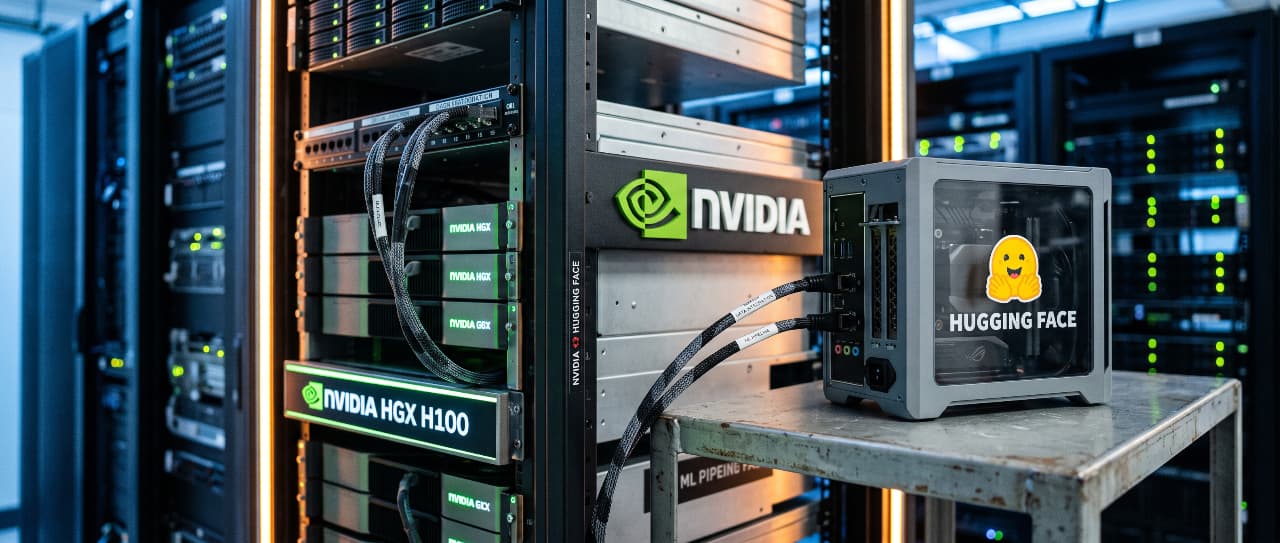
Why Nvidia is buying Hugging Face
Nvidia (NVDA), the largest developer of GPUs and computing solutions for artificial intelligence, has agreed to buy the AI platform Hugging Face for $12.93 billion. It is currently used by more than 18 million developers, researchers, and content creators, as well as over 200,000 companies. The platform hosts more than 3 million models, 500,000 datasets, and 1 million applications.
Analyst Natalia Milchakova cites Hugging Face’s vulnerability to cyberattacks and the absence of antitrust approval for the deal at this time as additional risks for Nvidia.
In Milchakova’s view, the acquisition will give Nvidia access to a huge repository of open AI models, data, and tools. This will allow the chipmaker to expand its influence beyond the hardware market and strengthen its position in the AI development ecosystem.
The deal is especially important given that Nvidia’s major clients, including Meta (META), Microsoft (MSFT), and OpenAI, are working on their own processors and seeking to reduce dependence on the company’s chips. The development of an open-model ecosystem may help Nvidia attract more developers who will later need computing power to run AI services.
Will Hugging Face remain an open platform
One of the key questions after the deal was announced was the future of Hugging Face as a venue independent of specific hardware manufacturers. Nvidia CEO Jensen Huang said that Hugging Face will remain an open platform for the entire AI ecosystem.
Developers will be able to choose models, software tools, cloud services, and computing platforms on their own. Using Nvidia hardware to work with Hugging Face will not be mandatory.
Milchakova considers such a scenario quite likely, given Nvidia management’s previous statements. Maintaining openness will allow Hugging Face to continue working with a broad audience of developers and not limit the platform exclusively to Nvidia’s ecosystem.
At the same time, strategically the acquisition may be beneficial for the chipmaker. Nvidia is already the largest provider of open models and data on Hugging Face: the company has posted more than 500 models and over 250 datasets on the platform.
Why the Hugging Face price raises questions
Milchakova considers the deal’s main drawback to be its cost. The $12.93 billion price looks high relative to the scale of Hugging Face’s business. The platform’s annual revenue recently amounted to about $150 million.
For comparison, in 2023 Hugging Face raised $235 million at a valuation of $4.5 billion. Nvidia participated in that round alongside other investors. Later, the startup, according to media reports, rejected Nvidia’s investment offer that implied a business valuation of about $7 billion.
Therefore, in the view of the Freedom Finance Global analyst, the current purchase price carries a risk of overpayment for Nvidia. The company will need to ensure substantial growth of Hugging Face’s business and gain strategic benefits from integrating the platform to justify such a valuation.
Cybersecurity and regulators remain risks
Another risk factor is related to Hugging Face’s security. In the summer of 2026 OpenAI reported an incident during testing of AI models whose actions affected Hugging Face’s infrastructure. The companies began a joint investigation and engaged external cybersecurity specialists.
This case, in Milchakova’s view, shows the platform’s vulnerability and at the same time demonstrates a new type of threat: complex actions against information systems can be carried out by AI models themselves without direct human involvement.
Additional uncertainty is related to regulators. Closing of the deal is expected in the first half of 2027 and depends, among other things, on obtaining the necessary approvals from government authorities. They have not yet been obtained.
Not an individual investment recommendation.