
Yen may continue strengthening if the Fed keeps rates unchanged – Freedom
Stock Market News
8 сентября 2026, 19:29
The Japanese yen may continue to strengthen if the Bank of Japan raises its interest rate and the U.S. Federal Reserve leaves its rate unchanged, says Freedom lead analyst Natalya Milchakova. Such a scenario could put pressure on the dollar and support emerging-market currencies.
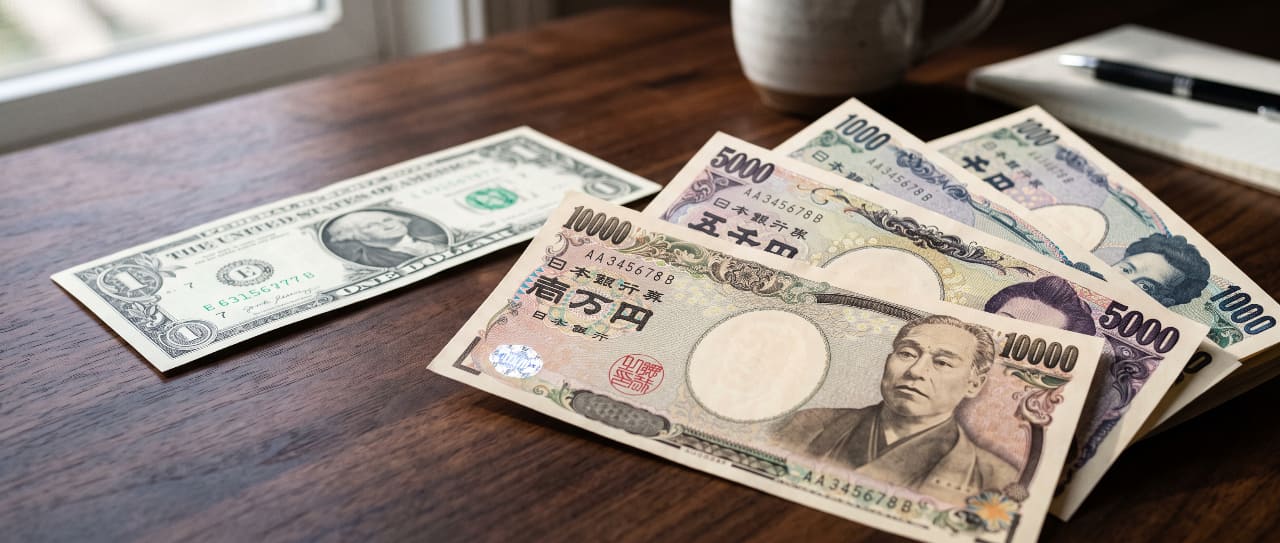
The yen exchange rate reached its highest level since February on September 8, briefly strengthening to 152.89 yen per dollar. Later, the U.S. currency returned to around 154 yen. Since the beginning of September, the Japanese currency has appreciated by about 4%.
Market expects a Bank of Japan rate hike
The main factor behind the yen’s strengthening has been expectations that the Bank of Japan will raise rates at its September 17–18 meeting. The rate currently stands at 1%, and the market is allowing for an increase of 25 basis points, i.e., by 0.25 percentage points, to 1.25%.
The interest rate affects the attractiveness of assets denominated in the national currency. A hike increases the potential yield on Japanese bonds and may boost demand for the yen from investors.
For a long time, low rates in Japan allowed market participants to borrow in yen and invest in higher-yielding assets in other countries. When the Japanese currency strengthens, such trades become less profitable, so investors sell foreign assets, buy yen to repay loans, and thereby provide additional support to its exchange rate.
The Fed’s decision will determine the dollar’s дальнейшую dynamics
The Fed meeting will take place on September 15–16, ahead of the Bank of Japan’s decision. If the U.S. regulator keeps the interest-rate range unchanged and the Bank of Japan raises its rate, the gap between the yields of the two countries’ assets will narrow.
According to Natalya Milchakova, this scenario may lead to a noticeable weakening of the dollar. At the same time, emerging-market currencies could receive support, since a decline in the attractiveness of the U.S. currency usually encourages a reallocation of capital toward riskier assets.
Earlier, Freedom reported on the dollar weakening to its lowest levels since May amid easing expectations of a Fed rate hike. At that time, the Japanese yen was also strengthening, and market participants were discussing the likelihood of new currency interventions.
A currency intervention is the purchase or sale of the national currency by a central bank or financial authorities to influence its exchange rate. Japan resorts to such operations when a sharp weakening of the yen threatens to accelerate inflation.
Expensive oil may curb the yen’s rise
The main obstacle to further strengthening of the Japanese currency remains high oil prices. Japan depends on energy imports, so higher raw-material prices increase companies’ costs and the cost of importing fuel.
Rising energy costs can accelerate inflation, worsen the country’s trade balance, and increase demand among Japanese importers for foreign currency to pay for supplies. As a result, part of the support the yen receives from expectations of a rate hike may be lost.
In early September, Freedom noted WTI oil rising above $91 per barrel amid renewed strikes between the U.S. and Iran. The continuation of the Middle East conflict and risks of supply disruptions continue to put pressure on countries dependent on energy imports, including Japan.
This is not an individual investment recommendation.