
Freedom Broker names a factor for stabilizing the U.S. government bond market
Stock Market News
18 September 2026, 14:13
A stronger dollar could increase foreign capital inflows and stabilize yields on long-term U.S. Treasury bonds, says Freedom Broker macroeconomist Yuriy Ichkitidze. A more attractive combination of FX returns and interest rates could support demand from overseas investors for U.S. government debt.
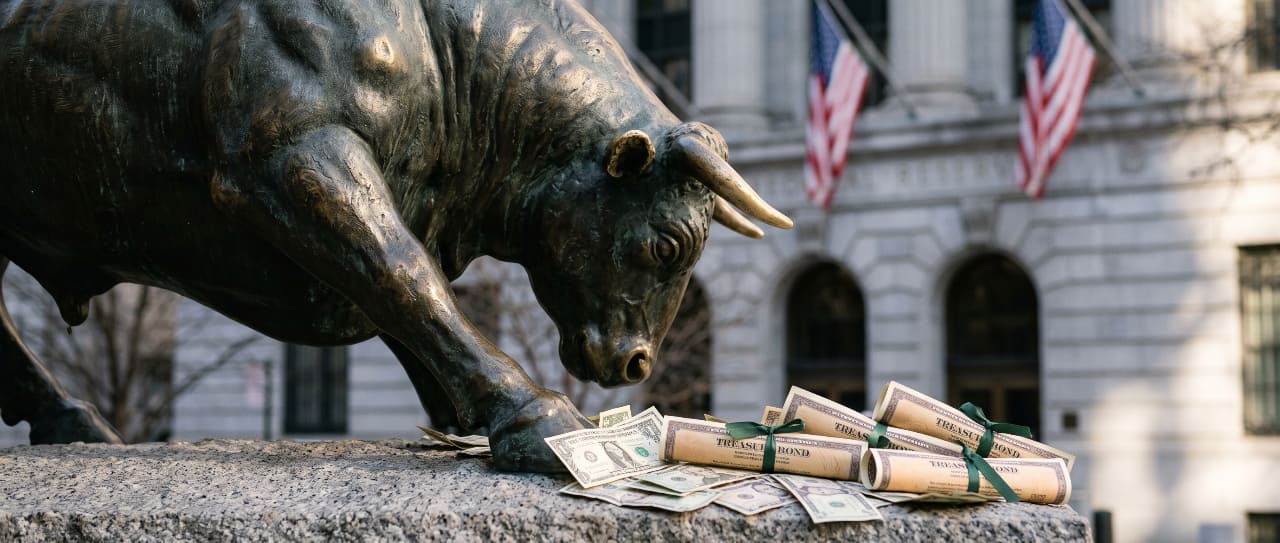
U.S. Treasury bonds, or Treasuries, are used by the government to finance budget expenditures. Their yields serve as a benchmark for borrowing costs across the economy, including corporate loans and mortgages. Rising demand pushes bond prices up and, accordingly, limits their yields.
A strong dollar may support demand for Treasuries
After the Federal Reserve raised the rate to the 3.75–4% range, the dollar received additional support. According to Freedom Broker, a strengthening U.S. currency may increase the appeal of dollar-denominated assets for overseas investors.
If market participants expect the dollar to hold steady or continue rising, returns on Treasury bonds are supplemented by potential FX gains. Foreign capital inflows increase demand for Treasuries and can help prevent a sharp rise in yields on long-term issues.
“One of the benefits the U.S. may gain from the Fed’s rate hike is a stronger dollar. It can also stabilize yields on long-term Treasury bonds by activating foreign capital inflows,” Ichkitidze noted.
Inflation and oil will remain key factors
Further moves in the U.S. government debt market will depend not only on the dollar. Freedom Broker highlights two main guideposts: inflation data, including oil price dynamics, and the yield on 10-year Treasury bonds.
The analyst expects that from September the core PCE price index will rise by an average of 0.22% per month. Such a pace is close to the regulator’s inflation target and in itself does not point to the need for a prolonged tightening of monetary policy.
Oil remains the main external risk. A continuing oil crisis could keep headline inflation elevated and force investors to demand higher yields on long-term bonds.
The market is pricing in high uncertainty
The Fed allows for one more rate increase by the end of 2026. At the same time, policymakers’ views regarding 2027 diverge markedly: eight of the committee’s 18 members allow for a third hike, while three foresee two cuts.
Such dispersion shows a lack of a steady consensus on the policy path ahead. Freedom Broker believes future decisions will be driven by incoming data rather than a pre-set prolonged cycle.
In these conditions, foreign capital inflows could become a stabilizing factor for the Treasury market. However, its effect will depend on the dollar exchange rate, inflation expectations, and whether investors maintain confidence in the regulator’s ability to ensure price stability.
This is not an individual investment recommendation.