
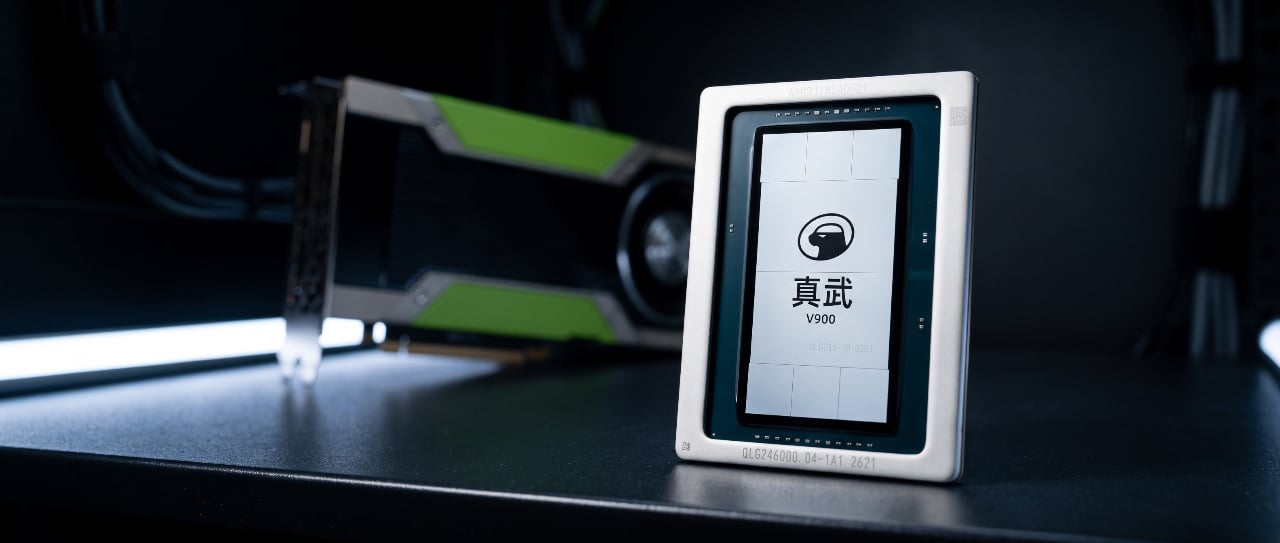
Alibaba has unveiled a new processor for artificial intelligence, calling it the most powerful Chinese AI chip. According to Freedom analyst Vladimir Chernov, the development could support Alibaba shares by reducing reliance on U.S. accelerators and strengthening its position in cloud computing. For Nvidia — a leader in producing processors, microchips, and graphics cards — the news is moderately negative. The emergence of a local competitor increases the risk of further erosion of its share in the Chinese market, although it does not yet threaten the company’s global leadership.
How an in-house chip could strengthen Alibaba
Alibaba (NYSE: BABA) is a Chinese technology group developing e-commerce, cloud computing, and artificial intelligence. Its in-house processors complement its infrastructure, which includes AI models and data centers.
AI accelerators are specialized processors designed to perform the computations required for training and running artificial intelligence. Access to such compute capacity is important for the development of cloud services through which companies provide customers with computing resources.
Chernov views the news as positive for Alibaba shares. A powerful in-house processor reduces dependence on U.S. accelerators and strengthens the group’s position in the fast-growing cloud-computing market. Investors also reacted positively to the announcement: in Hong Kong trading, Alibaba shares rose 5.1% and hit a one-month high.
An additional advantage, in the analyst’s view, is the development of the entire technology chain within Alibaba’s ecosystem — from processors and AI models to data centers. In the quarter ended March 2026, revenue from the cloud unit rose 38% year on year to 41.63 billion yuan, after a 36% increase in the previous quarter. Products related to artificial intelligence accounted for about 30% of the cloud business’s external revenue.
How serious is the threat to Nvidia
For Nvidia (NASDAQ: NVDA), a U.S. developer of graphics processors and AI accelerators, Chernov assesses the news as moderately negative. The emergence of strong local competitors increases the risk of further loss of ground in the Chinese market.
Alibaba’s development fits into a broader trend: Nvidia’s largest customers are seeking to reduce their dependence on its accelerators and are building their own solutions. Amazon, Google, and Meta are developing specialized processors, and OpenAI is preparing its own chip together with Broadcom. At the same time, new accelerator makers focused on training and running AI models are entering the market.
At the same time, Nvidia still holds about 90% of the AI-accelerator market. Its position is supported by the scale of shipments, a mature software ecosystem, and high performance. Therefore, Alibaba’s chip currently poses a threat primarily to Nvidia’s business in China; however, in the long run, the growing number of in-house developments by major technology companies could increase pressure on the U.S. manufacturer’s market share.
Investor interest in Alibaba may persist against this backdrop, but further assessment of the development will depend on the results of its practical application.
Alibaba expands computing capacity
Earlier, Freedom highlighted cloud services and artificial intelligence among Alibaba’s key growth drivers. In the quarter ended March 2026, revenue from the cloud unit rose 38% year on year to 41.63 billion yuan, and AI-related products accounted for about 30% of its external revenue.
Alibaba also plans to increase the capacity of its data centers to 20 GW by 2032. The expansion of infrastructure is intended to support the growth of the cloud business and provide computing resources for the company’s own AI models and services.
Analysts have noted that restrictions on supplies of advanced U.S. chips are increasing demand for Chinese technologies.
The company has also explored the possibility of purchasing overseas solutions. In December 2025, it was reported that Alibaba is considering ordering 40,000 to 50,000 AMD AI accelerators. This underscores the scale of the group’s need for computing infrastructure.
Not an individual investment recommendation.