
Freedom Broker: the 737 MAX issue could complicate Boeing’s recovery
Stock Market News
30 September 2026, 10:25
A software flaw in Boeing 737 MAX aircraft is creating a new risk to the recovery of deliveries and could affect the certification timeline for prospective models, Freedom Broker analysts note. The need to refine the software could delay deliveries of the MAX 7 to customers and the certification of the MAX 10, which is especially important for Boeing (BA) amid the company’s heavy reliance of deliveries and cash flow on the 737 MAX family.
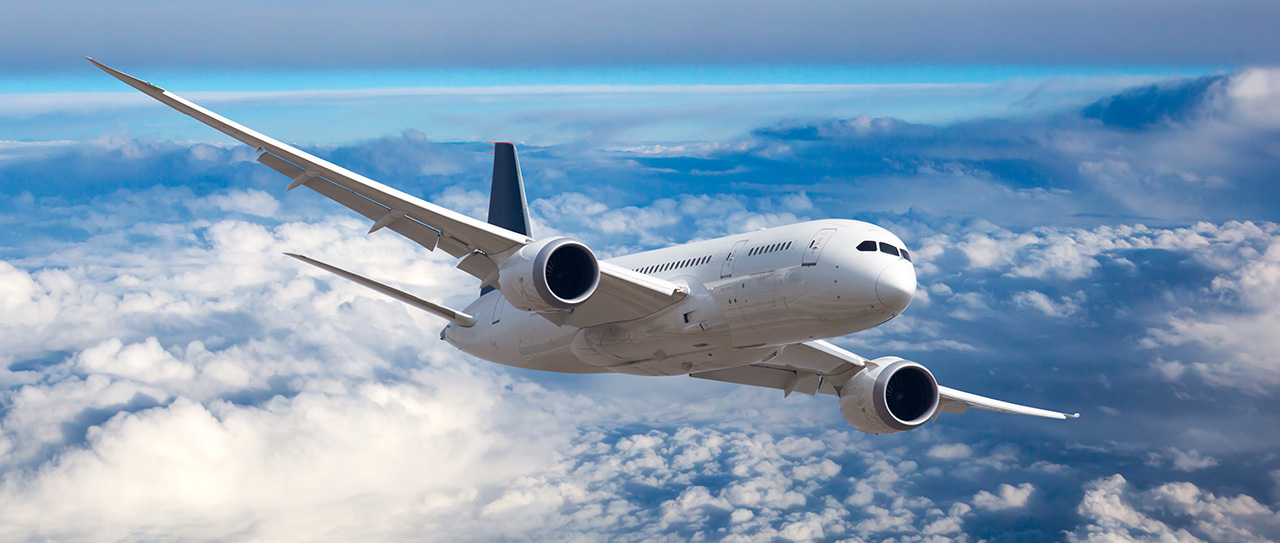
One of the leaders in aircraft manufacturing
Boeing is one of the world’s largest manufacturers of civil and military aircraft. The company produces airliners of the 737 MAX, 787 Dreamliner and 777X families, as well as rockets, satellites, military aircraft and missile defense systems. Boeing’s business includes commercial aviation, defense and space programs, and services.
Software flaw threatens delivery timelines
Boeing discovered a 737 MAX software bug that, under a certain landing scenario, could disrupt the operation of the automated navigation system.
Southwest Airlines (LUV) and United Airlines (UAL) requested deliveries of aircraft with an earlier software version. For the market, the key question is the impact of the refinements on the timing of handovers of Boeing 737 MAX 7 aircraft to customers and the certification of the larger MAX 10 model.
The situation has come into the market’s focus, Freedom Broker experts noted. If the fix requires additional testing or coordination with regulators, Boeing could face yet another postponement of deliveries, analysts believe. This could slow cash inflows from customers, since aircraft manufacturers typically receive a significant portion of payment upon delivery of the aircraft to the customer.
The previous investment idea needs revisiting
At the end of August, Freedom Broker analysts called the current situation attractive for buying Boeing shares. The target price was $242; since then, the stock has fallen to $184.
Boeing remains dependent on the 737 MAX family
The risk is especially important given the high share of the 737 MAX in Boeing’s deliveries. In July, the company delivered 53 commercial aircraft to customers — 17% fewer than in June, but five more than a year earlier. This total included 39 737 MAX family jets, 10 787 Dreamliner aircraft, one 777 freighter and three 767 aircraft.
In the first seven months of 2026, Boeing delivered 367 aircraft, including 279 737 MAX jets and 50 787 aircraft. Thus, nearly 76% of all deliveries came from the 737 MAX family.
In July, the company received 38 new orders. After eight cancellations, net growth amounted to 30 aircraft. At the same time, Boeing continued to trail Airbus: the European rival delivered 67 aircraft for the month versus 53 for the U.S. manufacturer.
Cash flow returned to positive territory
In Q2 2026, revenue grew 8% year over year to $24,6 bn, beating market expectations by 1.2%. Net loss narrowed from $612 mln to $428 mln, and GAAP loss per share improved from $0,92 to $0,67. The adjusted loss was $0,76 per share. Results were affected by additional write-offs of $280 mln under the VC-25B presidential aircraft program and price concessions on aircraft deliveries.
Operating cash flow increased more than sixfold to $1,36 bn. Free cash flow returned to positive territory and reached $631 mln. Boeing’s backlog totaled a record $715 bn and included more than 6,2k commercial airplanes.
It was the recovery in deliveries and the return to positive free cash flow that were important arguments behind the August investment idea. Possible 737 MAX delays pose a threat to this momentum.
Defense contracts partially mitigate risks
Over the summer, the U.S. Department of Defense entered into seven-year framework agreements with Boeing and RTX Corporation (RTX) to ramp up production of components for SM-3 Block IB and SM-3 Block IIA interceptor missiles for the Aegis missile defense system.
The terms of the agreements allow production to be increased before a multiyear contract is signed. This improves visibility into future plant utilization and may help boost the profitability of Boeing Defense, Space & Security.
Another potential source of revenue is a possible sale to Qatar of up to four KC-46A tanker aircraft. The U.S. State Department approved the deal valued at up to $4,5 bn, including engines, defensive systems, training and technical support.
Not an individual investment recommendation.