
Freedom: High gas prices leave Americans with less money to spend
Stock Market News
14 октября 2026, 19:05
Freedom Broker analysts expect the U.S. retail sales control group to rise by only 0.05% versus the consensus forecast of 0.3%. In their view, expensive gasoline is limiting spending on other purchases. The data release on October 15 will be an important test for consumer-sector stocks: the options market is already showing heightened investor caution.
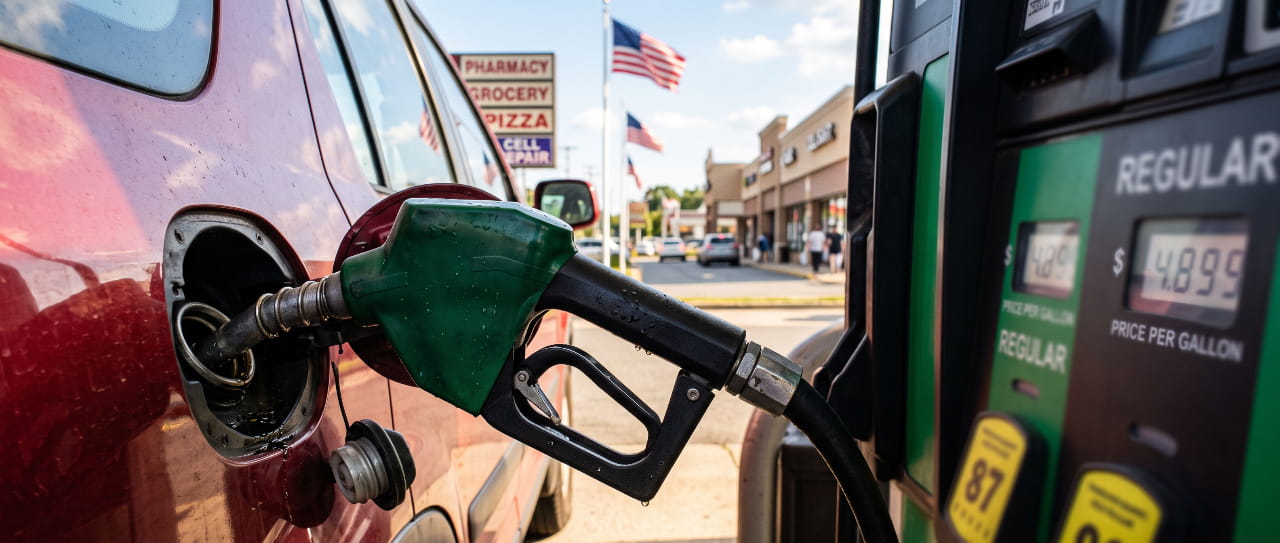
Fuel spending crowds out other purchases
High gas prices are eating into other purchases, Freedom experts note. Their forecast relates to the retail sales control group—a measure that excludes a number of categories, including autos and gasoline. This helps assess consumer spending without the direct impact of changes in fuel prices.
Higher spending at the pump may support the dollar value of gasoline sales, while at the same time leaving households with less money for other goods. Analysts attribute the forecast of just 0.05% growth in the control group to precisely this effect.
An additional signal of weak demand is the University of Michigan index of current economic conditions. Freedom Broker analysts noted its decline to 44.7, the lowest since 1951. The indicator reflects consumers’ assessment of their financial situation and conditions for major purchases.
Options market prices in the risk of weak demand
Concerns about consumer spending are reflected in positioning in the fund Consumer Discretionary Select Sector SPDR Fund (XLY), which represents the consumer discretionary goods and services sector. Among its largest holdings are Amazon (AMZN) and Tesla (TSLA).
According to Freedom Broker, two options indicators for XLY point to downside. The put/call ratio has risen to 2.11, and the options price skew has turned moderately bearish at −6.7%.
Puts make it possible to profit from a decline in the price of the underlying asset or to hedge an existing position. Calls, by contrast, are used to bet on gains. Analysts believe that the combination of these signals is consistent with the risk of a weak retail sales release.
In the report, experts highlight buying a put option on XLY with a $108 strike and an expiration date of November 20, 2026. Confidence level in the idea is 6 out of 10. The strike is the price at which the option grants the right to sell the underlying asset; it is not the fund’s target price. The analysts do not provide an entry price or the expected return for the trade.
Retail sales will test consumer resilience
The U.S. retail sales release on October 15 will be an important test for consumer-sector stocks and will show how resilient Americans’ spending remains amid expensive fuel. Freedom Broker’s forecast implies weaker momentum than the market expects, so the data will test both the analysts’ macro view and their tactical idea on XLY.
That same week, investors will receive consumer and producer inflation readings. For the market, the combination of these data is important: price growth determines the strain on household budgets, while retail sales show how consumers are changing their spending.
Restaurants have already cited pressure from expensive gasoline
The impact of fuel costs on consumption has shown up before. In early May, restaurant chains Wingstop (WING) and Domino’s Pizza (DPZ) reported quarterly results that were weaker than expected. Consumers cut spending on dining out, as a larger share of their budgets went to gasoline.
At that time, the average gasoline price in the U.S. was about $4.43 per gallon—almost 40% higher than a year earlier. Comparable sales at Wingstop fell by nearly 9%, while Domino’s posted growth of less than 1% and lowered its full-year forecast. Those May results illustrate the mechanism Freedom Broker analysts are now pointing to: rising mandatory fuel spending limits room for other purchases.
Not an individual investment recommendation.