
Freedom: resilient fares sustain United Airlines stock’s upside potential
Stock Market News
21 қазан 2026, 19:12
Freedom analysts reaffirmed their “Buy” recommendation on United Airlines Holdings (UAL) shares and kept the target price at $142. This implies upside potential of 44.11% from the current quote of $98.535. The experts revised their forecasts for fuel expenses, but believe that resilient airfares, premium products, and loyalty programs continue to support the carrier’s investment appeal.
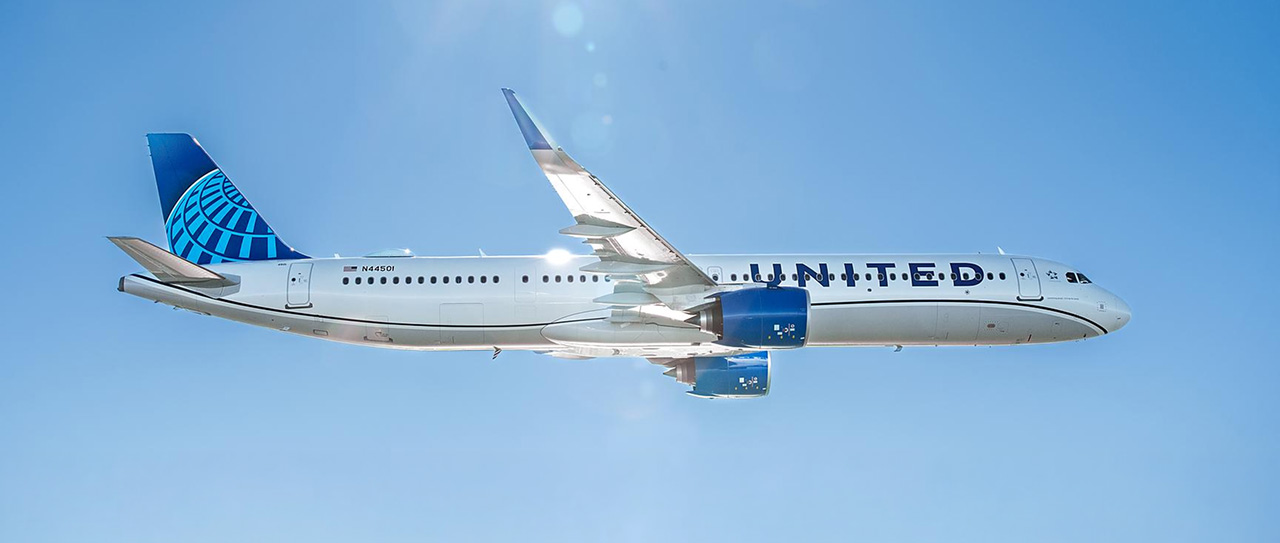
About the company
United Airlines Holdings is the holding company of carrier United Airlines, which operates domestic and international flights. In addition to passenger transportation, the company generates revenue from its cargo business, loyalty program, and ancillary services.
Costly fuel changes forecasts, but not the recommendation
Freedom analysts’ main takeaway is that United’s ability to raise transportation yields allows them to maintain a positive view of the shares even after revising expectations for jet fuel costs.
The experts updated their model to reflect developments in the oil market and the latest results from Delta Air Lines (DAL). In their view, the current jet fuel price environment is among the most volatile of the past 5–10 years.
The crack spread—the difference between the price of refined products and crude—points to materially higher fuel costs persisting for at least the next 12 months if tensions in the Middle East do not ease. At the same time, analysts expect United’s passenger yield growth in Q4 2026 to be slightly above their previous forecast and to help offset cost pressure.
Ahead of Q3, Freedom updated expectations
The October review focuses on adjusting the model ahead of the Q3 results. The figures cited for this period are analysts’ forecasts. Freedom expects Q3 revenue of $17,740 mn, adjusted EBIT of $1,351 mn, and adjusted EPS of $2.62. For Q4, revenue of $18,079 mn and adjusted EPS of $2.23 are projected.
For full-year 2026, analysts assume revenue of $68,099 mn and adjusted EPS of $8.03. For 2027, their estimates are $68,895 mn and $11.72, respectively.
In Q2, revenue grew while profit declined
In Q2, operating revenue increased 16.0% year over year to $17,672 mn from $15,236 mn. Passenger revenue rose 16.4% to $16,100 mn, and cargo revenue increased 22.6% to $527 mn. However, expenses grew faster than revenue. Operating costs increased 19.2% to $16,576 mn. As a result, operating profit fell 17.3% to $1,096 mn from $1,325 mn a year earlier.
Net income totaled $805 mn versus $973 mn, down 17.3%. Diluted EPS declined 17.2% to $2.46 from $2.97. Adjusted EPS, which excludes special items and other adjustments, dropped 48.6% to $1.99 from $3.87.
Demand is supported by premium seats and the loyalty program
In Q2, United’s revenue from premium products rose 16%, from Basic Economy increased 11%, and loyalty program revenue grew 11%. Contract revenue from corporate clients increased 27%. Total revenue per available seat mile rose 12.1% as capacity increased 3.5%. This metric reflects how much the company earns per offered passenger seat adjusted for distance flown. Its growth shows that revenue gains were driven not only by expanded flying.
In Freedom analysts’ view, premium products and loyalty programs remain structural sources of growth. Fleet renewal and service improvements should provide additional support.
One such area is the rollout of Starlink satellite internet. In a July release, United reported equipping 450 aircraft and plans to increase the number to nearly 1,000 by the end of 2026. The company aimed to complete installation across the entire fleet by the end of 2027.
Fuel costs remain the key constraint
In Q2, United’s jet fuel expenses rose 84.1% to $5,110 mn from $2,775 mn a year earlier. The average price was $4.19 per gallon. According to the company’s estimate at the time of the July reporting, it managed to offset about half of the increase in fuel costs during the quarter. In Q3, management expected to recoup 80–90% of the increase, and by Q4—100%.
In the updated review, Freedom also highlights risks of weakening demand due to macroeconomic and geopolitical uncertainty. Competition and excessive capacity additions by other carriers could limit United’s ability to raise fares.
In July, United raised its full-year guidance
Publishing Q2 results on July 15, United raised its 2026 adjusted EPS guidance to $9.00–11.00. At the same time, the company expected nearly $6 bn in additional fuel costs versus its estimate at the beginning of the year. In Q2, the carrier generated $1.6 bn in operating cash flow and $322 mn in free cash flow. Available liquidity at period-end totaled $19.6 bn. The company also reported that since the beginning of Q2 it had prepaid about $1 bn of higher-cost debt.
Freedom’s October forecast of $8.03 in adjusted EPS is below management’s July range of $9.00–11.00. These estimates correspond to different dates: analysts updated the model to reflect subsequent changes in the fuel market.
Not an individual investment recommendation.