
Freedom: Digital Realty investors to profit from the rise of AI
Stock Market News
3 қараша 2026, 19:07
The development of artificial intelligence is increasing demand for data centers, and one of the beneficiaries of this trend, according to Freedom analysts, is Digital Realty Trust (DLR). They maintain a “Buy” recommendation with a target price of $227. From the current $176.35, the upside potential is about 29%. The company is signing record volumes of new contracts, and the already signed agreements provide a foundation for revenue growth through 2028.
About Digital Realty
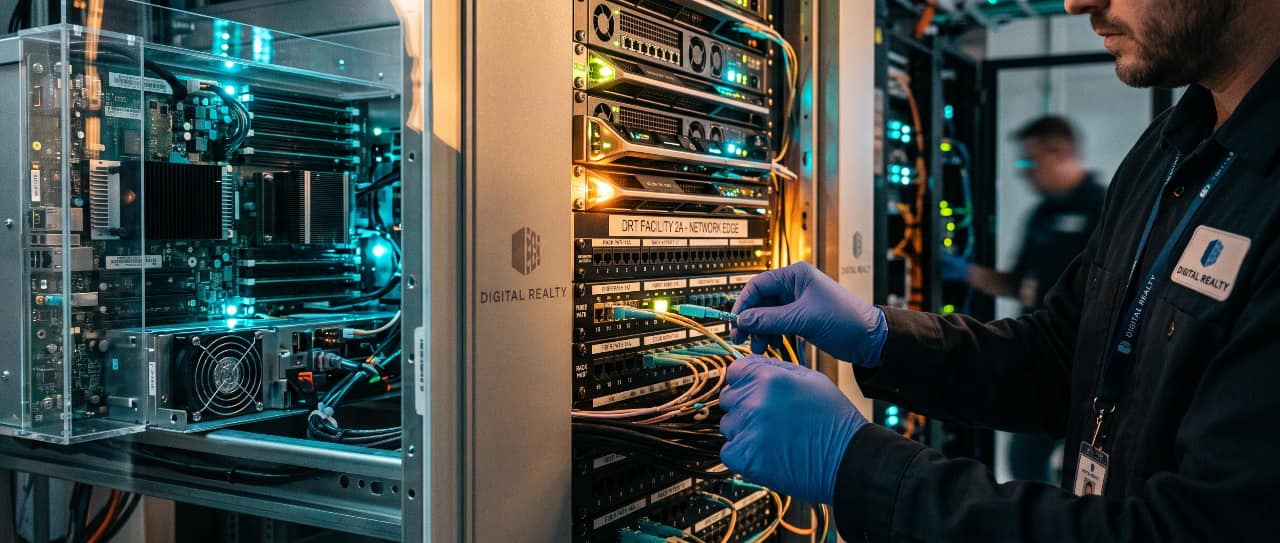
Digital Realty is a real estate investment trust that owns data centers and provides companies with space, power supply, cooling, and network connectivity to host servers. Its business makes it possible to participate in the development of digital infrastructure through real estate leasing and related services.
How AI demand turns into revenue
The key result of Q3 was a record volume of new lease agreements. Measured as annualized rental revenue, Digital Realty’s share in new contracts reached $627 million versus $208.5 million the prior quarter. Demand is rising across different customer categories. In the segment of contracts for capacity up to 1 MW, management estimates that 44% of new lease contracts were related to artificial intelligence. Large deals were supported by deployments in Northern Virginia, Seoul, Chennai, and Sydney.
For investors, it is important that these are already signed agreements. The portfolio of contracts for which leasing has not yet begun grew 29% over the quarter, to $1.8 billion in annualized revenue terms, taking into account Digital Realty’s share. This amount is equal to nearly 40% of the company’s existing data center rental revenue. As facilities are completed and leasing begins, contracts will convert into current revenue. That is why analysts see a foundation for multi-year business growth.
Capacity shortages allow rates to be raised
Demand supports not only data center utilization, but also rental pricing. In Q3, upon contract renewals, cash rental rates increased by an average of 11.8%. In the segment above 1 MW, the increase reached 26.3%. At the same time, occupancy at facilities that have reached a stabilized operating level rose to 93.4% versus 91.9% a year earlier.
For Digital Realty, these are two sources of growth: the company deploys more customer equipment and earns more revenue from existing space. According to Freedom, record rates in large new contracts point to a persistent supply shortage. The effect is already reflected in the financials. Quarterly revenue rose 20.6% to $1.902 billion, and adjusted EBITDA increased 12.7% to $978 million. Both metrics exceeded market expectations.
Core FFO per share reached $2.10, up 11.1% year over year, versus a consensus of $1.99. This metric is used to evaluate real estate investment trusts: it adjusts net income, including by excluding depreciation of properties and gains or losses from their sale.
Where the company will find capacity for further growth
Digital Realty is expanding supply: data centers with total capacity of 1.5 GW are under construction. The expected cost of these projects is $22 billion. At the same time, 63% of the capacity under construction is already secured by preliminary lease agreements.
Preliminary contracts reduce uncertainty about future utilization, but construction requires significant funds. In Q3 alone, the company allocated $1.5 billion to development. To finance expansion, Digital Realty is bringing in partner equity. After the end of the quarter, it received initial investor commitments of $1.4 billion for a new investment vehicle focused on operating large-scale data centers in North America. This mechanism makes it possible to raise funds against completed assets and direct capital toward building new ones.
Why Freedom lowered the target after a strong quarter
Management raised its guidance for the third time this year. The company now expects core FFO per share excluding incentive fees from investment projects in the range of $8.30–8.35 instead of $8.15–8.20. The midpoint of the new range implies growth of nearly 13% versus 2025. Despite improved results, Freedom lowered the target price from $233 to $227. The reason is an increase in the cost of capital in the valuation model: with more expensive financing, the business’s future cash flows are valued lower.
Leverage also requires attention. The ratio of net debt to adjusted EBITDA rose to 5.2 versus 4.7 in the prior quarter. In addition, utility costs increased faster than customer reimbursements, putting pressure on profitability. Freedom’s investment view is based on the record volume of signed contracts, higher rental rates, and capacity expansion. To realize the company’s potential, it will need to commission new facilities on time and convert contracted demand into cash flow, while maintaining control over costs and financing.
This is not an individual investment recommendation.