
Investment Review №348. Seasonal Rotation
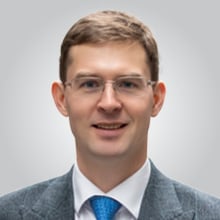
Timur Turlov
CEO Freedom Holding Corp.
Back to the Future
Alan Greenspan, who died last week at 100, chaired the Fed from 1987 to 2006, stepping down just before the 2008 crisis. He was known for his distinctive style—intentional ambiguity, keeping markets guessing and rarely explaining decisions publicly—yet he acted decisively in the face of crises and inflation. By the end of his tenure, however, he faced criticism for overly accommodative policies, which contributed to the 2008 crisis. Upon taking office as Fed chair in May, Kevin Warsh singled out only one predecessor—Greenspan—as the model he aims to emulate.
At his first meeting on June 17, Warsh kept the policy rate unchanged at 3.50–3.75% (a fourth straight pause) but overhauled the Fed’s communication. The post-meeting statement was cut from 341 words in April to 132, scrubbing any language about a bias toward easing and references to individual voters, and leaving a single thesis: the committee will ensure price stability. For 15 years straight, the Fed’s forward guidance had primed markets for the next move, turning the regulator’s signal into the dominant one; the Fed then read markets’ reaction as validation of its own view—what Ben Bernanke called a “hall of mirrors.” Warsh said market prices are the Fed’s most important information source, but only when markets have their own view, rather than simply echoing the Fed.
Ironically, Warsh was appointed by Trump, who had pressed for sharp rate cuts and reportedly chose him with that in mind. In 2025, Warsh softened his tone, noting AI-driven productivity could be disinflationary, but his track record skews the other way. A Fed governor from 2006, he was at Ben Bernanke’s side through the whole crisis—the Bear Stearns sale, Lehman Brothers’ failure, and the AIG rescue. He broke with Bernanke over QE2 (the $600 billion Treasury purchase program) and resigned defiantly in March 2011, warning that bond buying would distort capital allocation. He has often argued that “inflation is a choice,” and his current stance is consistent with that view.
Warsh’s agenda centers on the Fed’s outsized balance sheet, recently trimmed to about $6.7 trillion after nearly 18 years of expansion. He wants “unsubsidized” returns—i.e., a real cost of capital set by markets, not by Fed purchases. This path is bumpy, and the likely roadmap involves further balance-sheet compression and some easing of banking rules, with rate moves reserved for managing inflation and growth. It’s early to judge outcomes, but if executed, the plan could, over time, restore economic balance and improve the health of the Fed’s balance sheet. In the near to medium term, however, such steps would likely be a headwind for both equities and bonds.
For market participants, the implications are vague, as Warsh intended and as Greenspan often preferred, but investors will adjust quickly. First, the “Fed Put” remains intact: in the event of sudden financial instability, the Fed is likely to backstop markets. Second, elevated volatility will require closer portfolio oversight — more frequent hedging, more active management, and tighter engagement with investment advisors. Third, Warsh has shown he is independent, precisely what is needed to execute a long-term plan to restore healthier economic conditions and improve the Fed’s balance-sheet position. Over the next 10–15 years, that should make the market more conducive to investment while reducing certain risks. Consequently, U.S. equity investors should regain confidence in the stability of financial institutions and in the ability of resilient companies to drive equity-market performance.