
Investment Review №352. Playing Defense
In a high-risk area
Persistent geopolitical tensions are preventing local markets from realizing their accumulated growth potential
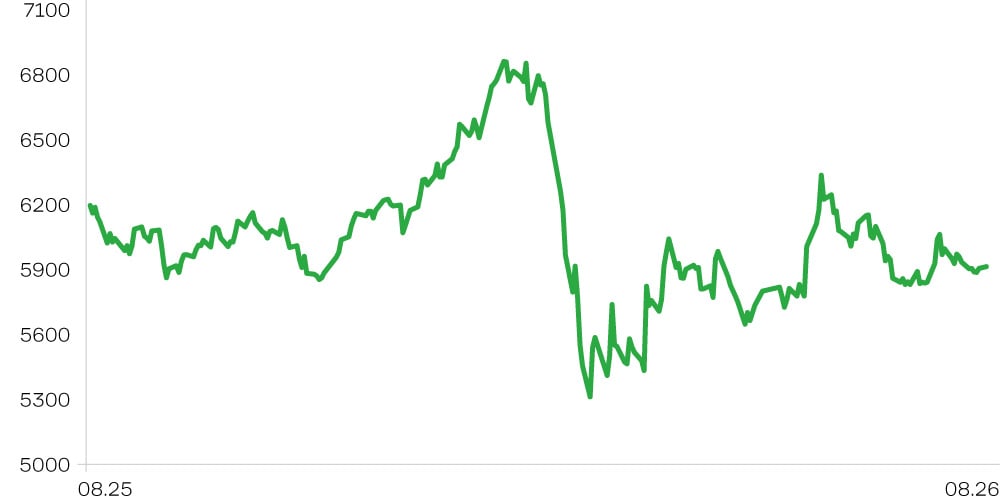
DFM General Index: 1-Year Dynamics
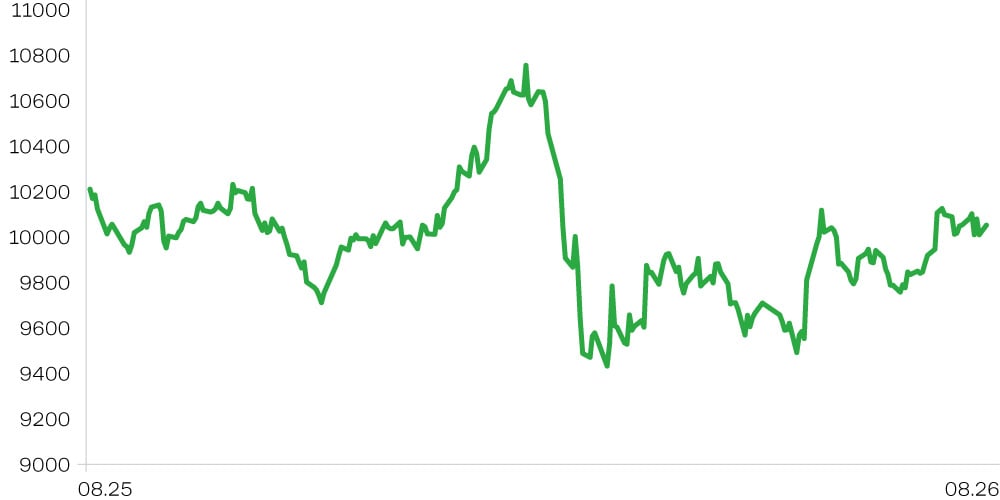
Abu Dhabi Securities Exchange Index: 1-Year Dynamics
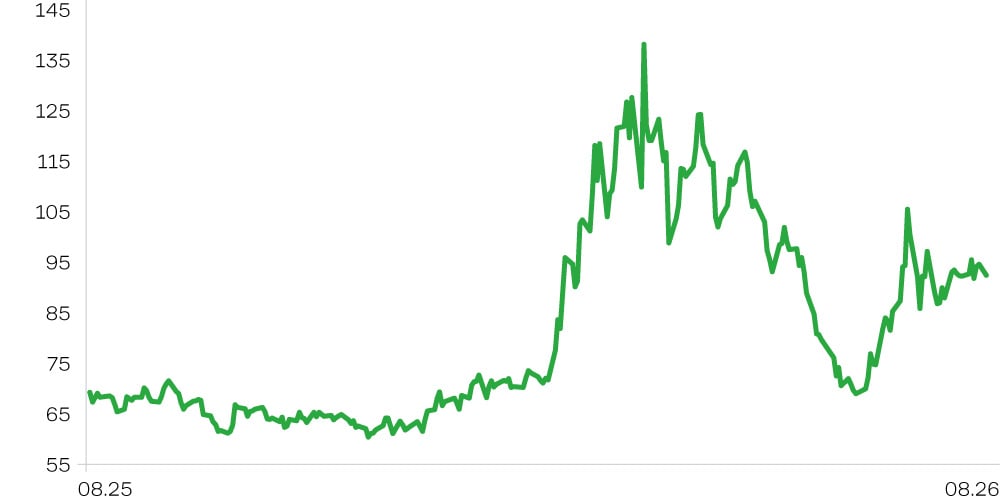
Brent Oil, 1-Year Dynamics
Over August 10–24, 2026, the DFMGI slipped 0.6% to 5,866, and ADXGI edged down 0.4% to 10,048, while the S&P 500 declined 1.3%.
Brent slipped 0.7% to $92 per barrel, while WTI rose 5.7% w/w to $87.1 on supply disruptions and the threat of additional U.S. sanctions on Iran’s partners.
Sector performance was mixed. Consumer Discretionary (+3.9%, Parkin: +6.5%) and Communication Services (+2.1%, e&: +4.2%) outperformed, while Financials dropped 2.1% (Emirates NBD: −4.3%), Energy lost 1.11% (ADNOC Gas: −3.5%) amid tanker attacks, and Real Estate declined 1.06%.
Yields on UAE proxy bonds rose to 5.84% from 5.34% (+50 bps), whereas the 10Y UST yield declined to 4.73% from 4.78% (-5 bps). The spread widened to ~111 bps from ~56 bps, reflecting a higher geopolitical risk premium after attacks on ADNOC tankers.
Economic Updates
The Abu Dhabi Securities Exchange (ADX) market capitalization reached $762.4bn at end-H1 2026. More than 30,000 new investors registered (+7.1% YoY), 77% of whom were foreign. International investors accounted for 48% of trading volume, and dividends totaled $13.59bn. ADX also deepened international connectivity, admitting HSBC as its first foreign clearing member and Morgan Stanley as its first international remote trader.
Dubai’s real estate market remains active, with $2.61bn in transactions in the week ended August 14. The ultra-luxury segment rose 23% YoY to $6bn. In Abu Dhabi, sales reached $19.17bn in H1 2026.
U.S.–Iran tensions remain a key overhang. On August 13, two ADNOC vessels were attacked in the Strait of Hormuz—17 vessels have been attacked since the conflict began. Iran has stated the strait will remain closed until the U.S. fulfills the terms of the June memorandum. On August 17, Iran announced a shift to “offensive” tactics amid stalled negotiations.
Corporate News
ADNOC Gas reported Q2 earnings fell 52% YoY to $665m, reflecting disruptions around the Strait of Hormuz, but beating guidance of $400–600m. The board approved the FID on Rich Gas Development and awarded $8.2bn in EPC contracts, lifting the 2030 EBITDA growth target to 60%. The company declared a $940m dividend. Management guides profit of $600–800m for Q3 and $3.5–4.0bn for 2026. ADNOC also plans to invest over $8bn in gas infrastructure bypassing the Strait of Hormuz.
ADNOC L&S posted record earnings of $951m (+303% YoY) and issued its third upgrade to 2026 guidance this year.
Emirates NBD reported record earnings of $4.41bn (+5% YoY). FAB reported earnings of $2.92bn, while banks broadly flagged margin pressure.
ADPower completed the mandatory buyout of TAQA minority shareholders at $0.735 per share; settlement occurred on August 13, and the ADX delisting is complete.
Two-Week Outlook
The key driver over the next two weeks will be the risk of further U.S.–Iran escalation. The IRGC has signaled a shift to an offensive stance, and oil supply tightness persists. A deal with Washington remains unlikely, supporting crude and limiting downside even on pullbacks.
Earnings season underscored the resilience of profits among leading UAE issuers. Strong results from ADNOC Gas, ADNOC L&S, Emirates NBD, and FAB supported sentiment, though banks are flagging margin compression. The widening spread between UAE local bonds and U.S. Treasuries signals a higher risk premium, with the near-term trajectory likely hinging on progress in U.S.–Iran–Oman talks. Structural support from real estate remains intact, with PMI at 52.7 and record activity in the ultra-prime segment, but UAE equities are likely to stay under pressure until there are clearer signs of de-escalation.
The U.S.–Iran conflict remains a key risk factor. Iran says the Strait will remain closed until the U.S. complies with the June memorandum, including lifting the naval blockade and sanctions. Talks appear deadlocked: an Iranian official said Tehran is shifting to “fully offensive” tactics, while Trump rejected extending the interim agreement.