
Investment Review №352. Playing Defense
We need more positivity
Strong macroeconomic data was not enough to keep the main stocks on the local market in positive territory
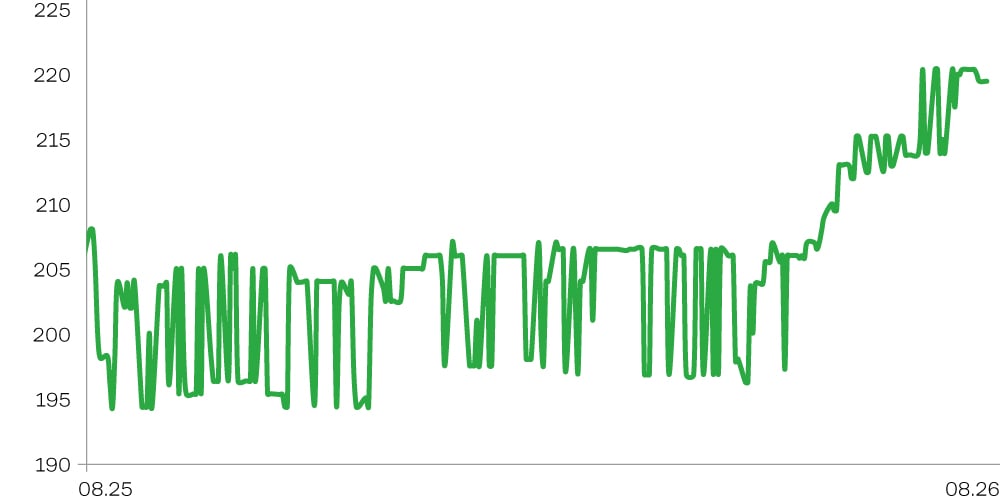
Telecom Armenia Stock Performance (Post-IPO)
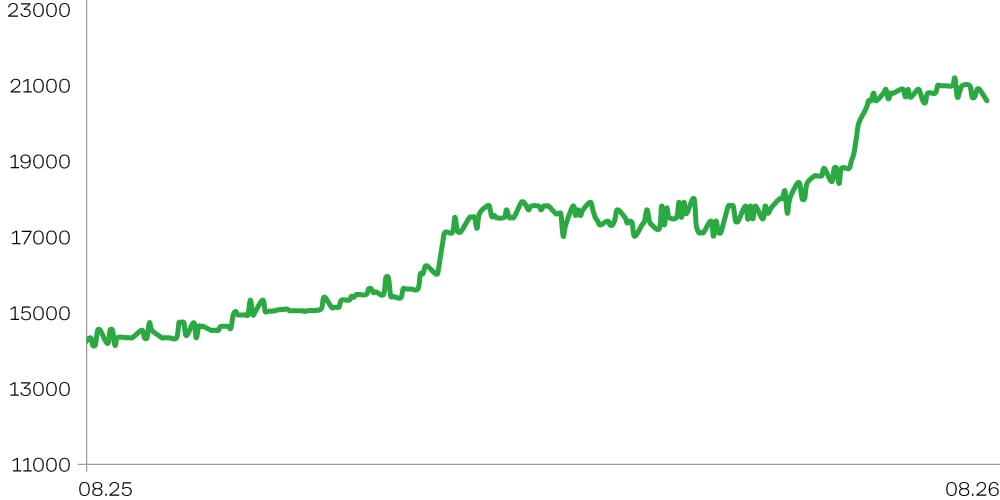
ACBA Bank: 1-Year Stock Trends
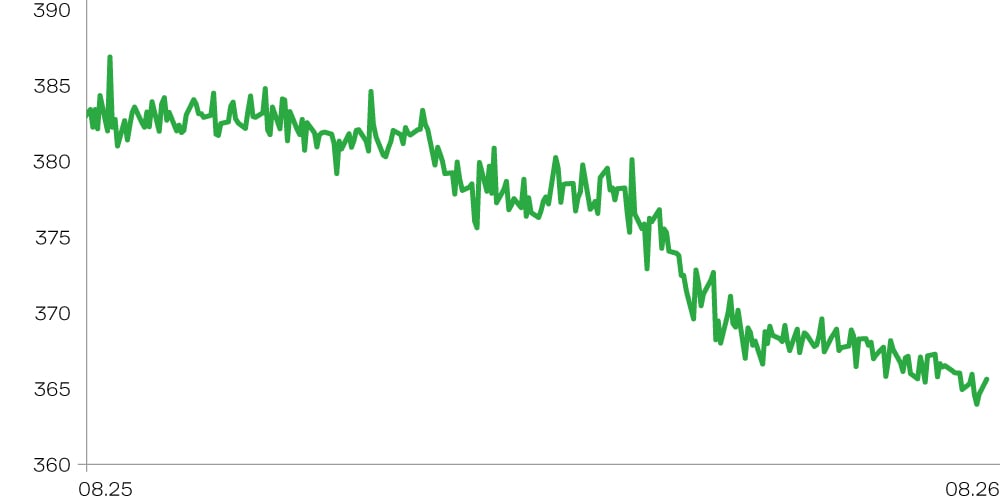
USD/AMD: 1-Year Dynamics
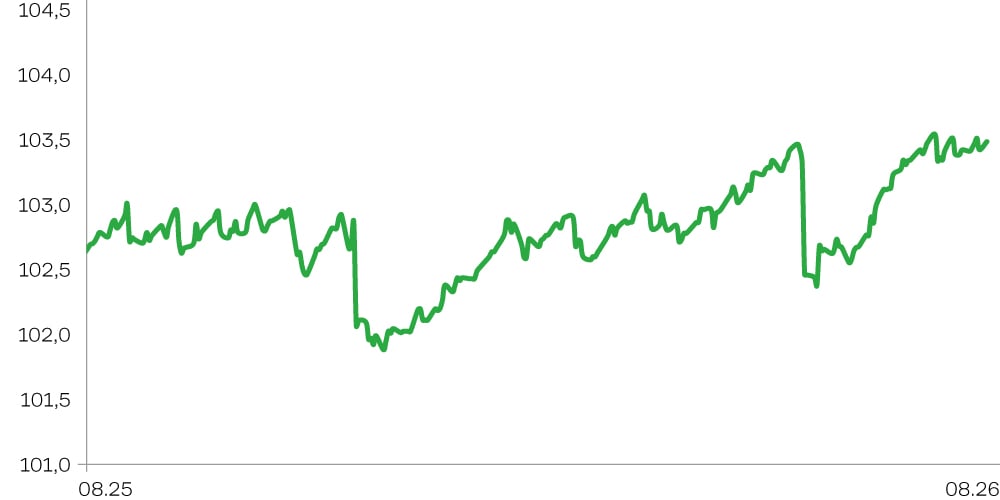
3-Year Corporate Bond Index (AMD) – Post-Update
Armenian equities traded mixed from August 10–24. Telecom Armenia (AMTL) slipped 0.4%, only modestly trimming its 7.1% YTD gain, while ACBA Bank (ACBA) fell 1.9% but remains up a strong 32.1% YTD. The pullback stands in contrast to a robust macro backdrop: Armenia’s economy expanded 6.7% YoY in Q2, nearly 1.5x the 4.5% consensus forecast.
The 3Y corporate bond price index was unchanged, suggesting investors remain on the sidelines ahead of July inflation data, which could drive a reassessment of the Central Bank’s rate path.
The dram strengthened 0.2% against the U.S. dollar. The key medium-term risk is a potential escalation in U.S. sanctions on Iran’s trading partners. Despite the near-term equity pullback, the period’s strong macro data continue to support the fundamental case for Armenian local markets.
Economic Updates
Armenia’s Q2 GDP grew 6.7% YoY, well ahead of the 4.5% forecast and accelerating from 5.2% in Q1; QoQ growth reached 19.2%. Growth was broad-based, led by financial services (+22.4% YoY), mining (+21.5%), construction (+20%) and information & communications (+15%). Agriculture fell 15.3%, while manufacturing and trade were notably softer at +2.2% and -0.2%, respectively. The breadth of the expansion points to a more durable growth cycle and provides a constructive backdrop for banks and telecoms.
Full-year 2026 forecasts remain split: S&P Global Ratings sees growth slowing to 4.9%, while the Eurasian Development Bank recently reaffirmed its more bullish 6.0% forecast, supported by resilient consumer and investment activity.
Armenia’s international reserves topped $6bn for the first time, reaching a record $6.189bn at end-July (+4.7% MoM; +52% YoY). The sharp build in reserves materially strengthens the country’s external buffer against shocks and geopolitical risk.
Armenia–Iran trade is coming under closer scrutiny as the U.S. threatens new sanctions on Iran’s trading partners. Bilateral trade turnover rose 8.4% YoY in 1H26. No specific measures against Armenia have been announced, but a further escalation could raise compliance risks for companies exposed to Iran and disrupt regional trade flows.
Corporate News
AMX listed $2m of U.S. dollar-denominated bonds issued by Solis CJSC, comprising 20k notes with a $100 face value, an 8% coupon and a 48-month maturity.
Two-Week Outlook
From August 28 through September 7, the market focus will shift to July macro data—inflation, economic activity, the trade balance and the first estimation of august inflation data.
Following the strong Q2 GDP print, investors will look for evidence that growth is holding up into early Q3, while inflation remains critical for the Central Bank’s rate path. With full-year 2026 forecasts split between S&P Global Ratings at 4.9% and the EDB at 6.0%, the next economic-activity print should provide an early read on which scenario is closer to the actual H2 trajectory. Iran-related sanctions risk will also remain firmly on the radar.