
Investment Review №355. The Rally Isn't for Everyone
One step forward—two steps back
Following a rebound in September, local stock markets resumed their correction
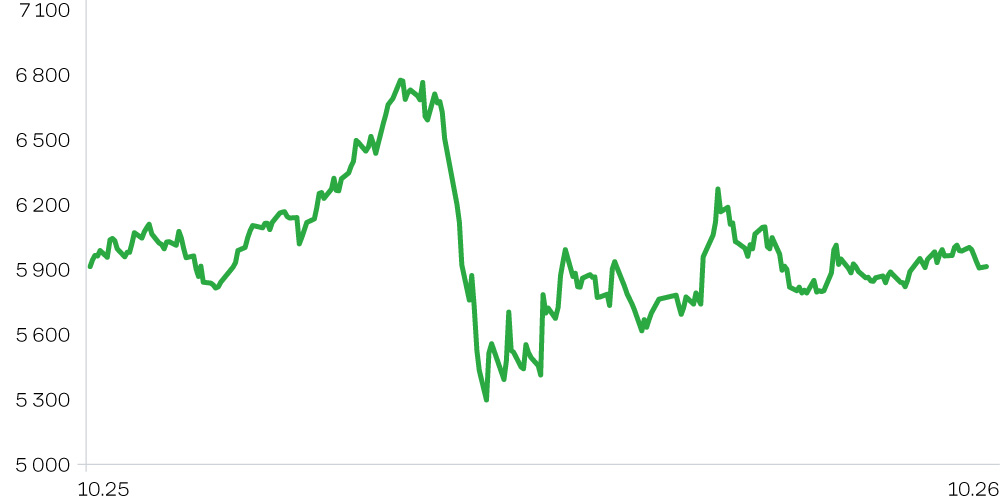
DFM General Index: 1-Year Dynamics
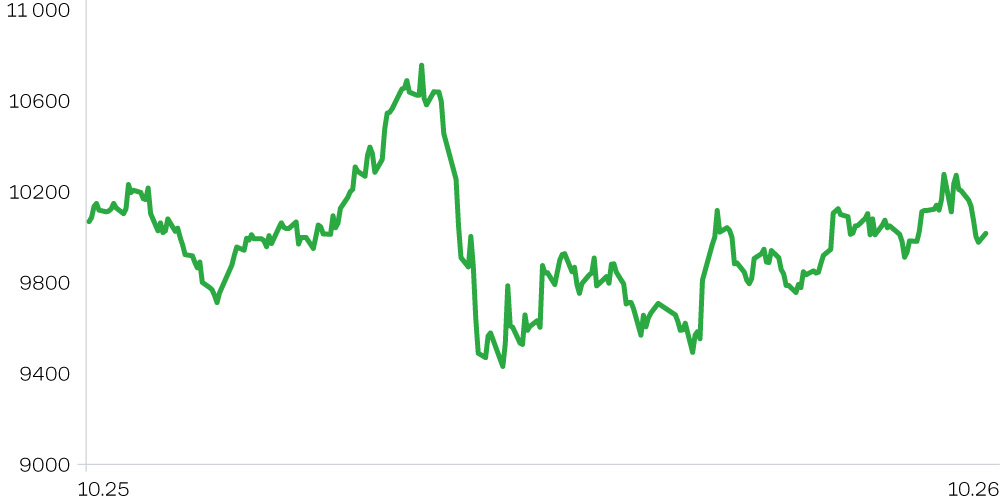
Abu Dhabi Securities Exchange Index: 1-Year Dynamics
Brent Oil, 1-Year Dynamics
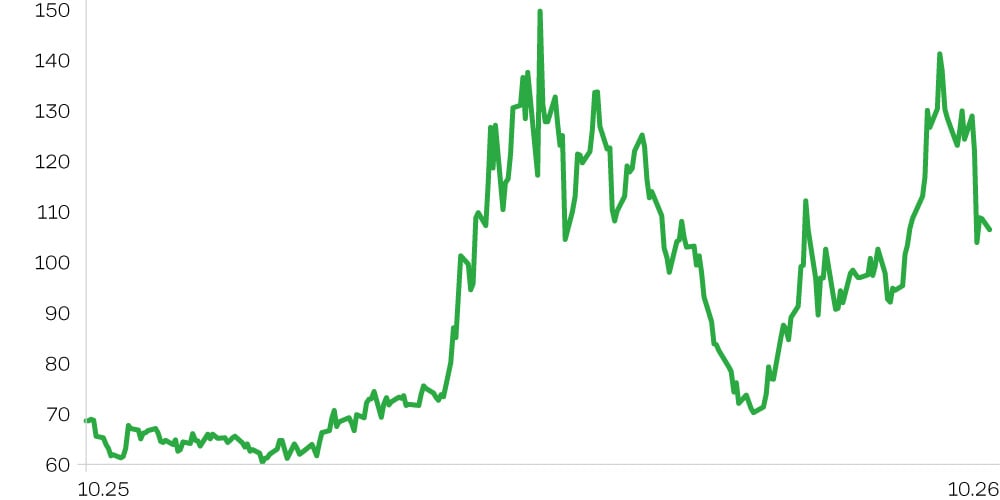
UAE equities weakened over September 21 to October 5, pressured by lower oil prices and persistent regional risk. The DFMGI fell from 5,960 to 5,908 points (−0.9%) and the ADXGI from 10,106 to 10,011 points (−0.9%), while the S&P 500 edged up from 7,765 to 7,774 points (+0.1%). Brent crude dropped from $116 to $100 per barrel (−13.7%) as Middle East export flows began to normalize and G7 countries released reserves.
Energy led sector performance (+1.03%), with ADNOC Gas up 1.54% and ADNOC Drilling gaining 0.70%. Consumer Discretionary gained 0.88%, Industrials fell 0.05%, Communication Services dropped 0.72%, Real Estate declined 0.87%, and Financials lost 0.90%. Consumer Staples showed the weakest performance (−4.08%). Among individual names, Amanat Holdings (+5.74%), Abu Dhabi Aviation (+3.45%), and Aldar Properties (+2.13%) led, while Air Arabia lost 6.31%, Investcorp Capital 5.73%, and Phoenix Group 4.92%.
UAE bond proxy yields rose 89bps from 5.62% to 6.51%, outpacing the 33bps increase in U.S. 10Y Treasury yields, which climbed from 5.07% to 5.40%. Consequently, the yield spread widened 56bps to 111bps, signaling a pronounced relative repricing of UAE risk versus the U.S. risk-free benchmark.
Economic Updates
UAE’s non-oil private sector maintained strong momentum in September, with the UAE PMI holding at a 20-month high of 55.3 and the Dubai PMI rising to 54.5 from 54.1. However, UAE firms’ output prices increased at the fastest pace in >15 years, driven by higher input and freight costs. Resilient demand continues to underpin economic growth, but intensifying price pressures raise the risk of tighter financial conditions persisting for longer.
Abu Dhabi continued to consolidate its position as a global wealth management hub. Temasek plans to open an office in the emirate in 2027, subject to regulatory approvals, while Pantheon has already established its first Abu Dhabi office. The growing presence of international asset managers broadens the emirate’s financial ecosystem and expands the potential institutional investor base for local assets.
ADX joined the SWIFT network, strengthening cross-border settlement infrastructure and improving access for international investors. The move follows a New York roadshow featuring 14 major issuers across Energy, Financials, Real Estate and Communication Services.
Corporate News
Aldar and Arada signed a strategic agreement covering projects with a combined value of ~ $4.1bn. The deal includes joint development of up to 1.5m sqm in Seih Al Sdeirah and the sale of three Yas Island plots to Arada. For Aldar, the partnership accelerates land-bank monetization while sharing development risk.
e& UAE commercially launched the world’s first mobile network operating in the upper 6 GHz band, leveraging its existing 5.5G infrastructure. The 6,425-6,775 MHz band provides up to 350 MHz of contiguous spectrum, laying the groundwork for the eventual transition to 6G. The launch reinforces the operator’s technology leadership, although near-term network upgrades could drive incremental capex.
ADNOC increased naphtha shipments to Asia via offshore transfers off Oman, bypassing the Strait of Hormuz. In August-September, ADNOC Maritime transported ~1.5m tonnes of cargo across 25 vessels for subsequent ship-to-ship transfers off Sohar. The alternative route mitigates the risk of export disruptions, albeit at the cost of higher transportation expenses.
Two-Week Outlook
Crude dynamics will remain the dominant catalyst for UAE equities over the next two weeks. On one hand, the recovery in Middle East supply and the decision by seven OPEC+ members to hold November quotas at September levels, 31.01mbd in aggregate, are capping prices. On the other, an 8m-barrel draw in U.S. petroleum product inventories and lingering risks to key shipping routes limit the scope for further declines.
Easing tensions around critical shipping corridors could unwind part of the geopolitical premium in crude. Renewed supply disruptions, however, would support oil prices and energy stocks while increasing cost and operational risks for airlines and logistics operators. In the current environment, companies with resilient contracted revenue and limited interest-rate sensitivity offer a more defensive profile. Banks and real estate developers could remain under pressure until bond yields stabilize.