
Investment Review №355. The Rally Isn't for Everyone
chatgpt.com
This is no time to take risks
Mixed macroeconomic data for August and September led local market participants to adopt a cautious stance
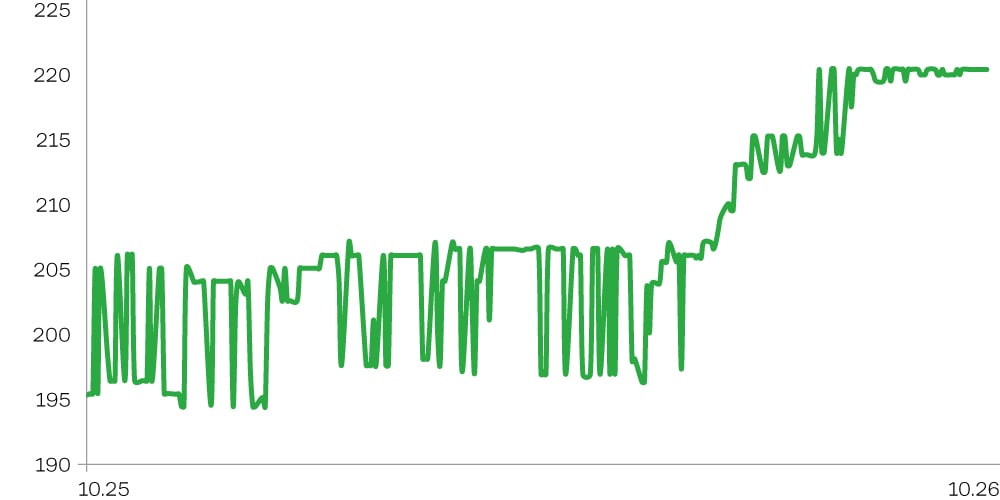
Telecom Armenia Stock Performance (Post-IPO)
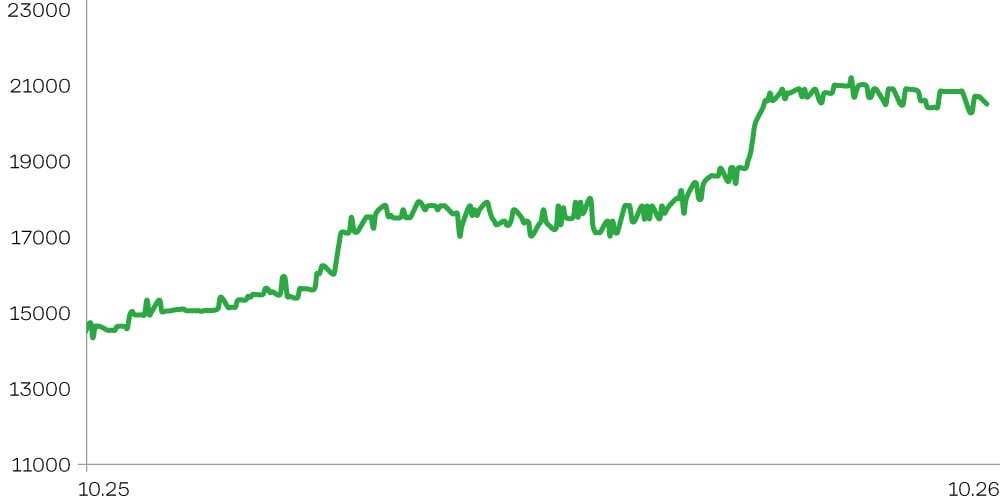
ACBA Bank: 1-Year Stock Trends
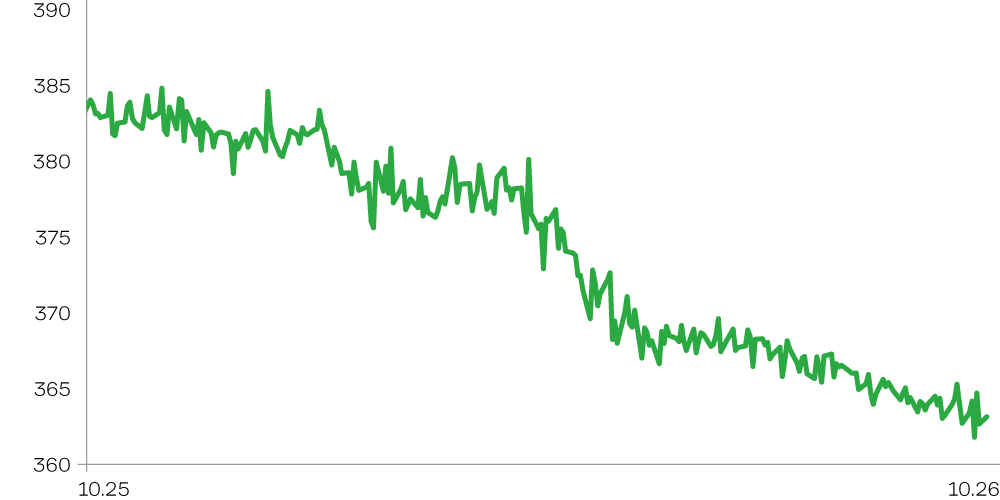
USD/AMD: 1-Year Dynamics
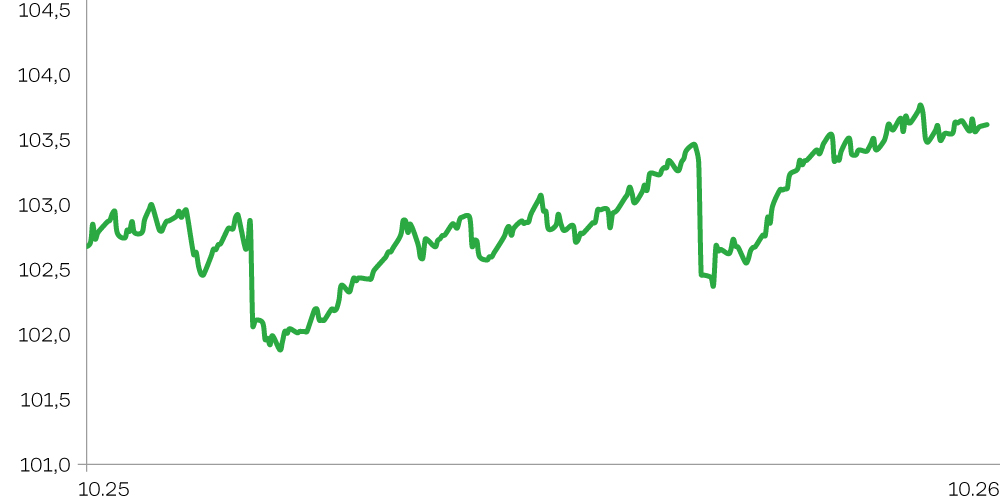
3-Year Corporate Bond Index (AMD) – Post-Update
Between September 21 and October 5, 2026, Armenian assets delivered mixed performance. Telecom Armenia (AMTL) inched up 0.2%, lifting its year-to-date gain to 7.5%, while Acba Bank lost 1.6% but remains up 31.5% YTD. Macroeconomic releases appeared to be the main driver: September inflation printed at 4.3%, above the Central Bank’s 3% ±1 pp target band, while economic activity rose 5.2% YoY, below forecasts.
The 3-year Corporate Bond Index rose 0.1%, and the dram (AMD) appreciated 0.2% against the U.S. dollar. Despite a widening external trade deficit, the currency’s strength was partly supported by stronger remittances (+37% YoY in July) and record tourist arrivals. Macro data for the period were mixed: economic activity rose in August, but industrial production contracted. If that weakness persists alongside soft exports, it would likely exert a moderately negative drag on overall growth.
Economic Updates
Between September 21 and October 5, 2026, August macroeconomic indicators and September inflation data were published.
Armenia’s Economic Activity Index (EAI) rose 5.2% YoY and 4.5% MoM in August 2026 (vs. 6.5% in July). That said, performance by sector was mixed: construction (+23.8% YoY) and services ex-trade (+11.4%) expanded by double digits, whereas industrial production contracted 4.3% YoY (+3.1% for the seven months), and domestic trade turnover was essentially flat (+0.1%).
Armenia’s PPI inflation accelerated to 8.9% YoY in August, its highest in three months, beating the 8.7% forecast and up from 8.5% in July. On a sequential basis, the index declined 0.2% MoM after a 0.5% increase the previous month.
Consumer inflation was 4.3% YoY in September (vs. 4.4% in August; below the 4.9% forecast), with prices up 0.2% MoM. Inflation remains above the Central Bank of Armenia’s 3% ±1 pp target band. Food and beverage prices increased 6.2% YoY, non-food goods prices rose 2.4%, and services tariffs were up 2.9%, pointing to pressure concentrated in food. If domestic inflationary pressures persist alongside external price headwinds, the probability of additional policy tightening before year-end is high.
Armenia’s trade deficit widened to $516.2m in August (vs. $346.8m a year earlier) but remained below July’s record. Imports rose 14.9% YoY, and exports returned unexpectedly to growth (+1.3% YoY) after July’s decline. Year-to-date, exports are down 6.5% and imports are up 9.3%.
Corporate News
Team Holding raised around $35m in Armenia’s capital market, completing ahead of schedule a three-stage public offering of corporate bonds totaling $31.5m and AMD 1.4bn. Freedom Finance Armenia acted as underwriter. Proceeds will primarily fund capex, including development of the Group’s energy and infrastructure businesses.
Two-Week Outlook
No major macro releases are scheduled for October 9–19, 2026. In the absence of new data, the market will likely focus on previously published figures, including inflation at 4.3% and slowing economic growth, central bank communications, and the external backdrop, particularly fuel prices. In September, gasoline prices in Armenia rose 11.4%, with AI-92 reaching a record AMD 600 per liter, while diesel prices jumped 28%. The key market risk remains persistently elevated inflation, which will shape central bank policy and, consequently, drive local yields and asset prices.