
The largest sovereign wealth fund invested $1.2bn in SpaceX shares: what it means for investors
Stock Market News
12 августа 2026, 21:32
Norway’s Government Pension Fund, the world’s largest sovereign wealth fund with assets of about $2.3tn, has disclosed an investment in SpaceX (SPCX). As of the end of June, it owned 0.05% of the aerospace company’s equity, valued at $1.22bn. The entry of one of the world’s largest institutional investors into SpaceX’s shareholder base could become an additional confidence factor for the stock after the high volatility that followed the IPO.
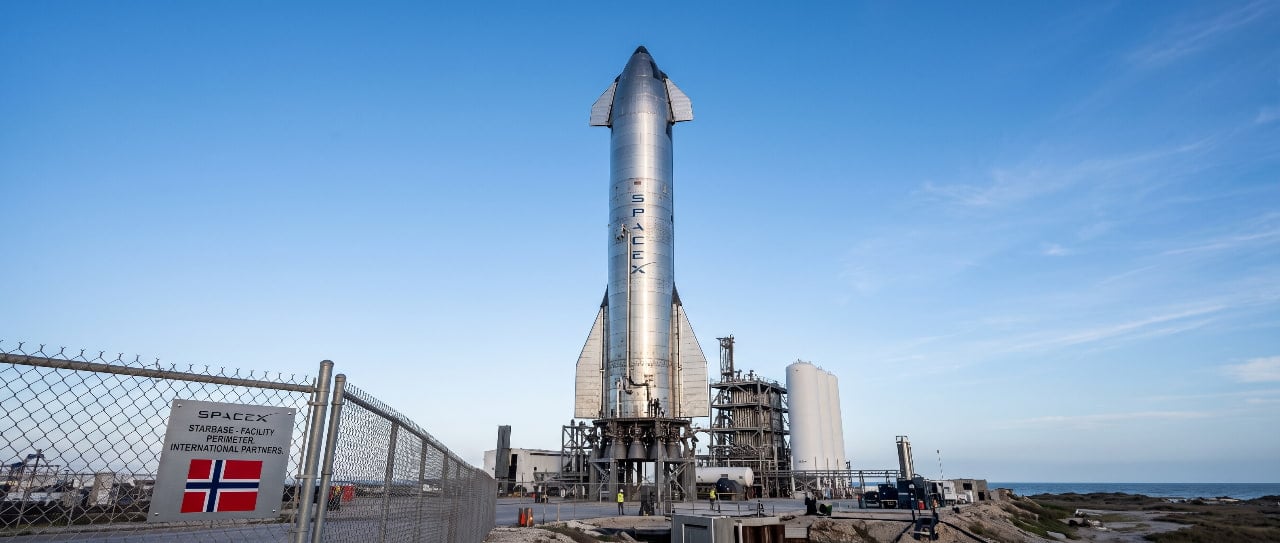
Why the world’s largest sovereign wealth fund bought SpaceX shares
Norway’s Government Pension Fund is managed by Norges Bank Investment Management. It invests the country’s oil and gas revenues and holds stakes in about 7.1 thousand companies worldwide. On average, the fund owns around 1.5% of public companies’ shares, so its 0.05% stake in SpaceX remains small relative to the scale of its portfolio.
For comparison, the fund holds 1.28% of Nvidia worth about $62bn, 1.27% of Microsoft worth $35bn, 1.24% of Apple worth $52bn, and 1.17% of Alphabet worth $50bn. Overall, 72.1% of the fund’s assets at the end of the first half of the year were in equities, while another 25.8% were in fixed-income instruments.
According to Freedom analyst Natalia Milchakova, the relatively small amount invested in SpaceX may be explained by the fund’s portfolio structure and the higher risk level of technology stocks. Such securities can be used for diversification, while a significant portion of capital is allocated to less risky instruments, including bonds.
At the same time, the very appearance of the world’s largest sovereign wealth fund among SpaceX shareholders is a positive factor for the company. Participation by such an institutional investor indicates that interest in the stock remains even after sharp price swings following the IPO.
SpaceX shares fell back below the IPO price after the August rally
After the IPO on June 12, SpaceX shares opened trading at $150 and on the first day rose to $176.52, and by June 16 reached an all-time high of $225.64, which is 67.1% above the offering price of $135. The stock then began to decline: by early August it had lost more than 40% from its peak amid investors’ doubts about the company’s lofty valuation.
In August, the quotes briefly recovered: over three trading sessions the shares gained almost 30% and for the first time since mid-July rose above the IPO price. However, on August 11 the stock fell 3.9% to $133.29, again dropping below the offering price.
Despite the volatility, Wall Street’s view of SpaceX remains mostly positive. The consensus rating for the shares corresponds to “outperform”: 30 of 40 analysts recommend increasing positions, while three advise selling.
SpaceX revenue nearly doubled in the second quarter
One of the key events after the IPO was SpaceX’s first quarterly report as a public company. In the second quarter, revenue rose from $4.1bn a year earlier to $7.81bn and exceeded the market forecast of $6.93bn. Net loss meanwhile nearly halved—from $1bn to $541m.
The operating loss of the AI segment came to $1.26bn versus the $2.39bn expected by the market. Capital expenditures reached $18.37bn, and the number of Starlink users—the only profitable business line at SpaceX—increased to 12 million.
Even before the results were released, Freedom analysts noted that the first report should be a test of SpaceX’s high market valuation. The investment thesis around the company was largely based on further scaling of Starlink, development of Starship, an increase in the number of launches, and an expansion of defense contracts.
SpaceX expands its artificial intelligence business
At the same time, the company is increasing investment in AI infrastructure. On August 6, SpaceX announced that together with Tesla it will invest $16.8bn at the initial stage to build the Terafab complex in Texas. The facility will manufacture advanced AI chips and is intended to meet the companies’ growing demand for computing power. In their forecasts, SpaceX and Tesla’s combined demand is expected to exceed 1 terawatt of compute capacity over time.
Another growth area has been expanded cooperation with Nvidia (NVDA). SpaceX plans to use Rubin GPUs and Vera CPUs in new Starmind AI1 satellites. The computing systems are designed to perform in-space tasks comparable in complexity to data processing in terrestrial data centers.
Not an individual investment recommendation.