
Freedom Broker initiates coverage of Cerus with a “Buy” rating and a $6.50 target
Stock Market News
21 August 2026, 21:40
Freedom Broker analysts see upside potential in shares of U.S. biomedical company Cerus Corporation (CERS) and recommend buying them. The target price is $6.50 per share.
Cerus develops technologies to enhance the safety of donated blood. Its flagship product is the INTERCEPT Blood System, a system for treating donated blood components that reduces the risk of pathogen transmission during transfusions.
Cerus’ platelet and plasma treatment technology is FDA-approved for use in the U.S. and bears the CE mark, confirming compliance with EU requirements and allowing the products to be sold in the European market.
Recurring sales support the resilience of Cerus’ business
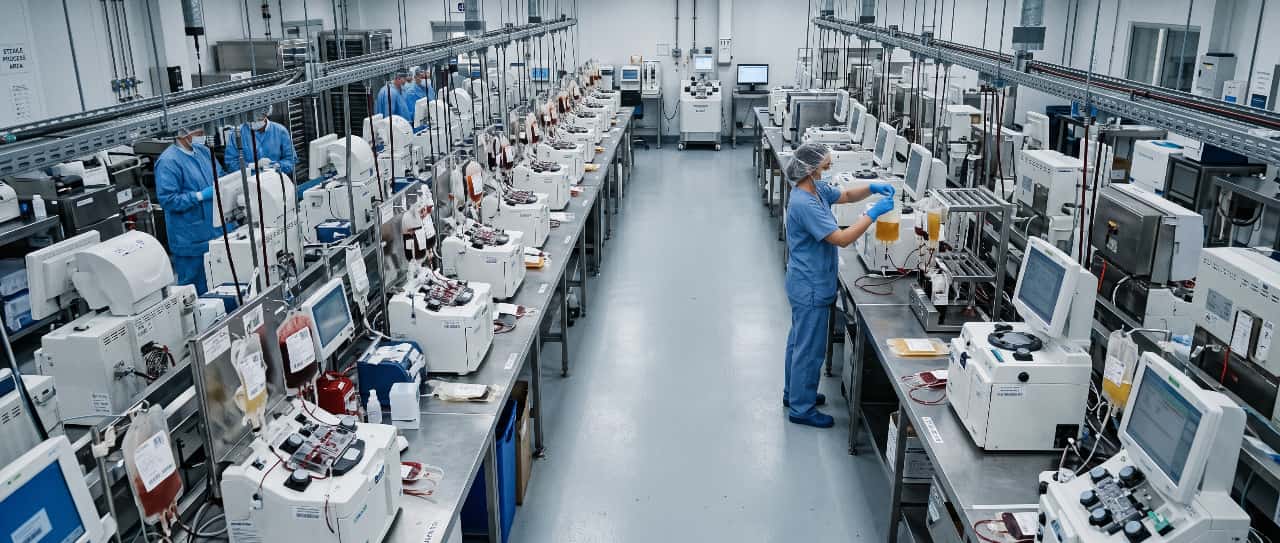
One of Cerus’ key advantages, according to Freedom Broker analysts, is its “razor-and-blades” business model. The company installs equipment at blood centers, after which those facilities regularly purchase Cerus’ disposable kits for processing blood components.
Consumables account for up to 98% of quarterly product revenue, and about 90% of the business is recurring. Equipment installation also raises customers’ switching costs to alternative solutions and creates multi-year demand for Cerus consumables.
The core focus remains the INTERCEPT system for platelet processing. Freedom Broker estimates U.S. market penetration is already around 60–65%. The system has FDA approval and CE certification, and its technology can neutralize a broad range of viruses, bacteria, and parasites.
IFC becomes a new growth driver
Another driver, analysts say, is INTERCEPT Fibrinogen Complex, or IFC — Cerus’ system for processing plasma to produce concentrated fibrinogen used for bleeding control.
In Q2 2026, U.S. revenue for this segment reached $6.7 mln versus $5.6 mln a year earlier. Excluding deferred revenue recognized a year earlier, growth was about 40%, while underlying demand increased by 43%.
Cerus raised its 2026 IFC revenue outlook to $23–25 mln, implying 40–50% growth. At the same time, management currently estimates the company’s share of the U.S. market for this product at only about 10%.
Analysts also point to additional upside from IFC’s transition from shipments of the finished product to the sale of kits. Kits currently account for about 70% of IFC volumes, and the company expects to complete the transition in 2027. This model should reduce logistics costs and have a positive impact on business profitability.
Freedom expects Cerus’ EBITDA to nearly double in 2027
According to Freedom Broker’s forecast, Cerus sales could total $256 mln in 2026, $276 mln in 2027, and $305 mln in 2028. Adjusted EBITDA is expected to increase from $15 mln in 2026 to $30 mln in 2027 and $41 mln in 2028.
The company has posted positive adjusted EBITDA for nine consecutive quarters. In Q2 2026, the figure reached $3 mln versus $0.9 mln a year earlier, and for the first half of the year — $7 mln versus $1.1 mln. Operating loss for the quarter narrowed to $1.9 mln from $3.4 mln a year earlier.
Freedom Broker expects adjusted EBITDA margin to rise from about 6% in 2026 to 11% in 2027 and 15% by 2030. One factor supporting margin expansion is expected to be IFC’s full transition to the kit sales model.
New products could expand Cerus’ market
Analysts also link long-term potential to pathogen-reduction technology for red blood cells. This is the largest donated blood component by volume: red blood cells account for about 70% of transfusions worldwide. Entering this segment could transform Cerus from a company focused primarily on platelets into a provider of solutions for a broader range of blood components. However, the initiative still depends on clinical trial results and further regulatory procedures.
Another potential catalyst is the new INT200 device — a system for processing red blood cells and reducing the risk of pathogen transmission during blood transfusions. Cerus filed for FDA approval in Q2 2026, and a regulatory decision is expected in early 2027. Analysts consider INT200 an important tool to preserve and further expand the company’s installed equipment base.
Risks highlighted by Freedom Broker
The key risks to the investment thesis relate to clinical trials and regulation. Negative results from the RedeS study or further delays in European certification for the red-blood-cell system could reduce this segment’s potential contribution to the company’s valuation. A delay in INT200 approval, in turn, could slow the rollout of new equipment and the associated growth in platelet processing volumes.
Profitability is another factor. In Q2 2026, gross margin in the product business declined to 51.4% from 55.2% a year earlier due to euro appreciation and inflationary pressure on costs. Freedom Broker notes that keeping margin below 52% could extend the timeline for Cerus to reach GAAP profitability.
Freedom Broker’s $6.50 target price is based on a combination of a five-year DCF model and relative valuation. For the DCF, analysts used a terminal EV/EBITDA multiple of 35x, and for the comparable approach — EV/Sales NTM of 5x.
Other Freedom ideas in the biotechnology sector
Previously, Freedom Broker maintained a “Buy” recommendation on shares of BioMarin Pharmaceutical (BMRN) with a $110 target price. Following Q2 results, analysts raised their forecasts for the company’s earnings for 2026–2028, and one of the key growth drivers remains VOXZOGO, whose sales increased 14% year over year.
Freedom analysts also expect a pickup in the U.S. biotechnology sector. Among potential industry drivers, they highlight clinical trial results, FDA decisions, and M&A activity. In Q1 2026, the volume of biotech M&A deals reached nearly $49 bln.
Not an individual investment recommendation.