
City Therapeutics is listing on Nasdaq under the ticker CTY with an anti-thrombosis drug that has already shown a reduction in the level of the target protein in the first cohorts of healthy volunteers. The company expects additional study results at the end of 2026. Trading is scheduled to begin on October 16, and the IPO range is $17–19 per share. If priced at the midpoint of $18, the company expects to raise $174.96 million, and its market capitalization will be $905.98 million.
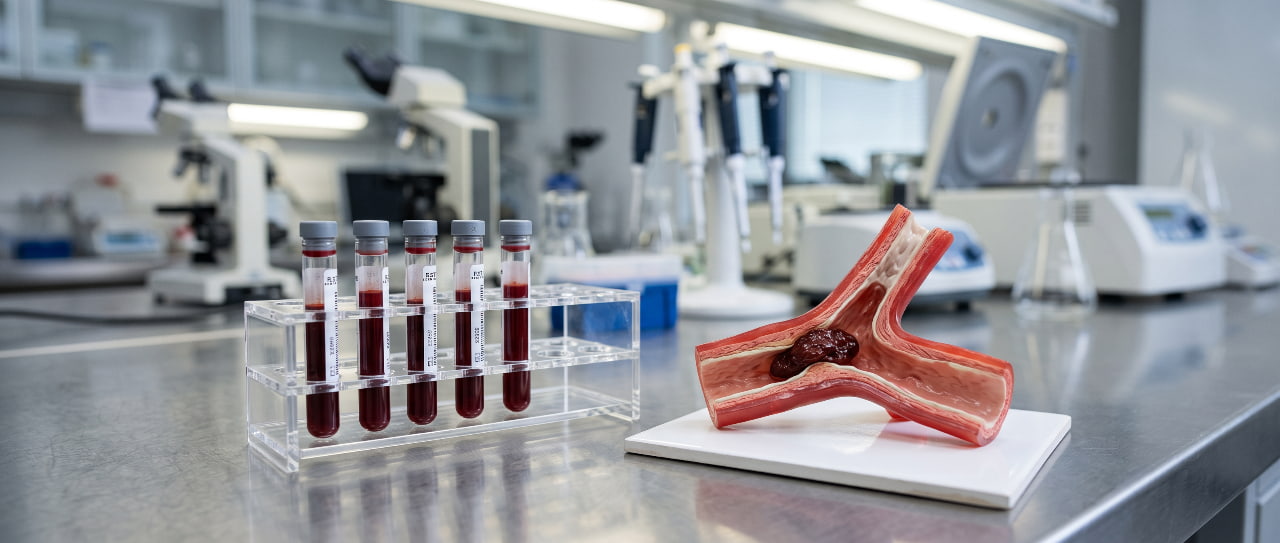
How City Therapeutics’ technology works
City Therapeutics is a U.S. biotechnology company developing drugs based on RNA interference. This mechanism makes it possible to suppress the production of certain proteins associated with disease. The company’s portfolio includes three programs: for thromboembolic diseases, an inherited eye disease, and anemia associated with chronic diseases.
City’s platform combines target selection, the creation of molecules that suppress activity of the relevant genes, and drug-delivery technologies to specific tissues. The company uses artificial intelligence and machine learning to design molecules. In its view, this reduces development cycles from months to weeks.
The company was founded in July 2023 and is incorporated in Delaware. In less than three years, it advanced three programs to clinical trials or preparation for them. Going forward, City expects to file one to two new applications each year to study its drugs in humans.
Lead drug: reducing a clotting factor without excess bleeding risk
The company’s main experimental drug is CITY-FXI. Its core goal is to prevent dangerous blood-clot formation while also reducing bleeding risk. The drug targets factor XI, a protein involved in blood clotting. The company chose this target because it contributes to pathological thrombosis but plays a limited role in normal hemostasis.
In 2026, City began a phase 1 study of CITY-FXI in healthy volunteers. In the first three cohorts, participants received single subcutaneous doses of varying sizes. After a 15 mg dose, factor XI levels fell by more than 60%; after 50 mg, by almost 80%; and three weeks after a 150 mg dose, by 85%. According to the company, the drug was generally well tolerated by participants.
These results show engagement of the selected target. City plans to evaluate the efficacy and safety of the drug for thrombosis prevention in a phase 2 study, which it expects to start in mid-2027. It will include patients after knee replacement surgery—an operation that increases the risk of blood clots.
Going forward, the company intends to study CITY-FXI for the prevention of recurrent stroke, in atrial fibrillation, and other conditions, including in patients for whom standard oral anticoagulants are not suitable due to bleeding risk. Anticoagulants are drugs that reduce blood clotting.
Two more programs: preserving vision and treating anemia
The candidate CITY-RBP4 is being developed to treat Stargardt disease type 1—an inherited disorder that leads to progressive loss of central vision. In the materials provided, the company notes that there are currently no approved treatments for this disease.
The drug targets the RBP4 protein, which transports vitamin A from the liver to the eye. In Stargardt disease, vitamin A breakdown products can accumulate in the eye and damage tissues. In a preclinical study in primates, CITY-RBP4 achieved approximately 90% suppression of circulating vitamin A and RBP4 at doses of 3 mg/kg and 10 mg/kg. In mid-2026, City filed an application to conduct clinical trials. The start of phase 1 is scheduled for the end of 2026, with initial results expected in mid-2027.
The third program, CITY-TFR2, is aimed at treating anemia associated with chronic diseases. During inflammation, the body may produce more hepcidin—a hormone that limits iron availability. The drug is intended to reduce its level so that iron can once again be used to produce red blood cells.
The first development focus will be anemia in myelofibrosis. An investigator-initiated study is planned to start in China at the end of 2026, with results to be presented in mid-2027.
IPO terms and near-term milestones
City Therapeutics plans to offer 9.72 million shares at $17–19. At the midpoint of $18, proceeds would total $174.96 million. The underwriters are Goldman Sachs (GS), Jefferies (JEF), Stifel (SF), and Oppenheimer & Co., part of Oppenheimer Holdings (OPY).
The next development milestones are additional CITY-FXI results at the end of 2026; the planned start of trials for CITY-RBP4 and CITY-TFR2; and then publication of the first data from these programs in mid-2027.
This is not an individual investment recommendation.