
Freedom analysts maintained their “Buy” recommendation on Delta Air Lines (DAL) shares, setting a target price of $108. This implies upside potential of 38.27% from the current quote of $78.11. In the experts’ view, the airline’s ability to raise fares and expand premium services supports the investment appeal of the business, despite expensive oil and a lowered full-year profit forecast.
About the company
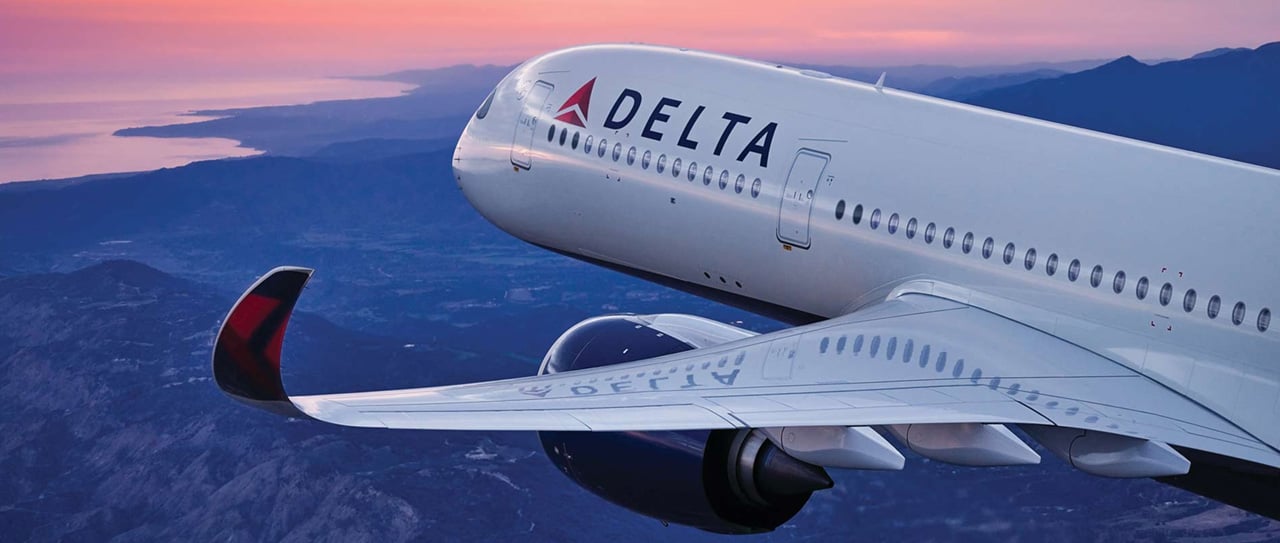
Delta Air Lines is one of the world’s largest airlines and a founding member of the international SkyTeam alliance. It provides passenger and cargo transportation, develops a loyalty program and partner products. The business is also complemented by an aircraft maintenance and repair unit and its own oil refinery.
Fare increases almost fully offset higher costs
The main takeaway from Freedom analysts is that Delta’s results confirm the company’s ability to pass rising expenses through into service pricing. By their estimate, in Q3 the airline offset about 99% of the increase in costs in dollar terms. This made it possible to keep profit roughly at last year’s level, although profitability declined.
The experts acknowledge that they previously assessed fuel price prospects too optimistically. However, Delta’s ability to raise prices proved stronger than they expected. Support comes from premium travel, resilient demand, and diversified revenue sources.
At the same time, passengers’ tolerance for further fare increases remains one of the key risks. Analysts link margin recovery in 2027 to a slowdown in non-fuel cost growth, normalization of the refinery’s operations, and favorable fuel-cost dynamics. In the new review, Freedom lowered the target price to $108 while maintaining a positive view of Delta’s long-term prospects.
Passenger revenue rose 15%
In Q3 2026, Delta’s passenger revenue reached $15.5 billion, up 15.0% year over year with flat capacity. Revenue per passenger mile—revenue from carrying one passenger for one mile—rose 14.2% to 22.80 cents. The load factor remained at 86%.
Operating profit totaled $1.7 billion, down 1.5%. Operating margin fell by 1.7 percentage points to 9.4%. Net profit reached $1.1 billion, up 1.8%. Operating cash flow declined 7.3% to $1.7 billion, free cash flow fell 44.4% to $463 million. Gross capital expenditures increased 26.5% to $1.4 billion. The company continued to reduce leverage: after repaying $1.2 billion of obligations, adjusted net debt amounted to $13.4 billion, down 14.3% year over year.
Premium seating and loyalty support the revenue mix
Revenue from premium seating rose 17.6% to $6.8 billion. The number of seats in this segment increased 6%, and the load factor rose by almost 2 percentage points. For the second quarter in a row, premium seats generated more revenue than standard-class tickets.
At the same time, the standard class also accelerated: revenue grew 12.2% versus 7.9% in Q2. Management is developing sales of upgrades to premium cabins and expects to scale this system fully in the first half of 2027. Revenue from award travel under the loyalty program increased 17.5% to $1.3 billion. Compensation from the partnership with American Express (AXP) rose 15% to $2.3 billion. The company expects it to exceed $9 billion for the year. Corporate sales grew at double-digit rates across all sectors, primarily in banking, technology, and energy. Paid advance bookings increased by nearly 20%—the fastest pace since 2022.
Ancillary segments continue to grow
Cargo revenue reached $301 million, up 29.2% year over year. Growth was driven roughly equally by volumes and unit pricing. The aircraft maintenance and repair unit generated $296 million in revenue, 28.1% above last year’s result. Over nine months, the figure reached $990 million, up 59.4%.
Analysts consider these segments an important complement to the passenger business. The head of the maintenance division aims to increase margin by at least 100 basis points annually and deliver double-digit revenue growth in 2027.
Expensive fuel forced a cut to the full-year forecast
Delta’s adjusted fuel expense increased 61.5% to $4.1 billion. The average price rose 60.4% to $3.61 per gallon. Non-fuel costs increased 7.6% to $11.1 billion. Against this backdrop, the company lowered its full-year adjusted earnings-per-share forecast to $5.10–5.60 from the previous $6.50–7.50. Free cash flow expectations were revised to about $2.5 billion versus $3–4 billion.
For Q4, management forecasts revenue growth of about 20% year over year with capacity up about 3%. Operating margin is expected in the range of 7–9%, and EPS at $1.15–1.65. The main source of revenue growth should be international routes. In addition to fuel costs, Freedom highlights risks from competition, delays in aircraft deliveries, and a decline in passengers’ willingness to pay higher fares.
Freedom previously noted Delta’s resilience to rising fuel costs
In July, Freedom analysts raised Delta’s target share price to $103 and kept a “Buy” recommendation after the Q2 report. Adjusted revenue then rose 13.9% to $17.7 billion, and adjusted EPS was $1.56, beating the consensus by 4.5%.
The experts highlighted growth in premium travel, loyalty programs, the cargo business, and maintenance. At that time, Delta reaffirmed its full-year adjusted EPS guidance of $6.50–7.50 and free cash flow of $3–4 billion.
Not an individual investment recommendation.