
Investment Review №333. Right to hedge
Score 0:0
From early November to mid-December, the dynamics on local stock markets were neutral
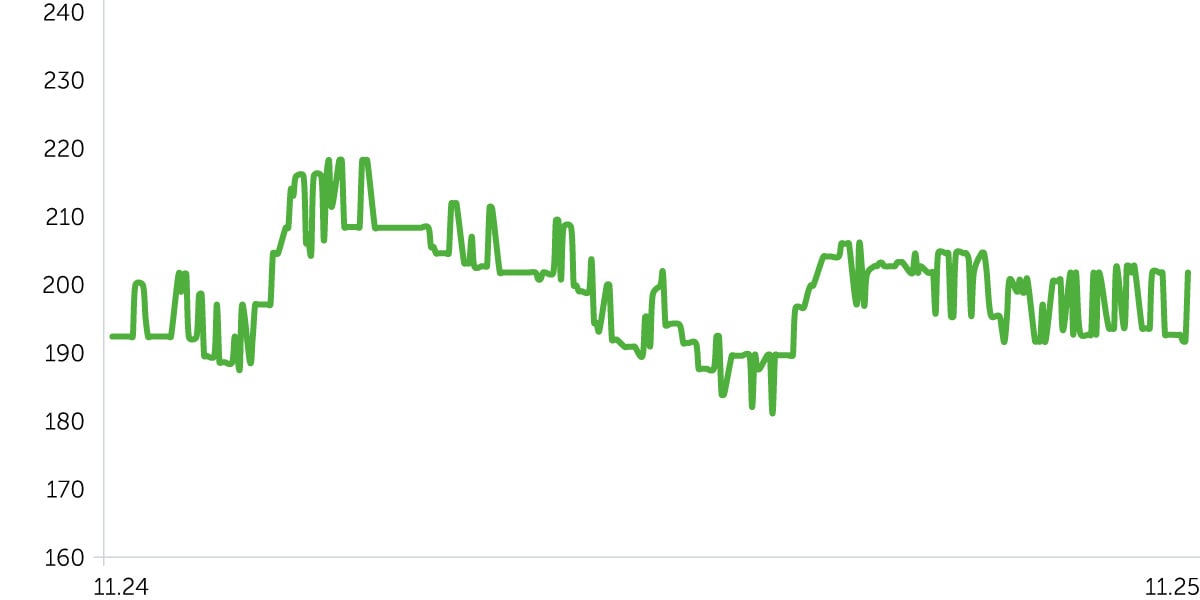
Telecom Armenia: 1-Year Stock Trends
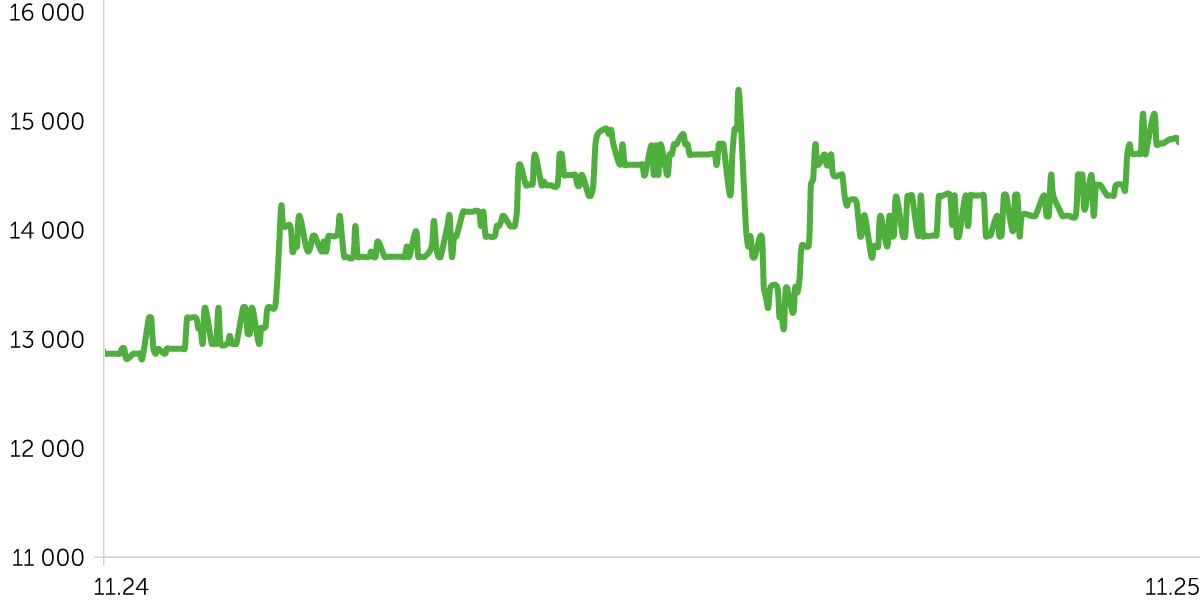
ACBA Bank: 1-Year Stock Trends
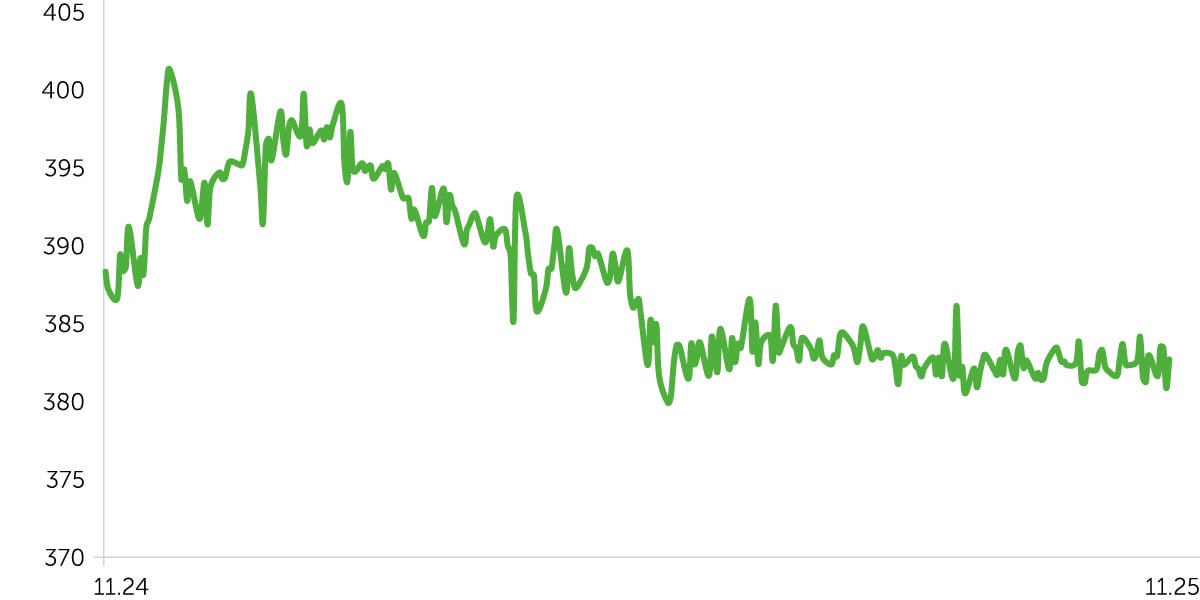
USD/AMD: 1-Year Dynamics
Between November 3 and 17, 2025, the Armenian stock market traded largely sideways. Acba Bank (ACBA) inched up 0.1%, Telecom Armenia (AMTL) remained unchanged. The short-term stability probably reflects a lack of substantial corporate news and limited macro data surprises. If current trends persist—steady inflation alongside economy growth running ahead of expectations—medium- to long-term demand for local financial assets should strengthen. That said, elevated domestic interest in real estate continues to divert capital from financial markets, remaining a headwind for investment demand.
The 3-year AMD Corporate Bond Index did not change over the period either. Bond market stability likely mirrors anchored inflation (including October figures), which ensures predictability of real yields. In addition, the Central Bank governor’s recent comment that the current price growth is primarily demand-driven argues for maintaining the present policy stance. The AMD has been stable against the USD (+0.1%), suggesting balanced external trade flows.
Economic Updates
Between November 3 and 17, 2025, Armenia’s macroeconomic conditions were marked by steady inflation, persistently high activity in the real estate market, and stable growth in the services sector. Meanwhile, industrial output continued to show signs of recovery by the end of September.
• Armenia’s October CPI was 3.7% y/y, slightly below the expected 3.8% but still within the Central Bank’s target range. Inflation was driven primarily by food (+5.6% y/y), alcohol and tobacco (+6.8% y/y), while non-food prices rose by 0.9% y/y. The education sector posted, as usual, the largest gains at 8.3% y/y. Monthly momentum remained moderate (0.3% m/m), implying there were no price shocks. The inflation mix is typical for this period, with faster increases in prices for staple goods and relative stability in services and non-food categories. This backdrop supports the regulator’s wait-and-see stance; Governor M. Galstyan noted that current price pressures are being driven more by demand than by supply factors.
• Construction output grouth was 22% y/y in September and 20.4% y/y for the first nine months. Market demand also remains stable: real estate purchase/sale transactions totaled 5,587 in September, up 12% y/y and 15.8% m/m. In our view, heightened activity in the real estate market continues to weigh on investment demand in local financial markets.
• Armenia’s industrial output continues to signal a recovery, a moderately positive sign for the broader economy. In September 2025, output accelerated sharply, rising 12.1% y/y and 9.6% m/m, following the sector’s contraction from November 2024 through June 2025. Key contributors to this growth included food manufacturing (+6.2% y/y) and tobacco production (+51.8% y/y). By contrast, output fell in basic metals (-58% y/y), beverages (-13.8% y/y), and other non-metallic mineral products (-13% y/y).
• Services activity in Armenia increased 7.9% y/y in September 2025, while slipping 2.0% m/m due to seasonality. Over the first nine months, growth was driven by finance and insurance (+13.8% y/y), as well as information and communication (+18.4% y/y). Transportation, which accounts for 11.4% of the structure, contracted 2.8% y/y. The composition of the services sector growth highlights the economy’s continued focus on high‑margin sectors (finance and IT), which is positive for medium‑term GDP resilience. However, the decline in the transport segment warrants attention, as it may signal issues in foreign‑trade logistics and potential pressure on exporters.
Corporate News
Armenia’s Public Services Regulatory Commission (PSRC) has decided to revoke Electric Networks of Armenia CJSC’s (ENA) license for electricity and capacity distribution. The move comes amid an ongoing legal dispute, with cases challenging the legality of ENA’s nationalization before the Constitutional and Administrative Courts. Revoking the license of the country’s monopoly electricity distribution operator creates uncertainty around business continuity and could exert downward pressure on the pricing of ENA’s outstanding bonds.
Two-Week Outlook
Between November 21 and December 1, several important macroeconomic data releases for Armenia are scheduled. Macro statistics updates are possible as well, though these should not materially change the assessment of the current market environment.
The key release is likely to be Q3 GDP, which is predicted to accelerate to 5.9% y/y from 4.6% y/y. Export and import statistics—already priced into current exchange rates—may shed light on foreign trade trends and shape the market’s FX outlook.
October’s Economic Activity Index (EAI) is also due and will help clarify momentum across sectors and the economy as a whole. We project a relatively stable level, with some cooling compared to September due to seasonal factors and / or a decline in tourism activity (by 7% m/m). The market will also be monitoring the Producer Price Index (+5.9% y/y in September) and retail sales (+0.9% y/y in September).