
Investment Review №351. S&P 500 Hits New Highs
Stress Test Passed
Slowing inflation and the limited impact of the ban on exports to Russia supported local stock prices
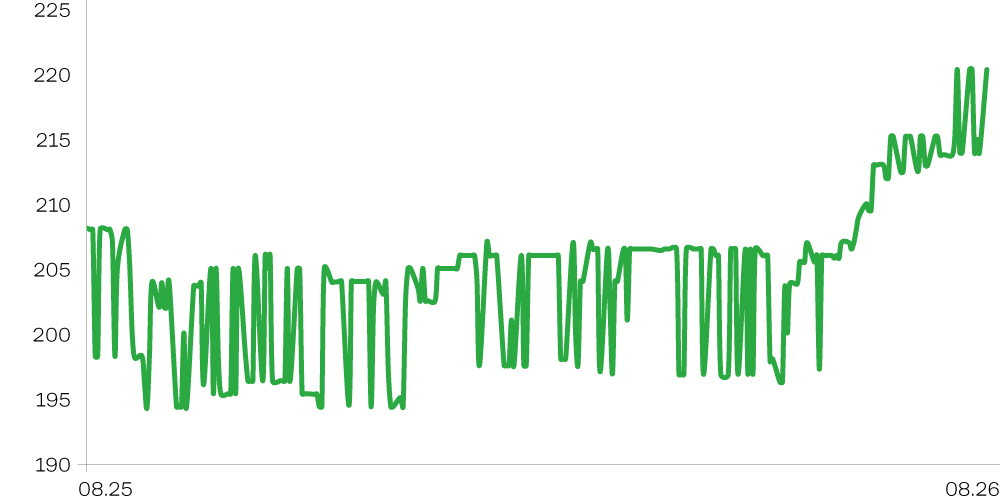
Telecom Armenia Stock Performance (Post-IPO)
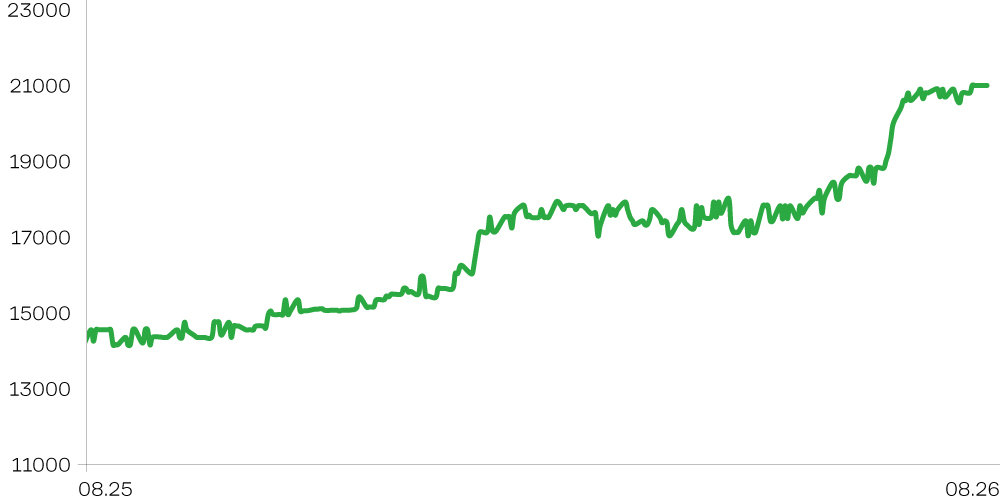
ACBA Bank: 1-Year Stock Trends
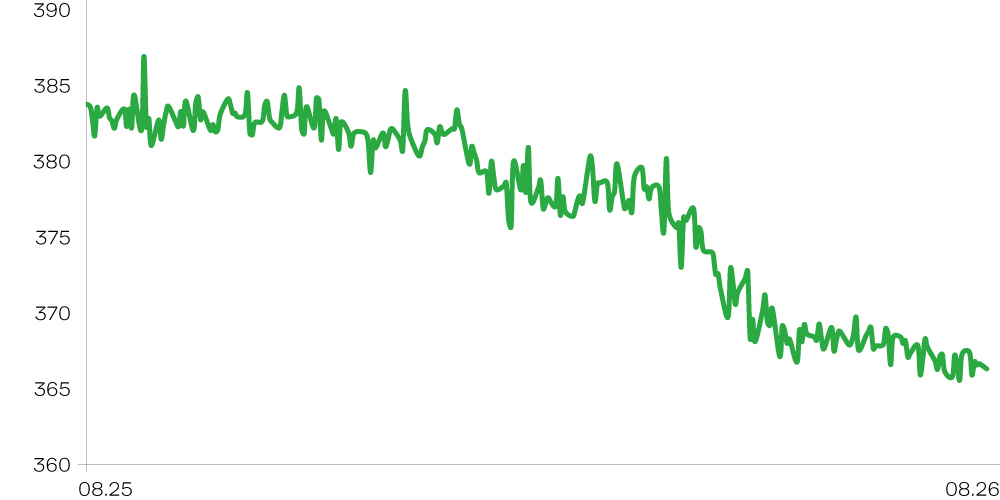
USD/AMD: 1-Year Dynamics
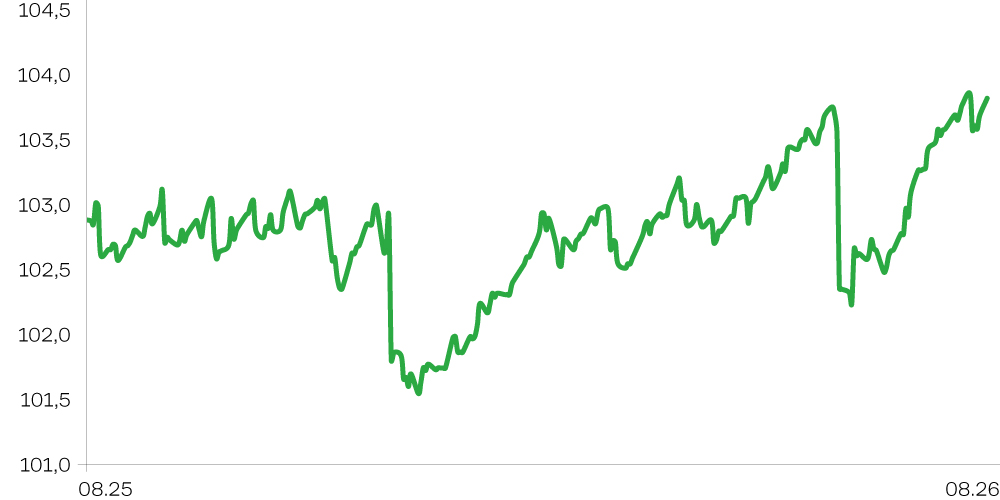
3-Year Corporate Bond Index (AMD) – Post-Update
Armenian equities posted positive returns over the July 27–August 10, 2026 period. Telecom Armenia (AMTL) gained 3.1%, bringing its YTD return to +7.5%, while Acba Bank edged up 0.5% (+34.6% YTD). Sentiment was likely supported by the central bank's decision to hold its refinancing rate, a modest easing of inflationary pressures, and the regulator's commentary pointing to limited pass-through from Russian export restrictions.
The three-year corporate bond price index gained 0.1% over the period, likely reflecting the easing of inflationary pressure, which is supportive of market sentiment via higher real yields. YTD, the index is up 1.5%. The AMD edged marginally weaker, depreciating 0.1% over the period. Overall, the reporting period delivered no material surprises—cooling food price inflation, a broadly anticipated central bank pause, and the regulator's measured assessment of external trade risks collectively underpin a cautiously constructive investor stance toward the local market.
Economic Updates
July CPI in Armenia came in at 4.5% YoY—below the 5.3% consensus—with MoM deflation of 1.4%. Food prices fell 3.8% MoM, though the segment remains the largest contributor to annual price growth (+7.4% YoY). Elevated YoY readings persist in education (+8.3%), restaurants & hotels (+4.9%), and alcohol & tobacco (+7.5%). The moderation in price pressure, in our view, reduces the likelihood of a hawkish shift in the near term, though CPI dynamics will remain the key market focus.
The central bank board held the refinancing rate at 6.5% at its August meeting, balancing resilient domestic demand (June CPI: 5.1% YoY) against slowing growth risks and a weak global backdrop. The decision was broadly in line with market expectations and should not have triggered material repricing in the fixed income market or inflation expectations.
The central bank characterizes the drag from Russian export restrictions as manageable, pegging the impact at ~1.0–1.5% of GDP, per monetary policy department head Vazgen Poghosyan. Imposed in phases since late May under the pretext of phytosanitary violations, the restrictions were broadened to encompass dairy products on July 27. While the scope of affected trade is non-trivial, meaningful domestic reorientation of supply should serve as a partial offset, limiting the net macroeconomic footprint.
Corporate News
The Firebird AI factory in Hrazdan is drawing a more skeptical read in the press following its launch. TECHi, among others, flags a material gap between current commissioned capacity (15MW) and the stated ambition to scale to 300MW and 70,000 GPUs by end-2027, noting that execution remains contingent on reliable power access, financing, equipment delivery timelines, and demonstrable commercial demand. The outlet cites Prime Minister Nikol Pashinyan's address to the National Assembly in June, in which he acknowledged that Armenia no longer commands the power surplus available 12–18 months ago—linking full project buildout to the development of new generation and storage capacity.
Two-Week Outlook
The marquee event for the August 14–24 period will be the preliminary Q2 2026 GDP growth estimate—consensus points to +4.5% YoY—which should offer meaningful insight into the resilience of economic momentum against the backdrop of more acute price pressures over the quarter and Russian export restrictions.
Absent a negative macro surprise, and given the strong May–June trajectory in construction and services, the market will likely price in a continuation of double-digit growth in these segments—a dynamic that could sustain investor interest in the banking sector as an indirect beneficiary of that expansion. Should the Russian restrictions prove contained in their macro footprint, the fixed income and FX market response should remain muted, in our view, though any reduction in export flows—absent successful trade reorientation—carries the potential to exert modest medium-term pressure on the currency. On the upside risk front, an inflation print running materially above expectations or the central bank's target could bring the prospect of a hawkish rhetorical shift back onto the agenda.