
Investment Review №349. High Hopes
Corporate News in Focus of Our Analysts
Apple, Broadcom
On July 8, Apple Inc. (AAPL) and Broadcom Inc. (AVGO) announced a new six-year agreement covering the development and production of custom chips and wireless connectivity components for “multiple generations” of Apple products. AAPL’s total commitments under the agreement will exceed $30bn, with the contract running through 2031. The deal represents the largest commitment to date under Apple’s American Manufacturing Program, supporting the production of >15bn chips in the U.S. and the expansion and modernization of Broadcom’s manufacturing facility in Fort Collins, Colorado, with investment of approximately $1.5bn. For AVGO, the agreement removes a key overhang around AAPL potentially transitioning to in-house solutions. The market had been pricing in the gradual displacement of Broadcom from the iPhone supply chain for several years, similar to the ongoing shift away from Qualcomm Inc. (QCOM). The agreement description leaves room for further optionality, as it explicitly refers to “custom semiconductor solutions”—a notable distinction from previous deals and a development that indirectly supports market speculation around a potential joint development of Broadcom-Apple server XPU Baltra chips. The >$30bn contract value translates into only a modest annual increase versus prior agreements, suggesting that the near-term revenue upside for AVGO from the partnership remains limited in the absence of additional details.
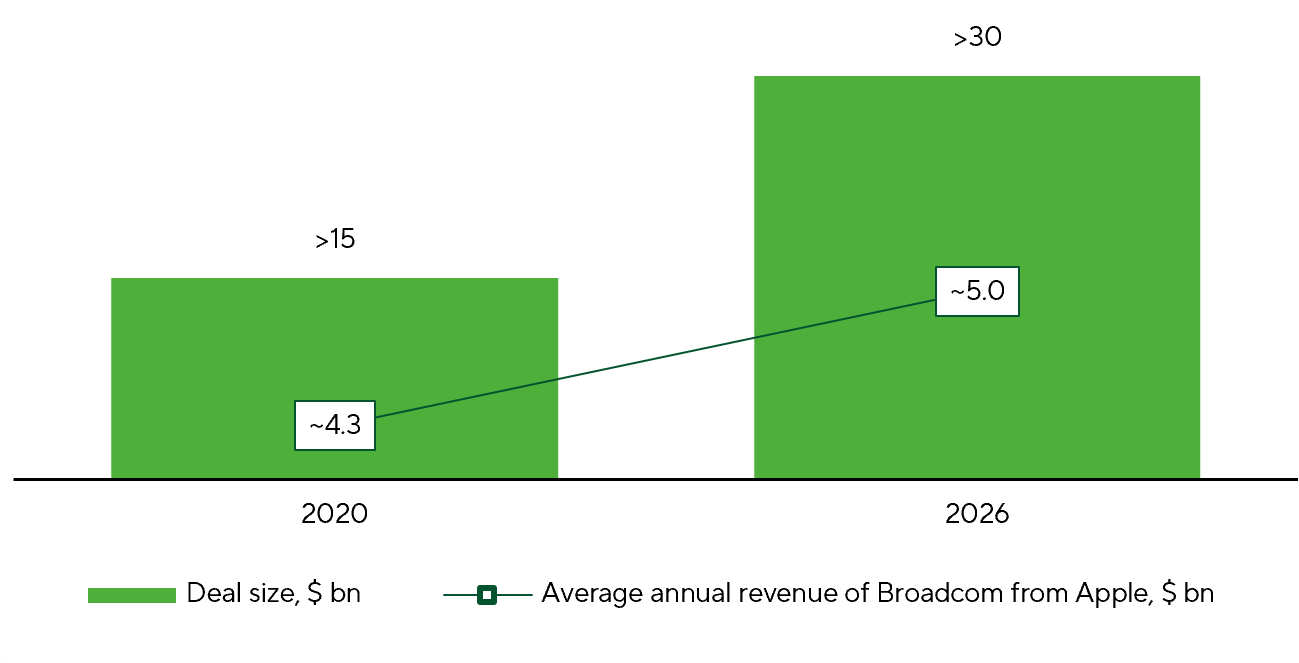
Apple and Broadcom Strategic Agreements
Source: Apple, Broadcom, Freedom Broker
Meta
Meta is exploring a cloud offering that would allow the company to monetize excess data-center capacity by leasing compute resources to third-party customers and providing developers with paid access to AI models hosted on its proprietary infrastructure. The ability to sell external compute capacity suggests infrastructure build-out may be running ahead of current internal demand. While this raises questions around the near-term adoption and commercial traction of Meta’s own AI products, it does not necessarily undermine their longer-term potential. The initiative comes amid a significant acceleration in AI infrastructure investment, with direct AI monetization streams beyond advertising still relatively limited. The strategy could mitigate the risk of underutilized assets while creating an incremental monetization channel for the company’s expanding AI infrastructure footprint. It remains premature to conclude that Meta intends to build a fully-fledged cloud business and compete directly with AWS, Azure, or Google Cloud. Based on the company’s comments, the initiative is primarily focused on monetizing surplus compute capacity, while the majority of new data-center capacity is expected to remain dedicated to training Meta’s frontier AI models.
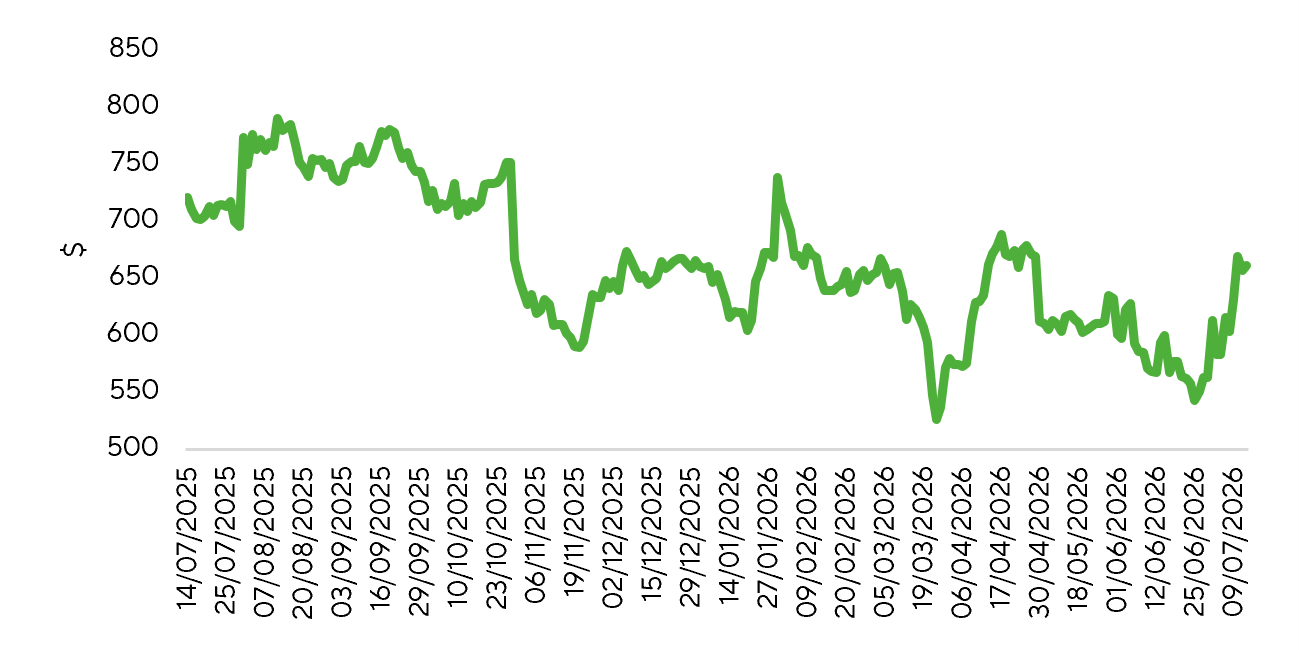
Meta stock price dynamics.
Source: FactSet
Rocket Lab, Iridium
Rocket Lab (RKLB) is acquiring Iridium (IRDM) in an ~$8bn transaction, significantly expanding its positioning from a rocket and satellite manufacturer into a vertically integrated space infrastructure operator. IRDM shareholders will receive $54/share, including $27 in cash and RKLB shares, representing a 25% premium to the unaffected closing price. The transaction is expected to close in mid-2027, subject to shareholder and regulatory approvals. The key strategic asset for Rocket Lab is Iridium’s existing L-band network, licensed spectrum, and >2.5m subscribers across government, defense, aviation, maritime, and commercial verticals. The transaction adds a high-quality recurring revenue base and enables RKLB to leverage its in-house launch capabilities and satellite manufacturing to scale the network, including direct-to-device connectivity. While the strategic rationale is compelling, the financial structure remains the key risk. The cash component is supported by a $3.6bn bridge financing facility from Deutsche Bank and Wells Fargo and implies additional debt and equity financing requirements.
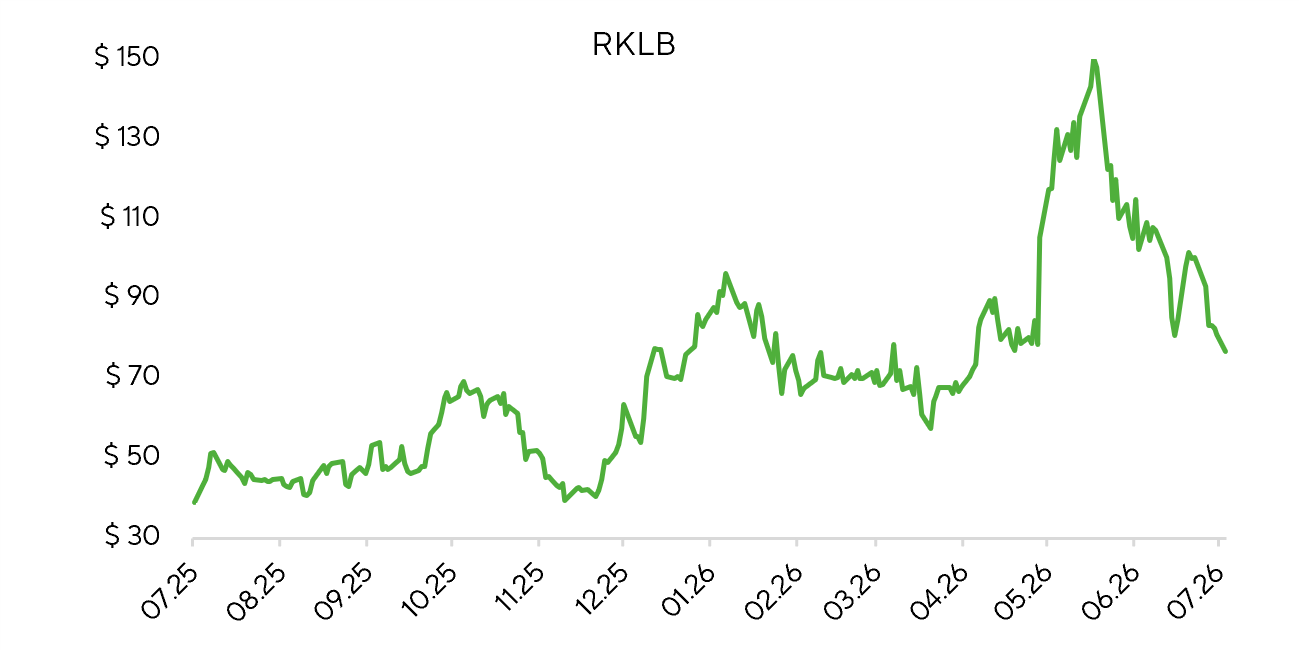
RKLB Stock Price Performance
Source: FactSet
Delta Air Lines
Delta Air Lines (DAL) reported above-consensus EPS, with adjusted earnings of $1.56/share vs. $1.49 consensus, while revenue reached $17.7bn (+14% YoY), in line with expectations. Growth was driven by higher demand and a 12.4% YoY increase in unit revenue, while available seat miles increased just 1% YoY. Adjusted operating margin declined to 8.8% from 13.2% YoY, reflecting pressure from higher fuel prices. Management reaffirmed FY26 guidance for EPS of $6.50–7.50 and FCF of $3–4bn, while announcing a 15% increase in the quarterly dividend starting 3Q. For 3Q, Delta expects EPS of $2.00–2.50 vs. $2.02 consensus. The positive takeaway is the continued pricing environment and supply discipline; post-earnings market focus remains on the sustainability of growth in premium and corporate segments and the pace of margin normalization.
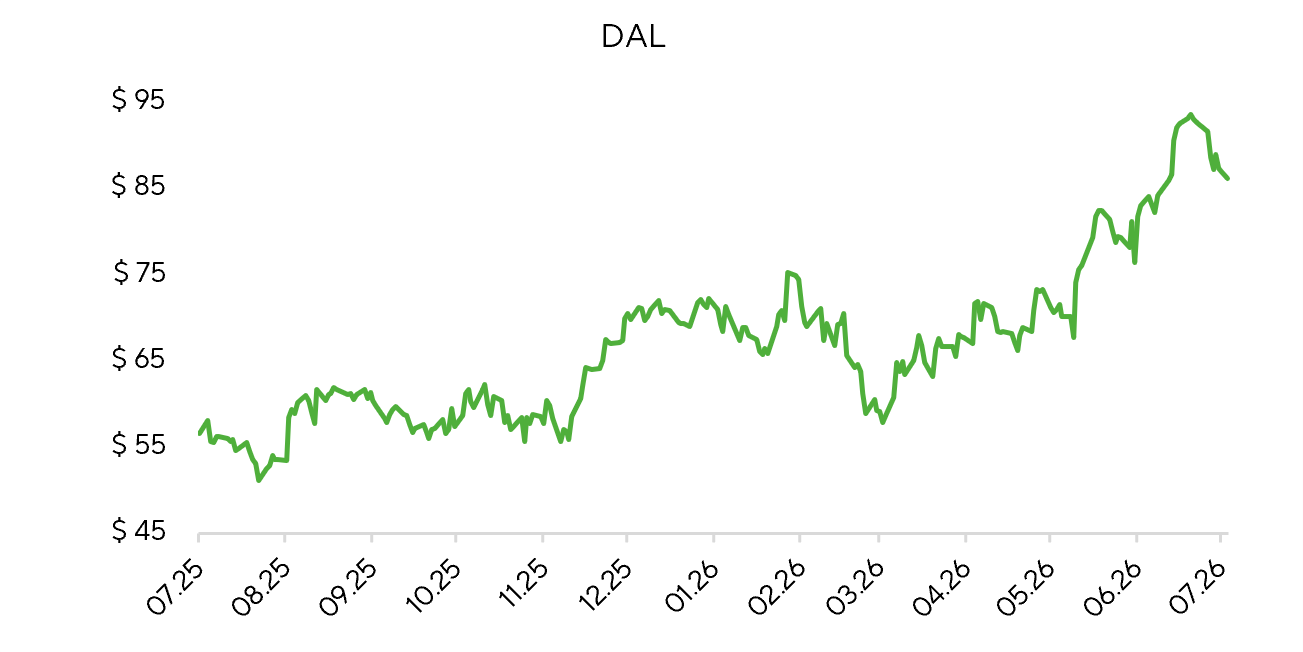
DAL Stock Price Performance
Source: FactSet
PepsiCo
On July 9, PepsiCo (PEP) reported its Q2 2026 results. Adjusted EPS came in at $2.20 versus $2.19 consensus, while revenue rose 6.4% YoY to $24.2bn, with both metrics exceeding expectations. Organic revenue growth reached 2.4%, while global food volumes increased 3% and beverage volumes rose 2%—the strongest YTD volume performance since 2022. The standout in the quarter was the company’s international business, where organic growth accelerated to 7%, marking the 21st consecutive quarter of growth. All international segments outperformed expectations, while markets most exposed to higher fuel prices—including China, the Middle East, and Southeast Asia—remained resilient. North America remained PEP’s weak spot. Sales missed expectations as consumers continued to rein in spending amid elevated gasoline prices, with impulse purchases at gas stations and convenience stores particularly soft. Operating margin (16.8%) also came in below consensus, reflecting continued investment in price affordability. At the same time, PepsiCo continued to gain market share in snacks, its better-for-you snacks business (~$3bn) delivered double-digit growth, and both Gatorade and the energy drinks portfolio strengthened their market positions.
The company reaffirmed its FY26 guidance, although management indicated EPS is now expected to trend toward the lower end of the $8.55–$8.71 range, with growth set to accelerate only in Q4. PEP also acknowledged that the recovery in North America would likely be slower than anticipated at the time of its Q1 report. In our view, this more cautious outlook for the domestic market was the key disappointment for investors, sending the stock ~3% lower following the earnings release. Looking ahead, the pace of recovery in PepsiCo’s North American business is likely to remain the primary catalyst for the shares over the medium term.
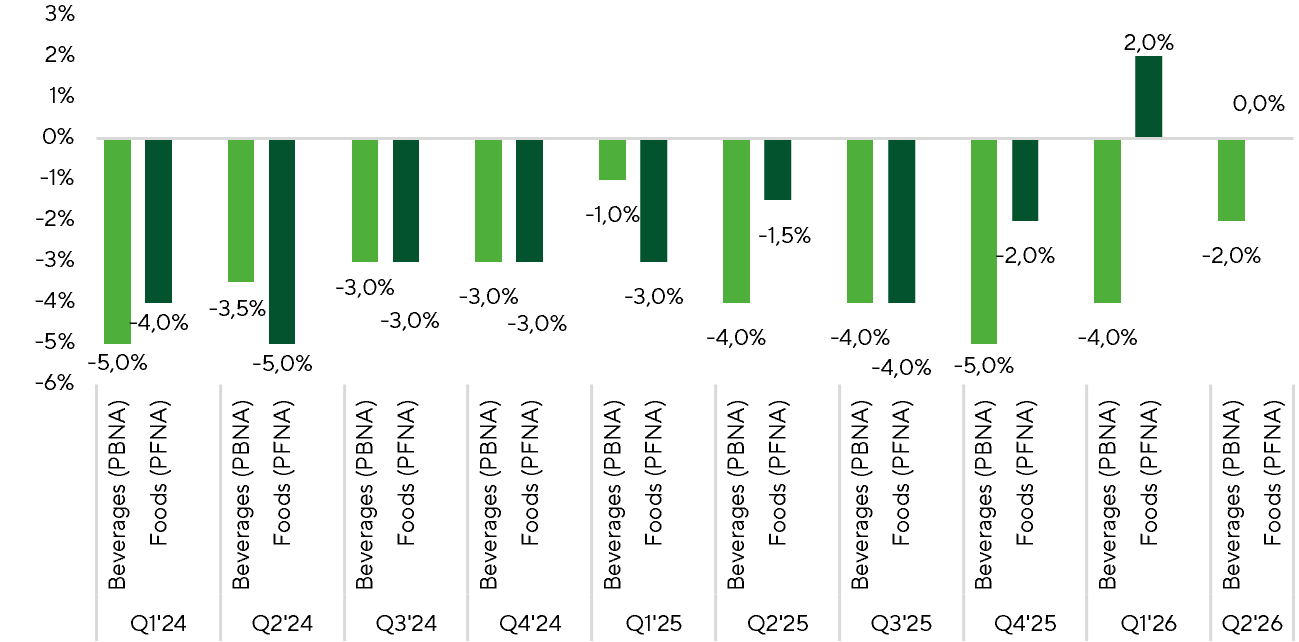
Organic Sales Volume Growth in the North American Beverage and Snack Segments
Source: PepsiCo