Investment Review №357. A Change of Leadership
Company News in Focus for Our Analysts
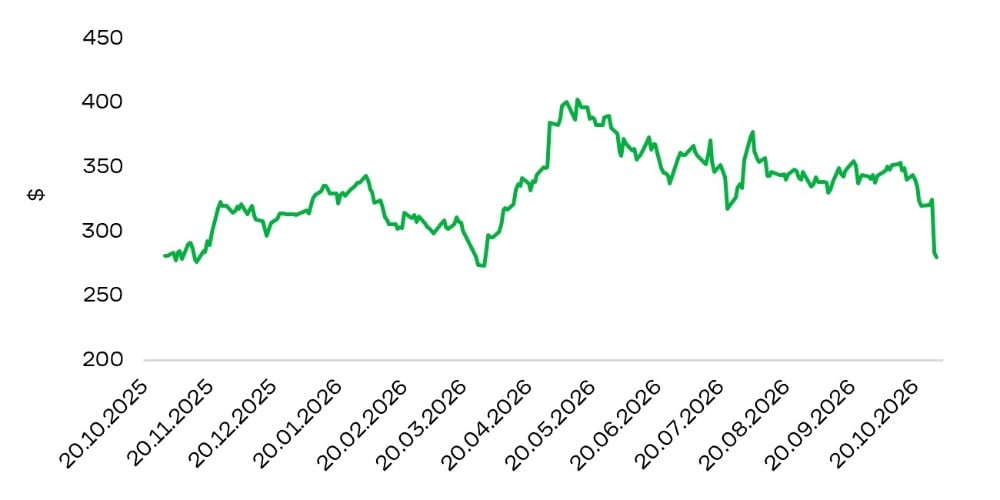
ServiceNow
ServiceNow (NOW) reported mixed Q3 2026 results on October 28. Subscription revenue rose 20.5% YoY in constant currency to $3.99bn. RPO increased 22.5% YoY to $29.7bn, signaling strong demand for Now Assist and workflow automation. However, adjusted EPS of $1.00 missed the $1.02 consensus amid higher integration costs, and management guided for Q4 cRPO growth of 18.5%, below the ~19.8% consensus, triggering a sharp selloff. Key risks include longer large-deal cycles, margin pressure from operating costs, and competition from niche AI tools. Long-term drivers include deeper enterprise adoption, high gross margins and ServiceNow's role as a core platform for managing IT and business workflows in the AI era.
AT&T
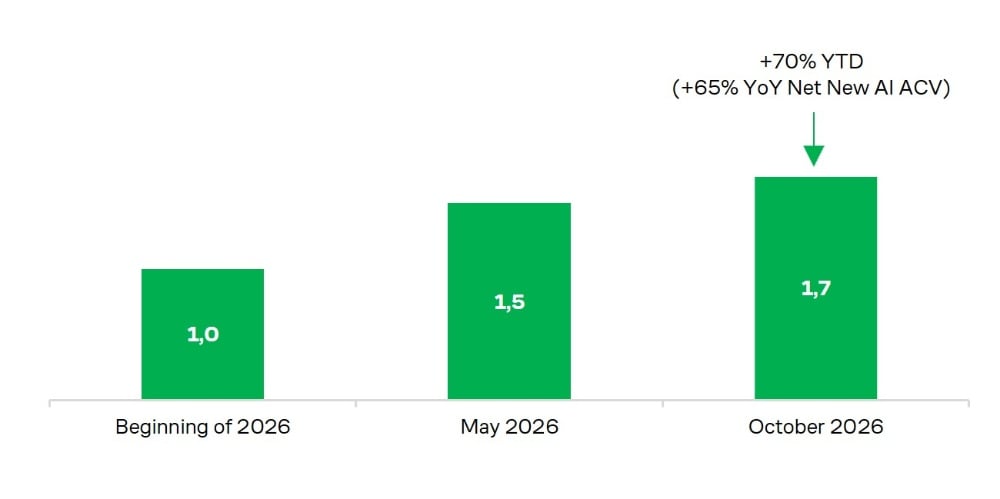
On October 21, AT&T (T) reported Q3 results ahead of consensus, with adjusted EPS of $0.65 (+20.4% YoY), EBITDA at $12.51bn (+5.4% YoY), and FCF of $4.95bn (11% above expectations). Combined net subscriber additions across fiber, fixed wireless access (FWA) and postpaid voice exceeded 1 million for the second consecutive quarter. Growth came at a cost: consumer fiber net additions climbed to 416k (+44.4% YoY), but fiber ARPU fell 4.3% YoY to $70.35, 5.3% below consensus, pressured by introductory prices, discounts for converged customers, and an influx of lower-ARPU Lumen customers. The company raised its 2026 EPS outlook to approximately $2.40, largely reflecting an accounting change related to its Mexican operations, now classified as held for sale. Fiber ARPU is now the key swing factor. Management's stabilization outlook hinges on the Q4 decline remaining at or below 4.3% and the downtrend ending in 2027.
Boeing
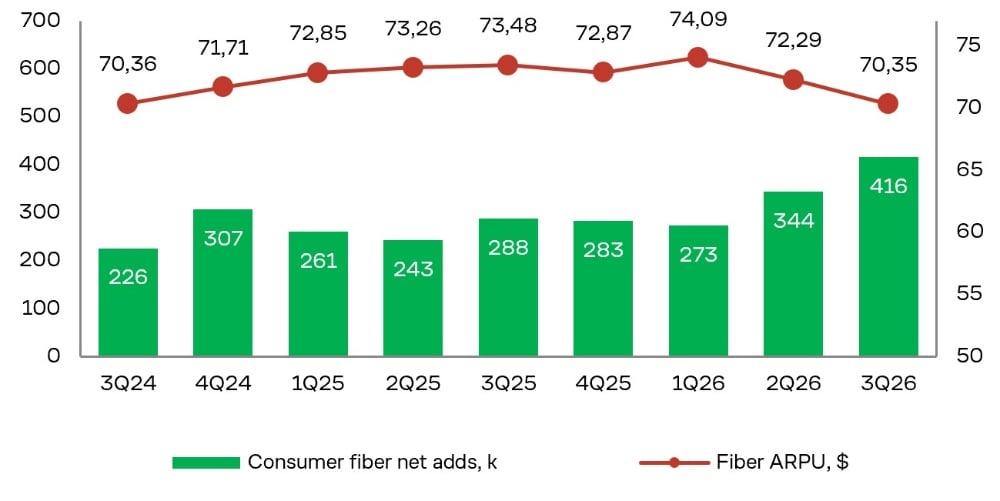
Boeing (BA) reported Q3 2026 results on October 27, with revenue up 3.9% YoY to $24.2bn, an adjusted loss of $0.34 per share versus $0.26 expected, and FCF of $464m. The recovery remains constrained by weak profitability at Boeing Commercial Airplanes (BCA) and challenges ramping up production. Defense (BDS) revenue grew 15%; Boeing Global Services (BGS) maintained an 18.3% margin; BCA posted a $697mn operating loss on higher costs. Management outlined a revised FCF trajectory: ~$2bn in 2026, $3bn in 2027, $6bn in 2028 and $10bn in 2029, with BCA breakeven pushed to early 2028. Certification of the 737-10 and a planned 737 production rate of 52/month support the outlook, though component-supply disruptions heighten execution risk. We reiterate our Buy rating, with a $240 price target.
Alphabet
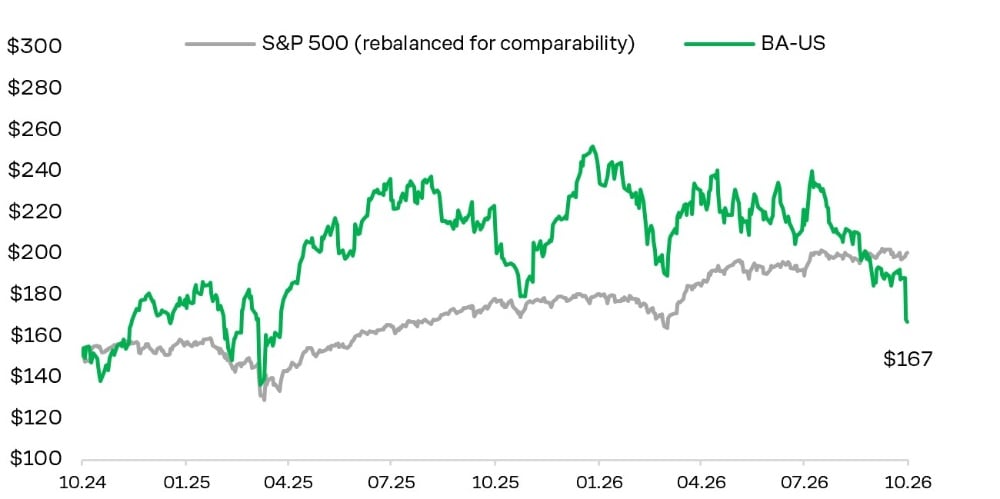
Alphabet (GOOGL) delivered mixed Q3 2026 results. Google Cloud revenue surged 103% YoY to $30.7bn, beating the $28.7bn forecast, driven by strong demand for AI infrastructure, enterprise AI solutions, core cloud services and TPU systems. Backlog increased to $561bn from $514bn, with just over 55% expected to convert into revenue within 24 months. Google Search & Other revenue increased 12% YoY to $63.4bn (forecast: $65bn). Growth in search activity is not translating fully into revenue, as AI Mode queries generate lower advertising yields. The company is expanding advertising across AI Overviews and AI Mode, moving beyond testing toward a broader international rollout. Elevated capex weighs on margins. FCF remained negative for a second consecutive quarter at −$9.1bn, versus positive $24.5bn a year earlier and a forecast deficit of $2.7bn.
Intel
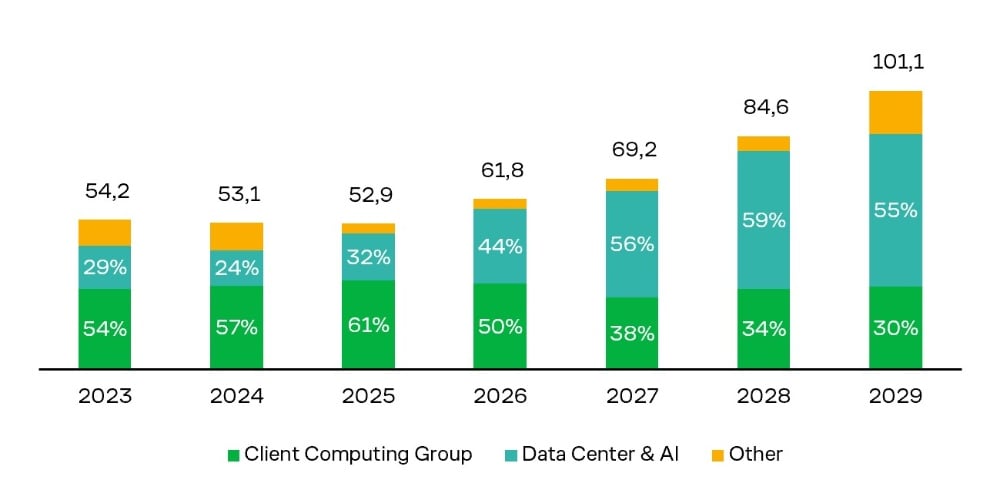
Intel's (INTC) fiscal Q3 2026 results reveal a two-speed business. Data-center demand was exceptionally strong, with DCAI revenue posting its fastest growth in 15 years despite supply constraints. Cost reductions at Intel 3 and 18A helped drive margin and EPS beats. Still, fiscal Q4 2026 guidance fell well short of consensus, reflecting a PC inventory correction amid memory shortages, a Fab 28 incident and an unfavorable product mix. Management frames 2027 as an investment year, with a sharp step-up in capex and likely negative FCF. Foundry milestones remain on schedule, but there are still no binding commitments from external customers. A deeper downturn in the Client business and a sluggish gross-margin recovery offset a substantial upward revision to the DCAI outlook.