
Investment Review №357. A Change of Leadership
The Central Bank Takes On Inflation
Despite some tightening of monetary conditions, local equities continued to post moderate gains
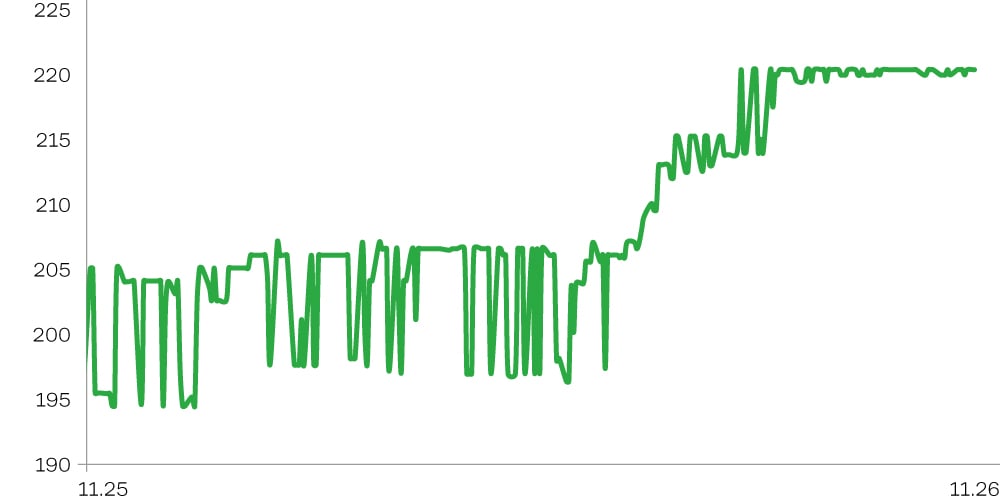
Telecom Armenia: Post-IPO Stock Performance
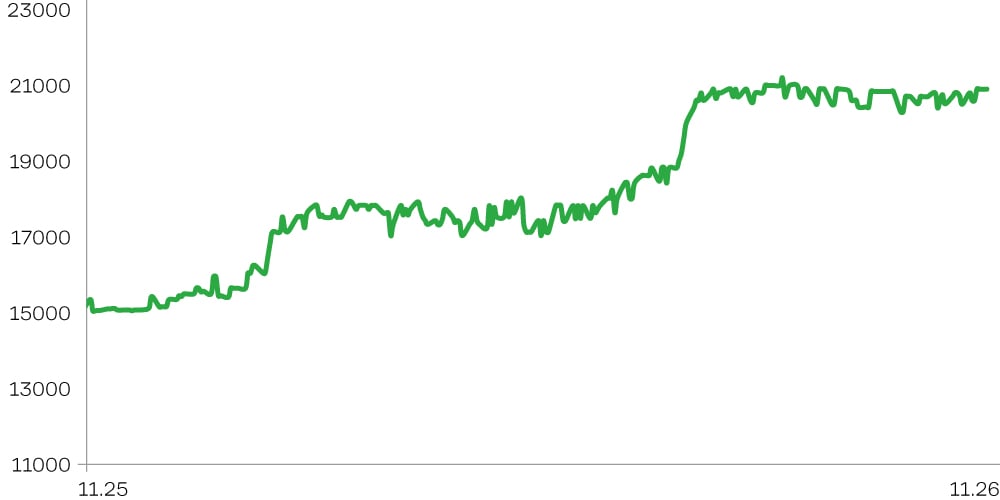
Acba Bank: 1-Year Stock Performance
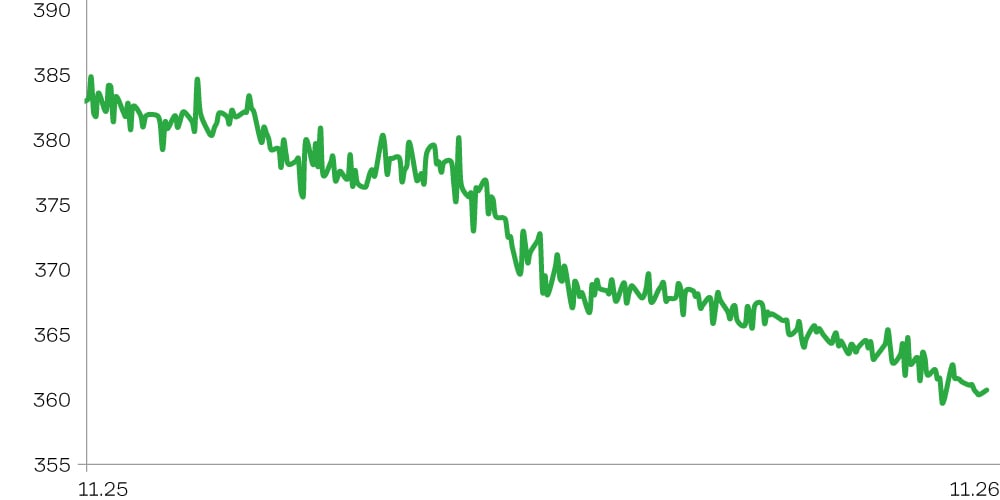
USD/AMD: 1-Year Performance
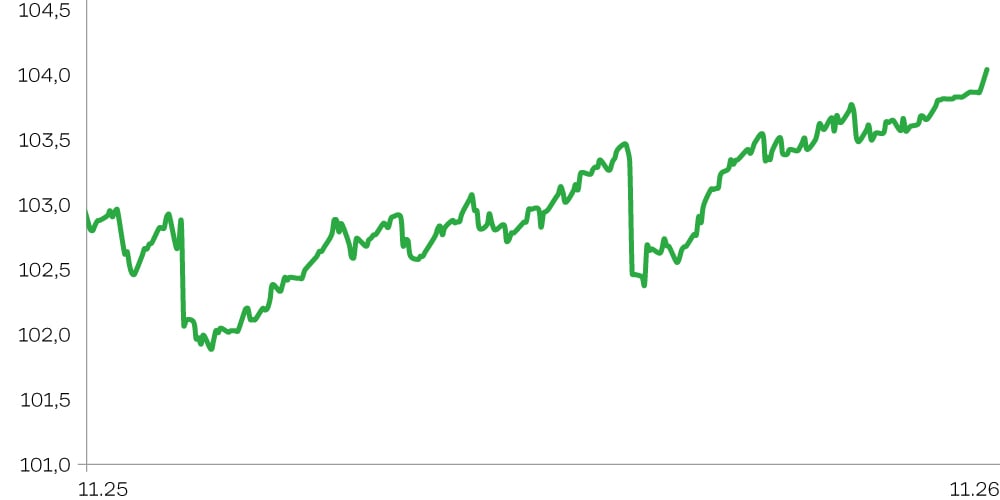
3-Year Corporate Bond Index (AMD), Post-Update
The Armenian market posted modest gains over October 19-November 2, 2026. Acba Bank shares rose 1.0%, taking YTD gains to 34.0%. Telecom Armenia (AMTL) added 0.2%, with its YTD gain holding at 7.5%.
The price index of three-year corporate bonds increased 0.2%, while the dram appreciated 0.5% against the U.S. dollar.
The news flow was driven by September economic activity data, the Central Bank's rate decision, and October inflation figures. Overall, the period was marked by continued monetary policy tightening amid inflation above the target range and sustained economic growth.
Economic Updates
During October 19-November 2, 2026, market attention focused not only on economic data and the Central Bank's policy decision, but also on the Ministry of Finance's economic growth outlook.
Economic activity in Armenia grew 5.0% YoY and 9.1% MoM in September 2026. Construction expanded 25.9% YoY (+8.5% MoM), while Services grew 15.1% YoY (+1.3% MoM). In contrast, Industrial Production declined 4.5% YoY (+4.2% MoM), while domestic trade turnover was flat YoY (−1.4% MoM). In our view, growth remains heavily skewed toward construction and services, with industrial activity lagging.
The Central Bank of Armenia raised its refinancing rate by 0.25pp to 7.0%, marking a second consecutive hike following September's increase, the first since December 2022. CBA Governor Martin Galstyan noted that scenarios involving stronger inflationary pressures had become more likely. Key risks include excess domestic demand, stronger external demand, elevated energy prices, and accelerating global food prices. The EDB had anticipated that the rate would approach 7% by year-end, but this level was reached as early as the November meeting. Beyond the policy rate hike, the CBA also raised banks’ countercyclical capital buffer to 2.25% and flagged renewed signs of overheating in the real estate market. Cadastral data show apartment prices in Yerevan up 20.3% YoY, while lending to the construction sector exceeded AMD 1tn as of August. In our view, this points to a further shift in investment demand towards real estate, potentially crowding out other lending and constraining overall bank credit growth.
Inflation in Armenia stood at 4.3% YoY in October 2026, below the 4.5% forecast and unchanged from September. Prices rose 0.3% MoM. Inflation remains above the upper bound of the CBA's target range of 3% ±1pp. Food and beverages inflation eased to 5.6% YoY from 6.2% in September, while price growth in housing and utilities accelerated to 3.5% from 2.1%. In our view, this points to a shift in the composition of inflationary pressures despite headline inflation remaining unchanged.
Finance Minister Vahe Hovhannisyan projected economic growth of 5.6% in 2026 and 5.8% in 2027. The 2026 forecast sits between the IMF's estimate of 5.5% and the EDB's forecast of 6.0%.
Corporate News
IDBank is launching its first-ever issuance of perpetual USD-denominated coupon bonds, with a total offering size of $30m. The offering period runs from November 2 to December 30, 2026. The bonds will carry a fixed annual coupon of 8.25% for the first 36 months, followed by a floating rate of SOFR + 4.35%, subject to a 6.25-9.25% cap. Coupon payments will be made semi-annually.
Two-Week Outlook
No major macroeconomic data releases are scheduled for November 6-16, 2026. In the absence of fresh data, market attention is likely to remain focused on previously released figures (inflation at 4.3% and September economic activity growth of 5.0% YoY), the CBA's rhetoric following the rate hike to 7%, and external market developments. In our view, energy and global food prices, both explicitly flagged by the CBA as key inflationary risks, will be the critical external variables to watch. Their trajectory will shape inflation expectations and, in turn, the policy rate path.