
Investment Review №327. The soft power of the Federal Reserve
Modesty is a virtue
In the second half of August, the UAE stock markets were dominated by slightly negative dynamics.
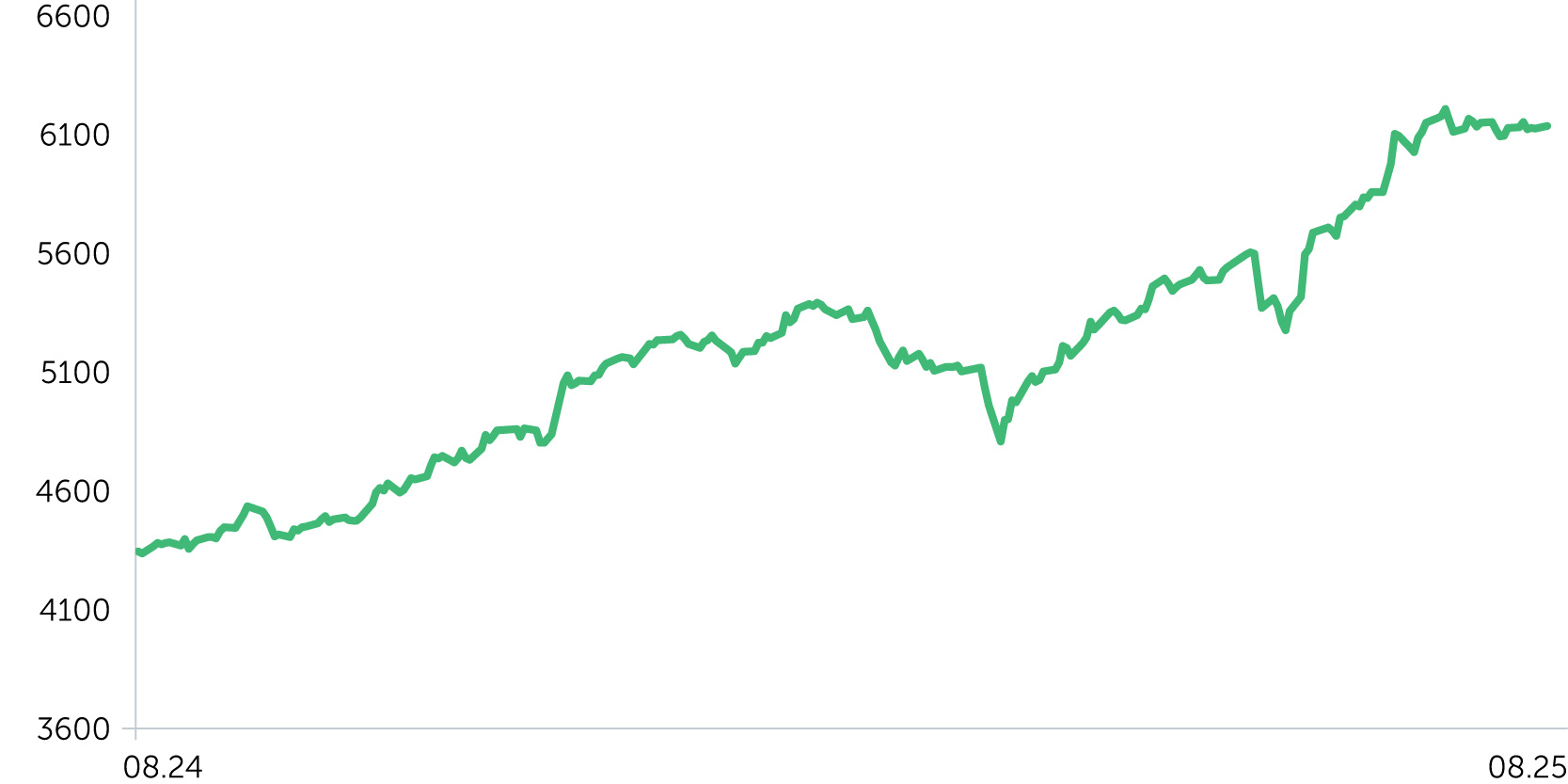
DFM General Index: 1-Year Dynamics
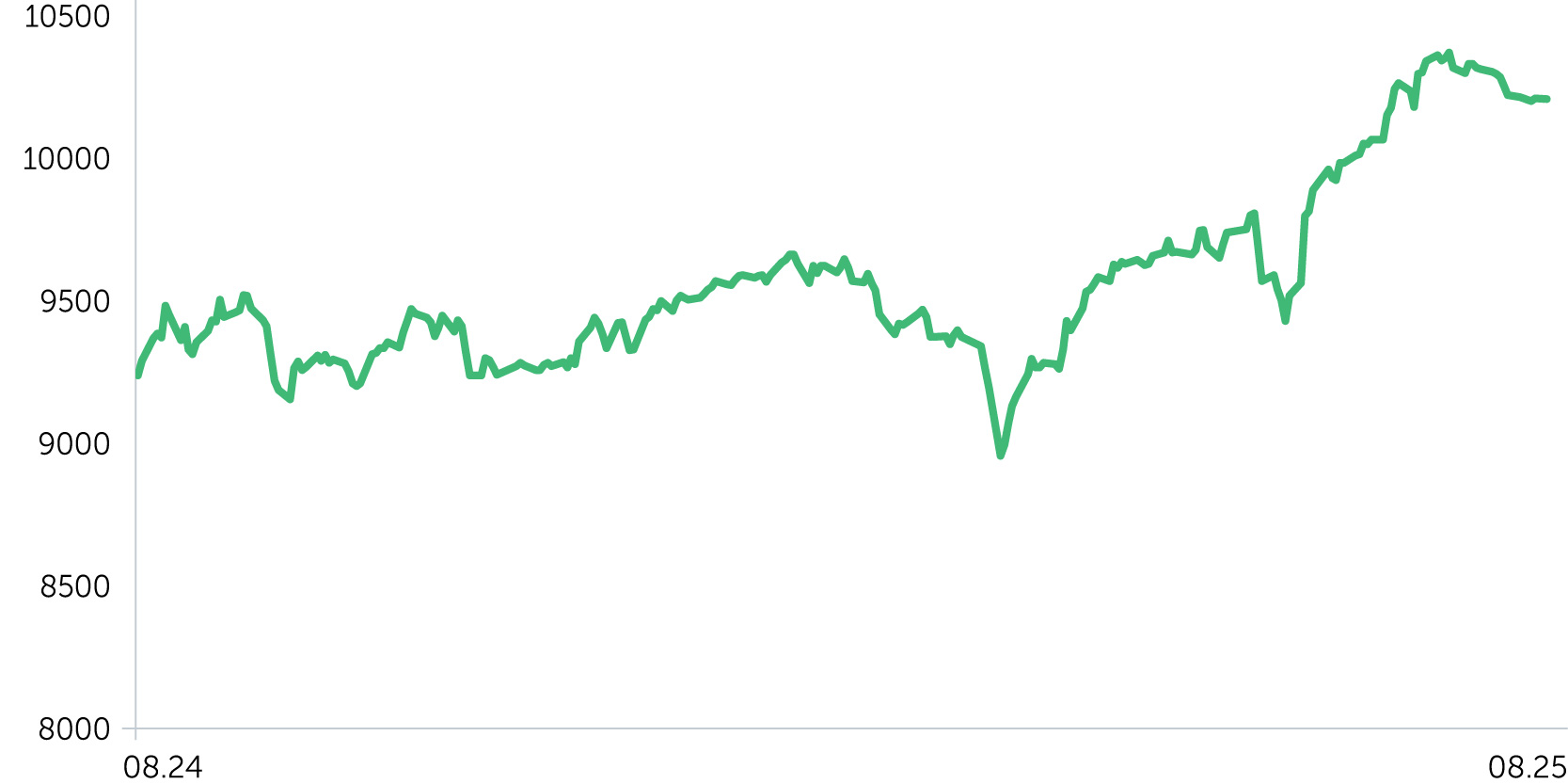
Abu Dhabi Securities Exchange Index: 1-Year Dynamics
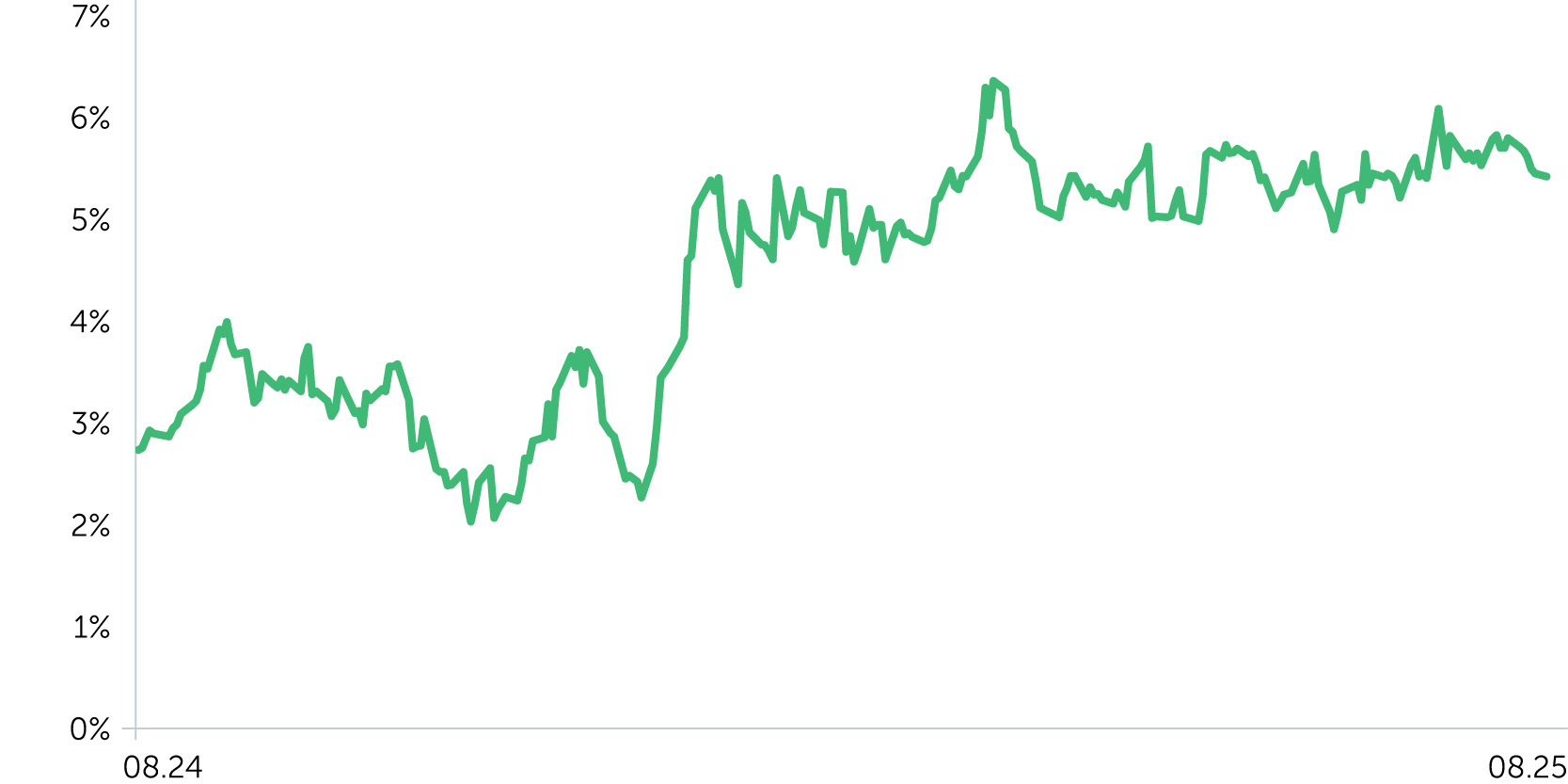
Yield, Forward Rate 1m10y, UAE, 1-Year Dynamics
Brent Oil, 1-Year Dynamics
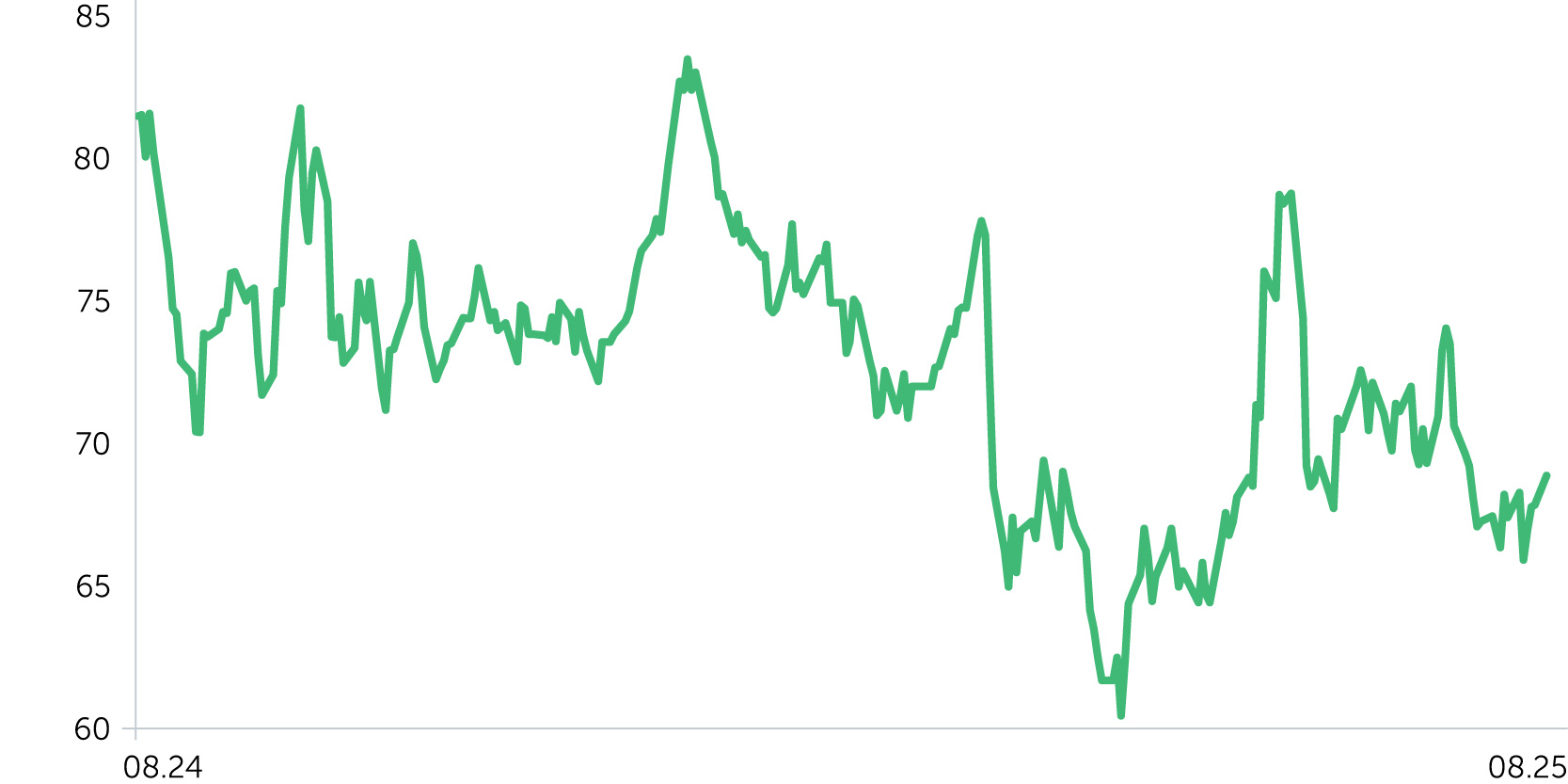
Between August 12 and August 25, 2025, the UAE stock markets experienced declines. The Dubai Financial Market (DFM) index lost 0.3%, and the Abu Dhabi Securities Exchange (ADX) decreased by 0.9%, resulting in an average market downturn of 0.6%. The price of Brent crude oil increased by 2.1% during the period. This trend indicates some profit-taking by investors following previous growth, despite the positive signals from the oil market. For comparison, the U.S. S&P 500 index rose by 1.0% over the same timeframe, suggesting stronger sentiment in global markets.
The sectors exhibited mixed dynamics. The Consumer Staples sector was the growth leader, with a 3.64% average increase. Meanwhile, the Real Estate sector experienced the largest decline, losing 1.29%, due to a negative response to the report from EMAAR (-2%). Among companies, Shuaa Capital (SHUAA) shares saw substantial gains, surging by 13.9% without any apparent news drivers. Conversely, Amlak Finance (AMLAK) shares recorded a notable decrease of 5.61%.
Yields on UAE Treasury bonds declined by 37 basis points, while U.S. Treasury yields dropped by 4 basis points. This movement may suggest relatively higher investor confidence in UAE debt compared to U.S. debt in the context of global economic uncertainty.
Economic Updates
- Over the past two weeks, the focus of economic news in the UAE has been on strategic partnerships and initiatives designed to strengthen capital markets. Abu Dhabi continues its active efforts to attract foreign investment and enhance access to its financial markets. On August 26, the Abu Dhabi Exchange (ADX) and Reem Finance signed two agreements aimed at facilitating investor access to IPOs and exchange-traded securities.
- On August 14, the International Monetary Fund (IMF) released an updated forecast projecting that the UAE’s economy will grow by 4% in 2025 and by 5% in 2026.
- On August 27, the Comprehensive Economic Partnership Agreement (CEPA) between the UAE and New Zealand officially came into effect. This agreement, which eliminates or reduces tariffs, is expected to boost annual bilateral trade to over $5 billion by 2032.
Corporate News
- Emaar Properties (EMAAR) continues exhibiting robust operating results. On August 22, the company signed a contract with Engineering Contracting Company for constructing the Palace Residences Creek Blue in Dubai Creek Harbour. This 50-story tower project is set for completion by 2028. The decision comes on the heels of strong financial results for the first half of 2025.
- On August 26, First Abu Dhabi Bank (FAB), the largest bank in the UAE, announced the terms of a five-year CNY-denominated bond issuance worth RMB455 million. This is part of its $20 billion global EMTN program.
- Mubadala Capital, the asset management division of Abu Dhabi’s sovereign fund, finalized its acquisition of CI Financial Corp., a leading asset management and private equity firm in North America, on August 12.
Two-Week Outlook
Over the next two weeks, market sentiment is likely to be influenced by oil price trends and the optimism surrounding expected rate cuts. Regarding oil, there is a fundamental shift in risks toward lower prices, as the early fall season, that typically sees low demand, may come amid increased oil production and a surplus in the market. The negative effects of potential U.S. import duties on international trade, along with increased oil production by OPEC+ countries and South America, may exert pressure on prices. Since the beginning of the year, OPEC+ has increased quotas by 2.5 million barrels per day, laying the groundwork for a rise in supply.
At the same time, the local market continues to show resilience, buoyed by strong financial results in the banking and development sectors. Efforts to enhance the liquidity and accessibility of financial markets, along with initiatives to attract foreign investors, such as those by ADX, are likely to provide support to the market. However, compared to developed markets, the UAE’s stock exchanges are characterized by a relatively lower volume of capital in publicly traded instruments. Inflows of foreign investment are expected to continue demonstrating robust dynamics relative to the S&P 500, especially if geopolitical tensions in the region remain subdued and a scenario of Fed rate cuts materializes. These conditions are poised to play a much more significant role in influencing the movement of UAE stock prices.