
Oil tops $100: Freedom analysts explain pressure on the U.S. market
Stock Market News
13 September 2026, 17:19
Rising oil prices heighten inflation risks, lift Treasury yields, and create additional pressure on U.S. stocks, Freedom Broker analysts note. The most sensitive in this situation remain growth companies, cyclical sectors, and small-cap stocks.
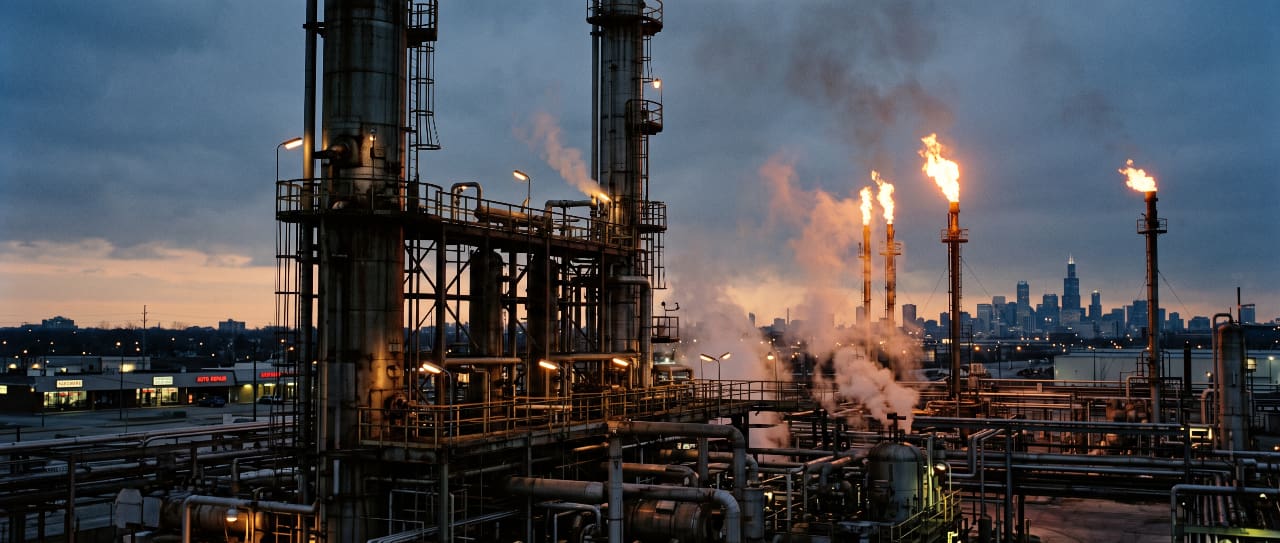
Brent rose to $101.2 per barrel
At the close of trading, Brent crude gained 3.4% to $101.2 per barrel. Quotes returned to the highest closing level since May 22. Analysts cite the conflict in the Middle East as the main driver of the rise. WTI crude rose 3.28% to $96.07 per barrel. Over the month, its price increased by 20.43%, and over the year — by 52.56%.
According to Freedom Broker, higher energy prices are intensifying inflation concerns. More expensive fuel can affect both production costs and overall price dynamics, increasing the likelihood that the Federal Reserve will keep monetary policy tight.
Bond yields reached the highest level since November 2023
Against the backdrop of rising oil quotes and a strong jobs report, the yield on 10-year U.S. Treasuries rose by 5 basis points to 4.84%. The показатель reached its highest level since November 2023. An additional factor was the U.S. Treasury’s announcement of buybacks of long-term bonds totaling up to $6 bn, versus a previously indicated minimum of $4 bn. This amount came in below the expectations of some market participants.
A successful auction of 10-year Treasuries later eased pressure on the debt market, and their yield retreated from intraday highs. However, it continued to remain near 4.84%.
Rising government bond yields increase the return investors require from other assets. In such conditions, pressure typically hits growth stocks harder, as their valuations largely depend on expectations of future cash flows.
U.S. indices ended the session lower
Major U.S. stock indices closed in the red. The S&P 500 fell 0.48% to 7,636 points, and the Nasdaq 100 — 0.29% to 29 422 points. The Dow Jones lost 0.77% and ended the session at 52 381 points, while the Russell 2000 slipped 1.32% to 2,921 points.
At the same time, the S&P 500’s performance did not fully reflect the weakness of the broader market. The number of declining index components exceeded the number of gainers by more than four times. The equal-weight RSP fund fell 0.96%. The VIX volatility index rose 0.74 points to 16.46. The strongest pressure was on small caps and rate-sensitive segments.
Large-cap growth companies lost 0.35%, while value stocks declined 0.60%. In the mid-cap segment, growth stocks fell 1.04%, and value companies — 1.18%. Among small caps, the corresponding figures were minus 1.63% and minus 1.02%.
Energy was the only sector to rise
Higher oil prices supported energy stocks. The S&P 500 energy sector, represented by the XLE fund, added 0.83% and was the only industry to finish the trading day in positive territory. The biggest laggards were the industrial sector, down 1.51%, and cyclical consumer goods manufacturers, down 1.34%. Utilities fell 1.17%, consumer staples — 1.15%, real estate — 1.12%, and materials — 1.06%.
The IT sector ended the day near the flat line. Freedom Broker analysts note that the performance of technology and AI-related companies remained mixed, so what happened cannot be called a broad sell-off in the AI segment.
The five companies with the largest positive contribution added about 24 basis points to the market, while the five main laggards drove a decline of about 30 basis points. Their combined net contribution was about minus 6 basis points, with SPY down 46 basis points. This points to broader pressure beyond the largest technology companies.
Not an individual investment recommendation.