
Freedom assessed the impact of new U.S. and Canadian tariffs on companies
Stock Market News
14 September 2026, 19:53
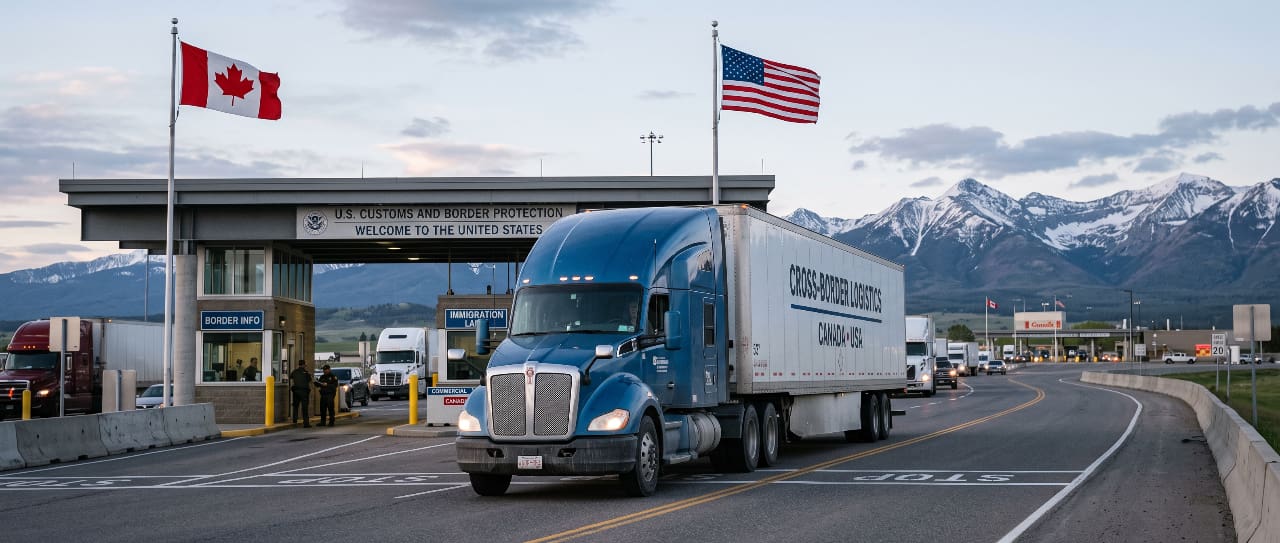 The U.S. and Canada expanded reciprocal tariff measures on industrial equipment, components, and metals. However, Freedom analysts Sergey Glinyanov and Aruzhan Seifulla do not expect the tariffs to have a material impact on the financial results of most companies under their coverage.
The exemption of Portland cement from the additional U.S. tariff reduced risks for construction contractors. Manufacturers with facilities in Canada may temporarily face higher steel and aluminum costs, but local production, alternative suppliers, and changes in procurement structure should limit pressure on margins.
Freedom maintained “Buy” ratings for Mueller Industries (MLI), Perma-Pipe International Holdings (PPIH), Preformed Line Products (PLPC), Orion Group Holdings (ORN), Argan (AGX), Everus Construction Group (ECG), and IES Holdings (IESC).
The U.S. removed the additional tariff on Portland cement
From September 15, the U.S. is excluding Portland cement from the list of Canadian goods subject to an additional 50% tariff. Portland cement is the main type of cement used in the production of concrete and mortar.
Its potential price increase represented one of the key risks for U.S. construction contractors. Removing the additional tariff should limit the rise in material costs and reduce pressure on project profitability.
At the same time, higher tariffs will remain in place for certain steel and aluminum structures. If a product is simultaneously subject to multiple tariff measures, duties may add up. Nevertheless, the analysts did not identify a material dependence of the companies reviewed on such categories of Canadian products.
Freedom does not expect the new U.S. measures to have a meaningful impact on Orion Group Holdings (ORN), Argan (AGX), Everus Construction Group (ECG), and IES Holdings (IESC).
Orion Group Holdings is engaged in the construction of marine and industrial infrastructure, including ports, piers, pipelines, and concrete structures. Everus Construction Group provides services for the construction and maintenance of energy and industrial infrastructure.
Argan designs and builds power plants, industrial facilities, energy and telecommunications networks. IES Holdings creates electrical and technology systems for data centers, industrial facilities, commercial buildings, and residential properties.
Freedom maintained recommendations for contractors
The target price for Orion Group Holdings shares was maintained at $15.90, with a “Buy” rating. For Argan, the analysts reaffirmed a “Buy” rating and a $700 target price.
Previously, Freedom upgraded its rating on Argan shares to “Buy”. At the time, the analysts noted the company’s 61.5% revenue growth in the second quarter of fiscal 2027, successful execution of gas generation projects, and the likelihood of winning new contracts.
The target price for Everus Construction Group shares is $180, with a “Buy” rating. For IES Holdings, the analysts set a $440 target and also recommend buying the shares.
In August, Freedom assessed the prospects for IES Holdings after the purchase of a new asset. The acquisition of a steel-structures manufacturer expands the company’s capabilities in data center and industrial infrastructure projects, although the lower profitability of the new division may temporarily affect overall results.
Canadian tariffs raise metals costs
Canada increased tariffs on certain categories of steel and aluminum products from 25% to 50%. The measures may have the greatest impact on businesses that import aluminum and steel wire, pipes, sheets, and other production materials from the U.S.
The analysts believe that a short-term increase in procurement costs is most likely for Perma-Pipe International Holdings and Preformed Line Products. At the same time, the risk for both companies is assessed as low to moderate.
Perma-Pipe International Holdings (PPIH) manufactures pre-insulated piping systems for energy, industrial, and municipal infrastructure. About 23% of its revenue for fiscal 2025 was generated by two facilities in Canada, which use, among other things, steel pipes and other materials imported from the U.S.
Higher costs may temporarily affect the profitability of Perma-Pipe’s Canadian business. However, increased production volumes and a shift to local or alternative suppliers should gradually offset this effect. Freedom maintained a “Buy” rating and a $38 target price for PPIH shares.
Preformed Line Products (PLPC) produces equipment and components for overhead and underground power lines, communications, and data transmission. Its Canadian operations use steel wire, stainless steel, and aluminum, some types of which have been subject to higher tariffs.
The company works with several suppliers and can purchase a significant portion of the required materials within Canada. Therefore, the analysts do not expect the tariffs to have a material impact on Preformed Line Products’ overall profitability. The recommendation on PLPC shares is “Buy,” with a target price of $480.
Risks for Mueller Industries are minimal
Mueller Industries (MLI) manufactures copper, brass, aluminum, and plastic components for piping systems, HVAC equipment, and municipal infrastructure. Canada accounts for about 8% of the company’s revenue.
Mueller Industries’ Canadian facility produces copper pipes mainly from refined copper and copper scrap. These materials are not among the main categories affected by the new Canadian tariffs. In addition, the company sources raw materials in several regions, which reduces dependence on individual suppliers.
Freedom assesses the tariff risk for Mueller Industries as low, reaffirms a “Buy” rating and an $80 target price. Previously, the analysts noted the resilience of Mueller Industries’ business, supported by cost control, diversification, and its own manufacturing base in North America.
Overall, the new tariffs may lead to a temporary increase in the cost of certain materials, but should not materially affect the performance of the companies reviewed. The key mitigating factors remain localized production, a limited share of cross-border supplies, the ability to switch suppliers, and partial pass-through of additional costs to customers.
Not an individual investment recommendation.