
Freedom Broker experts: Data centers and a merger will support Black Hills shares
Stock Market News
2 October 2026, 09:32
Freedom Broker analysts have initiated coverage of U.S. energy company Black Hills Corporation (BKH) with a “Hold” rating and a $69 price target. At the current quote of $70.08, this implies a 1.54% downside. The company benefits from rising electricity demand and is preparing to merge with NorthWestern Energy Group (NWE), but a high cost of capital limits the upside potential for its shares.
Energy provider
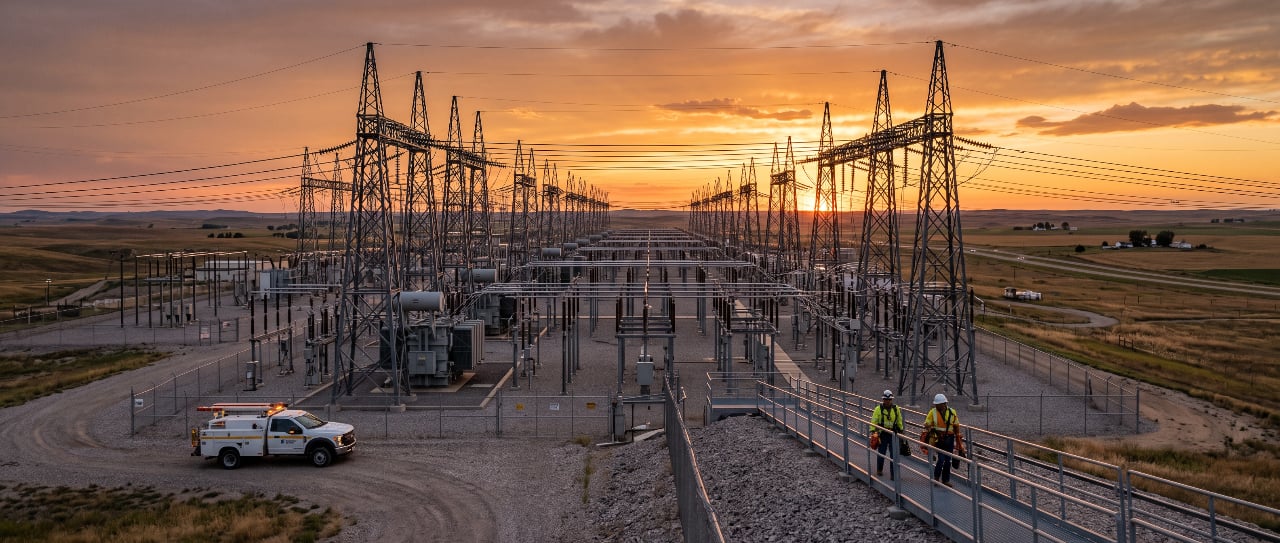
Black Hills supplies electricity and natural gas to about 1.37 million customers across eight U.S. states. The backbone of the business is regulated utility services: the company invests in infrastructure, while cost recovery and allowed returns are determined by industry regulators. The electric segment includes generation, transmission, and distribution of electricity; the gas segment includes distribution networks, gas transportation, and storage.
The merger will increase scale, but will require regulatory approval
Analysts cite the merger with NorthWestern Energy as the main growth catalyst. The companies are combining into a new regulated electric and gas company, Bright Horizon Energy Corporation, with an estimated enterprise value of about $15.4 billion. The merger will be structured as a stock-for-stock exchange: Black Hills shareholders will receive 56% of the combined company, NorthWestern 44%, and each NorthWestern share will be exchanged for 0.98 Black Hills shares.
After the deal, the new company will serve about 2.2 million customers in eight states, and total planned investments for 2025–2029 will exceed $7 billion. Scale and diversification are expected to improve efficiency, expand investments in energy infrastructure, and support long-term EPS growth of 5–7% per year.
Data centers are creating demand that is not yet fully reflected in the valuation
Another growth driver is large electricity consumers in Wyoming. Black Hills’ pipeline of potential demand has increased from roughly 1 GW in early 2025 to more than 3 GW. About 600 MW tied to the expansion of Microsoft (MSFT) infrastructure and a Meta Platforms (META) project is already included in the company’s plan through 2030.
Profit is growing faster than revenue
In the second quarter of 2026, Black Hills’ revenue amounted to about $453 million. Operating income rose 17.6% year over year to roughly $97 million. Net income attributable to common shareholders increased 38.9% to $38.2 million, while adjusted EPS rose 42.1% to $0.54.
Improved results were driven by new rates and cost-recovery mechanisms. They offset higher financing and depreciation expenses. Additional support came from lower costs associated with unplanned generation outages versus last year.
For the first half of the year, revenue declined by 0.9%, while operating income rose 4% to $299 million. Adjusted net income increased 9.2% to $176.6 million, and adjusted EPS rose 4% to $2.33. Analysts attribute the difference in growth rates to an increase in the number of shares. The company reaffirmed its 2026 adjusted EPS guidance in the range of $4.25–4.45. It excludes merger-related costs and NorthWestern Energy’s results.
Dividends support appeal, investments create risks
Black Hills has raised its dividend for 56 consecutive years. The annual payout of $2.812 per share implies a yield of about 4% at a price of $70.08. Freedom Broker forecasts average annual dividend growth of 5% in 2026–2030.
Black Hills’ standalone investment plan through 2030 totals $4.7 billion. For 84% of utility infrastructure spending, a cost-recovery or revenue mechanism has been defined. This supports the predictability of future income, but does not eliminate the need for external financing: under analysts’ model, $820 million of equity capital will need to be raised in 2027–2030. Additional share issuance may restrain EPS growth.
Black Hills’ investment appeal at present is more closely tied to dividends and the resilience of its regulated business, analysts note. Key factors for an upward revision of the valuation include the terms of the merger’s completion, new rate decisions, and agreements with large electricity consumers.
New coverage in September
Earlier, Freedom Broker initiated coverage of automotive safety systems manufacturer Autoliv (ALV) with a “Buy” rating and a $139 price target—about 22% above the price used in the report. Analysts expect results to improve in 2027 due to lower restructuring costs and business development with Chinese automakers and in India.
Freedom Broker experts also initiated coverage of Lightwave Logic (LWLG), a developer of electro-optic polymers for high-speed data transmission, with a “Buy” rating and a $10 price target. This implies upside potential of about 107% relative to the quote at the time the review was prepared. Expectations are primarily tied to the transition from technology testing to production orders and the start of ramping up production in the second half of 2027.
This is not an individual investment recommendation.