Financier №4 (40) 2025

Ablai Zhumanov
junior analyst at Freedom Broker
Logistics on Steroids
New Communication Standards Are Revolutionizing the Logistics Market
A port where autonomous cranes unload containers without human involvement. A warehouse where dozens of robots simultaneously move goods between shelves. A driverless truck that independently adjusts its route… All this is no longer fantasy, but the everyday reality of the logistics industry in the age of the 5G communication standard.
Speed Revolution
Logistics has long remained one of the most conservative industries. It habitually relied on proven tools, while other areas of the economy were actively digitizing. Today, however, pressure on the sector is increasing: profitability is declining, operating expenses are increasing, fuel is becoming more expensive, and customers are demanding faster and cheaper delivery.
The 5G communication standard has become the answer to the challenges faced by logistics. Its advantages have made it possible to improve the very principles of the industry:
- Expanded Connectivity Options. For the sector, it is important that within the new network format, one square kilometer can simultaneously support up to one million connected devices, such as sensors on containers. This means that every box and every pallet can quickly and reliably transmit data about its location, temperature, humidity, and other parameters.
- Real-Time Data Transfer. In previous-generation networks (4G), the theoretical maximum speed can reach 100 Mbps; however, in practice, it typically does not exceed 35 Mbps. For 5G, these parameters are estimated at approximately 20 Gbps and 3 Gbps. This allows for almost instant data exchange and the active use of robots for goods handling and order fulfillment.
- High reliability of signal transmission paves the way for the deployment of autonomous vehicles and drones.
All these advantages create the foundation for robotic automation in logistics. According to Morgan Stanley analysts, the widespread use of robots in this sector will ensure smooth 24/7 operation of warehouses and port terminals, reduce the risk of human error in order consolidation, cut staff workload by 30–40%, and accelerate operational processes.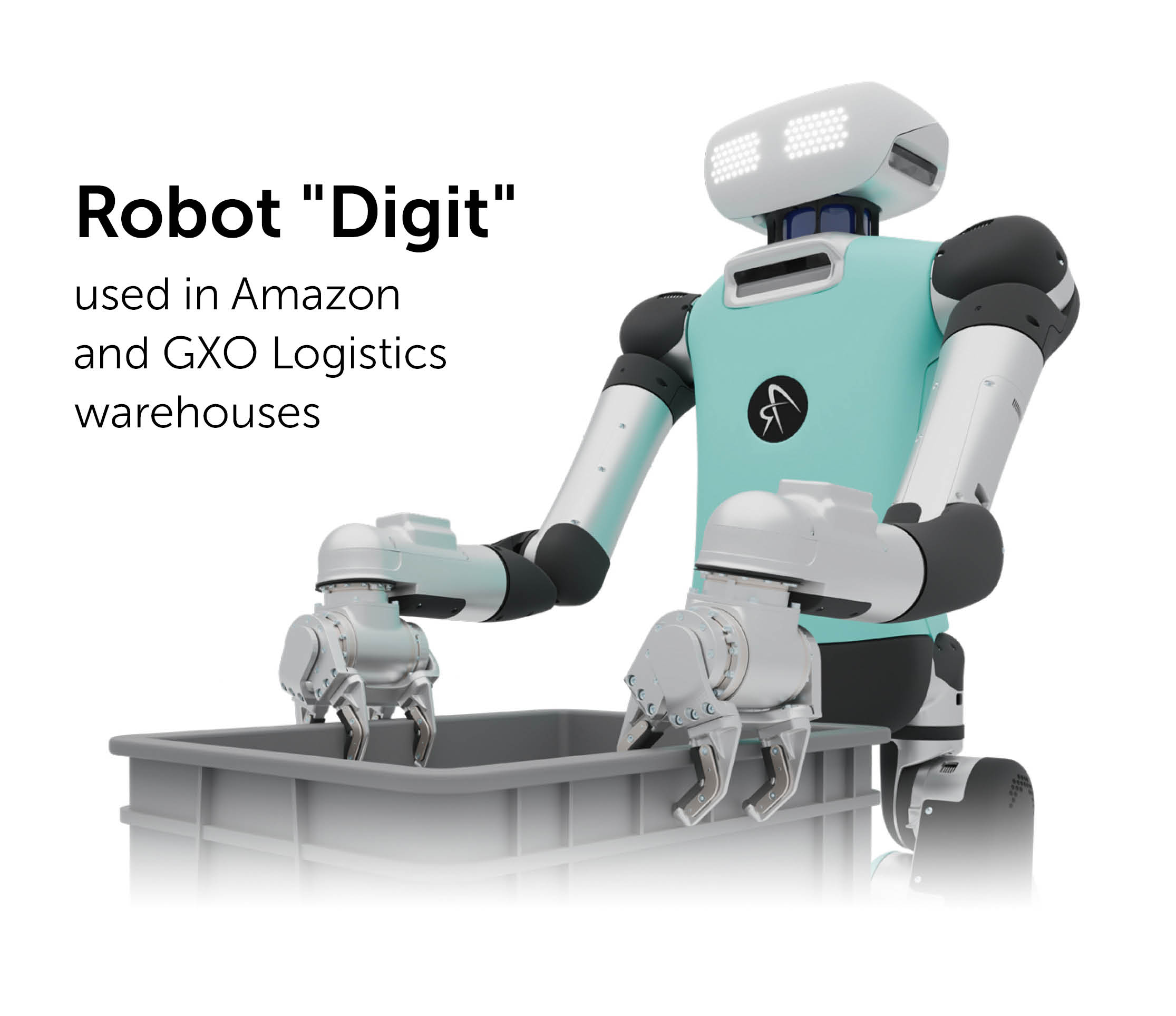
Photo: agilityrobotics.com
Connections Involved
The first 5G-based robotic warehouses are already operational. In early 2024, Huawei and logistics operator DP World built a fully automated port in one of Dubai’s free zones, with communications running over 5G networks. AI optimizes berth allocation and vessel queuing for mooring. Robotic cranes handle unloading, while autonomous trucks deliver goods to warehouses.
Huawei has also automated cargo handling at the Chinese port of Tianjin. This enabled the company to reduce staffing from 1,000 to 200 and increase container acceptance rates from 28 to 36 per hour.
Similar projects are also being implemented in Europe. In the summer of 2025, Hutchison Ports automated the ports of Felixstowe and Harwich in the UK. Robotic cranes and forklifts are now used, and warehouse management processes are digitized. All of this is powered by a private 5G network.
There will be even more such projects in the future. According to Global Market Insights forecasts, global demand for freight transport will triple by 2050. Traditional port infrastructure will not be able to handle this volume. The solution lies in the implementation of robotics and AI-based control systems, which can increase performance by up to 30%. While the smart port market was valued at $2.98 billion in 2024, it is expected to grow to $34.91 billion by 2034, at a CAGR of 27.9%.
Traffic Rules
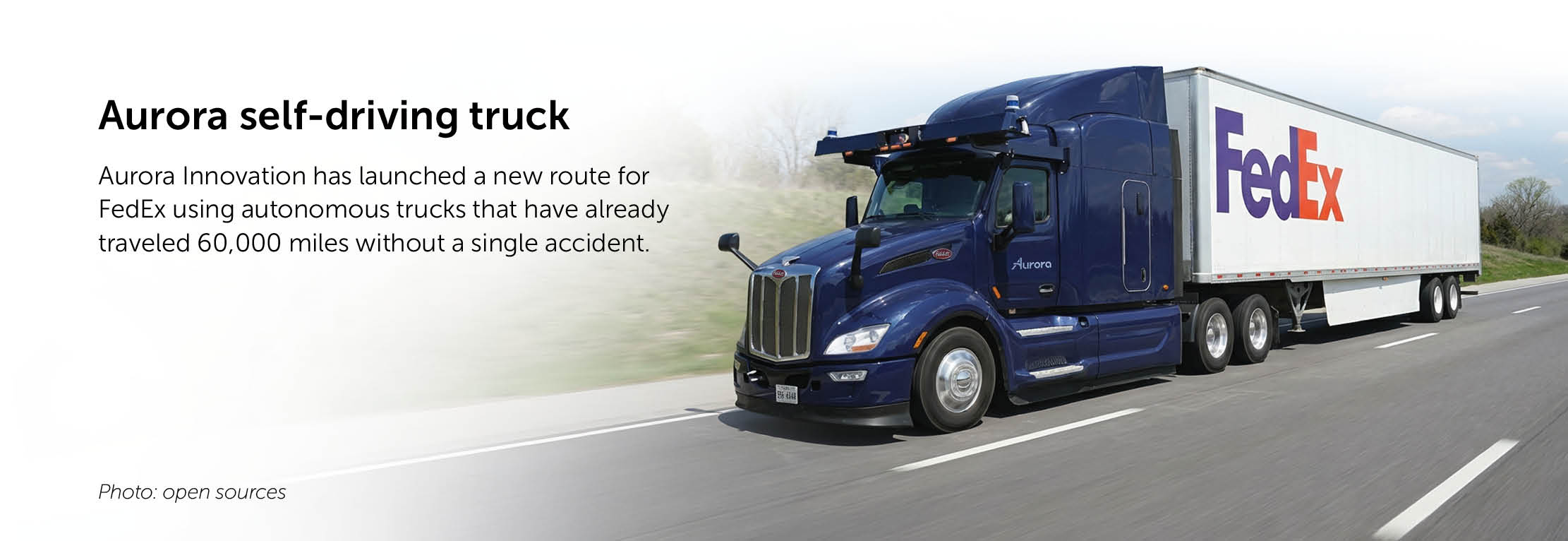
Leading global carriers, DHL, FedEx (FDX), and Maersk, have been testing autonomous trucks on limited routes in recent years.
5G has enabled V2X (vehicle-to-everything) communication, allowing vehicles to interact with road signs, traffic lights, other vehicles, and cloud platforms. The truck’s control system receives information about road conditions and responds accordingly, helping reduce accident risk and improve road safety. But V2X is not only about safety: it also enables real-time route optimization based on traffic conditions and flow speed, saving fuel and time.
For example, in the UK, around 30% of trucks currently operate empty, with average load utilization not exceeding 60% of potential capacity. Smart routing based on 5G and connected systems can optimize truck loading and utilization.
Amazon (AMZN) and UPS (UPS) are already experimenting with drone delivery, but widespread adoption remains constrained by limited communications coverage and regulatory barriers. Drones equipped with 5G modems can transmit HD video in real time, receive route updates every second, and coordinate with control centers even in remote areas.
These technologies could enable a fully autonomous delivery chain, in which goods are unloaded at an automated port, transported by a driverless truck to a robotic warehouse, and then delivered by drone to the end consumer. Both buyers and sellers would be able to track the entire journey of goods—a feature currently available to only 6% of logistics and transportation companies. The lack of adequate communications infrastructure leads to delays, excessive fuel consumption, and inefficient use of transport assets.
Implementation Challenges
According to STL Partners research, 5G networks will generate $280 billion in additional revenue for the global transportation and logistics industry by 2030.
Approximately 80% of the impact from new communication technologies is indirect and distributed across multiple sectors of the economy, driving overall productivity growth. Well-designed supply chains lower consumer prices. Reducing road accidents cuts healthcare and insurance costs.
Resolving traffic congestion ultimately boosts employee productivity across industries.
Despite this enormous potential, the path to full 5G transformation in logistics will not be easy. Infrastructure upgrades require substantial investment, especially in hard-to-reach areas. For example, upgrading fleets and warehouses to 5G standards can be prohibitively expensive, particularly for smaller companies.
Another major challenge is cybersecurity. The growing number of connected devices increases exposure to cyberattacks. Ransomware incidents have surged sharply: in 2023 alone, the US Coast Guard reported an 80% increase. This forces ports to invest heavily in security architecture and enables insurers to raise insurance premiums for infrastructure projects.
In addition, the lack of global standards for V2X communication complicates integration in the autonomous vehicle sector. Harmonizing regulatory approaches will require close collaboration between governments, technology providers, and logistics companies.