
Investment Review №350. A Shift in Priorities
Challenge Accepted
Moderate gains in local stocks were supported by news of the successful redirection of export flows
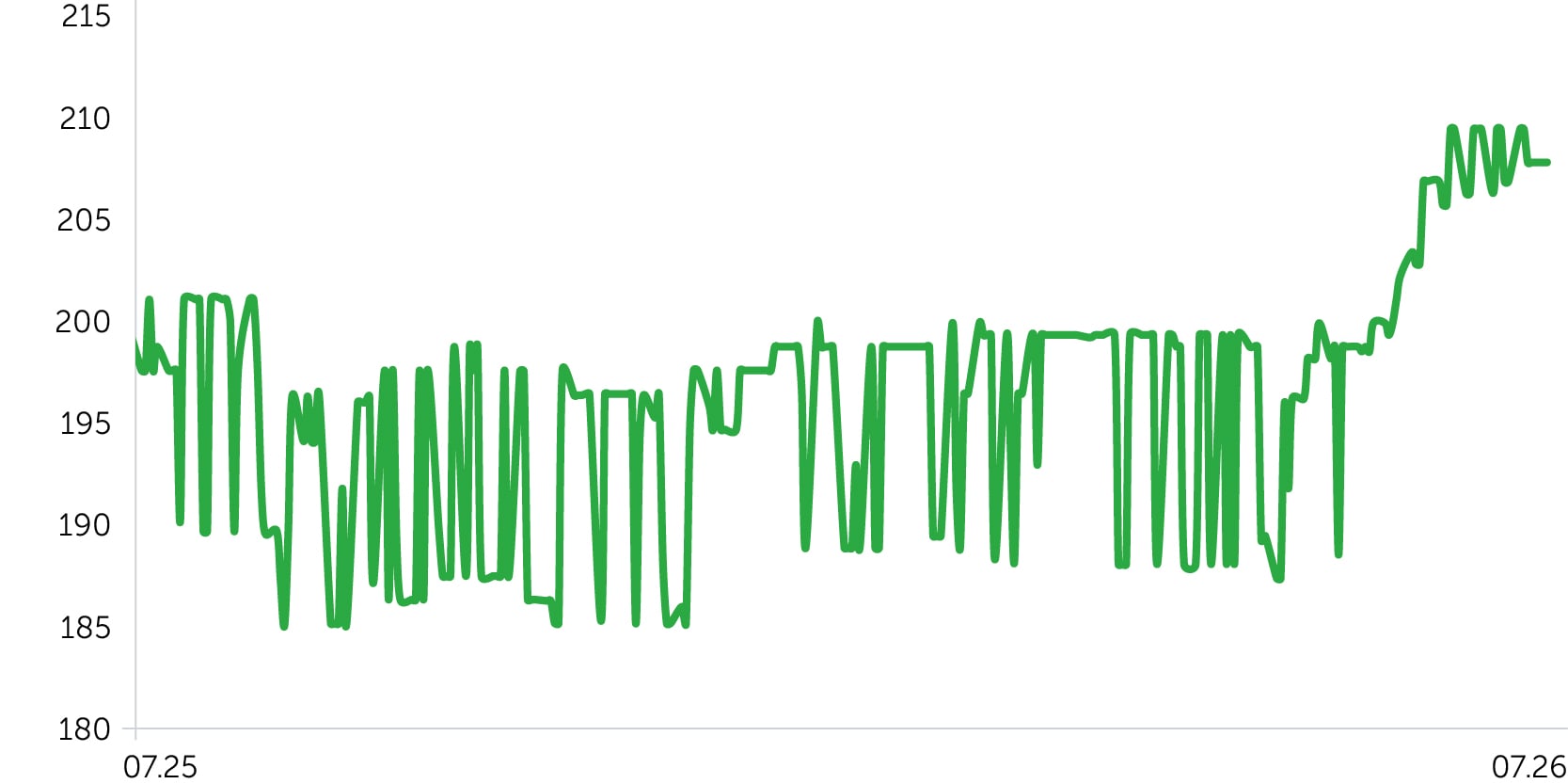
Telecom Armenia Stock Performance (Post-IPO)
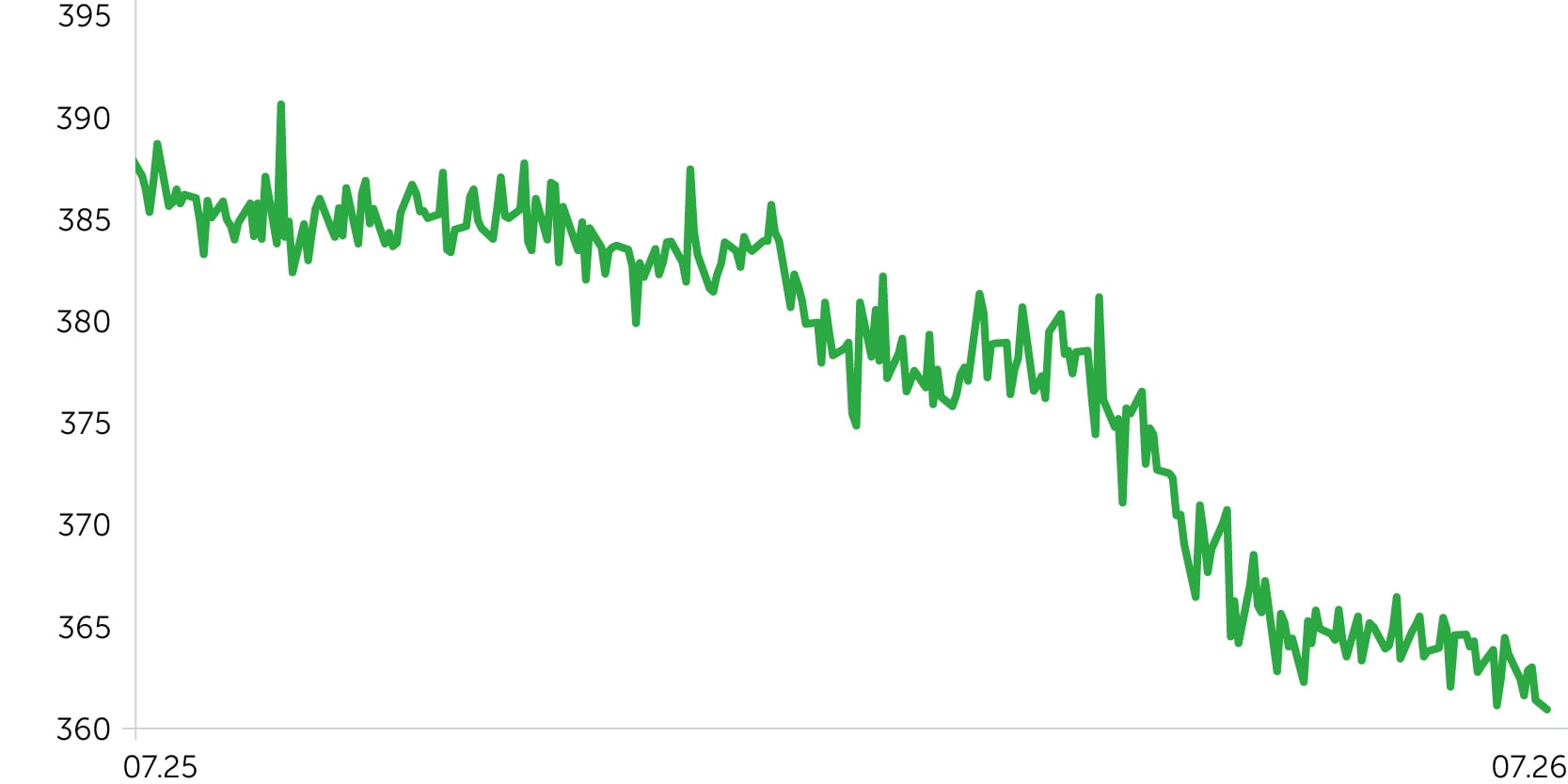
ACBA Bank: 1-Year Stock Trends
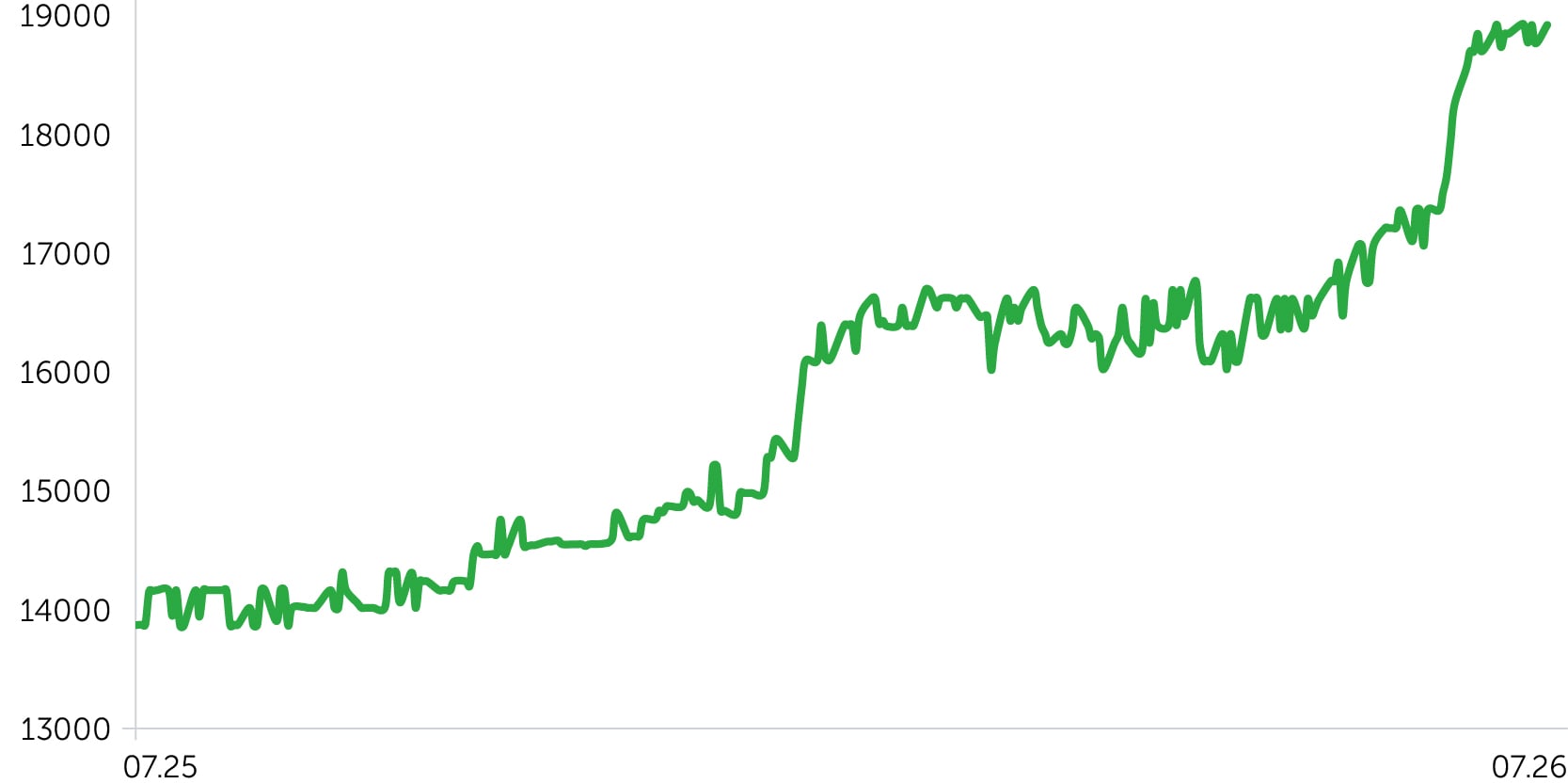
USD/AMD: 1-Year Dynamics
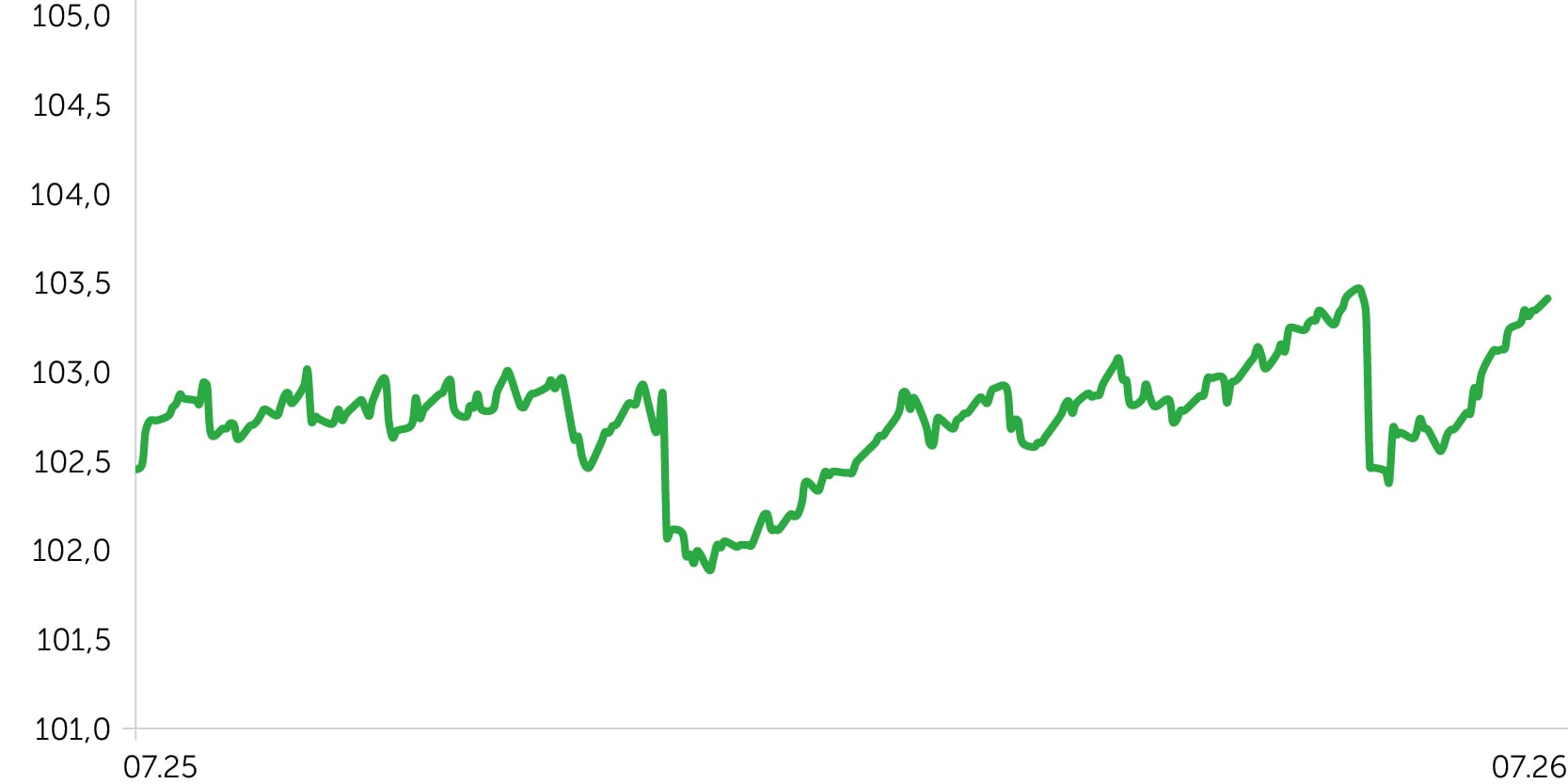
3-Year Corporate Bond Index (AMD) – Post-Update
Armenian equities maintained a moderately positive tone over July 13–27, 2026. Telecom Armenia (AMTL) rose 0.6% (+0.4% month-to-date), while ACBA Bank added 0.5%, expanding its year-to-date gain to 34.0% and continuing to benefit from a stable macro backdrop. Economic activity rose 7.7% YoY in June, with solid momentum in construction and services and slower, but ongoing, growth in industry, even though trade remained soft. Foreign trade turnover declined 3.3% YoY on weaker exports to Russia, but shipments are being redirected to other markets, suggesting a gradual adaptation of the export model.
In the debt market, the 3-year Corporate Bond Index rose 0.3% as yields declined, reflecting relatively sustained investor activity in the local debt market. Inflationary pressures remain somewhat elevated, and ongoing regional geopolitical tensions pose additional medium-term risks via imported inflation. Meanwhile, the dram appreciated a further 0.6% (+8.0% since the start of 2025; +4.3% year-to-date) despite a notable decline in exports. The currency’s sustained appreciation is a moderate positive factor for attracting capital into Armenia’s financial markets.
Economic Updates
Over the past two weeks, Armenia released key macro data for June 2026. Highlights include a modest deceleration in the Economic Activity Index and CPI, alongside foreign trade figures confirming a decline in exports.
- Armenia’s economic activity expanded 7.7% YoY in June 2026 (vs. 12% expected) after an 11.3% jump in May; monthly performance was also positive at +4.4%. The key drivers again were construction (+25.4% YoY; +19.5% MoM) and services ex-trade (+19.7% YoY; +5.7% MoM), suggesting sustained momentum in real estate investment. Manufacturing dynamics were softer (+4.0% YoY; −3.1% MoM). Construction data continue to signal elevated investment appetite in the industry, supporting demand in local financial markets.
- Armenia’s PPI inflation eased to 8.8% YoY in June from 9.0% in May; MoM price growth slowed to +0.2% from +1.6%, indicating a loss of momentum. If the recent cooling in producer prices persists after the sharp spring run-up, it should modestly ease domestic inflationary pressures. However, in our view, imported factors will remain the primary driver of consumer prices in the country; amid ongoing regional geopolitical escalation, these external pressures pose material upside risks to inflation.
- Foreign trade turnover decreased 3.3% YoY in June, and exports fell 20.5% YoY, as anticipated following Russia’s expanded trade restrictions on agro‑industrial and dairy products, while imports remained resilient, rising 8.6% YoY. As a result, the monthly trade deficit widened to its highest level in over a decade. The erosion of traditional sales channels is being partly offset by rapid diversification: in H1 2026, exports to China rose 83.4%, to India 81.3%, and to the EU 80%. Despite June’s overall weak print, this shift suggests firms are adapting to geopolitical headwinds—a pivotal step in reshaping foreign trade that should strengthen the export base’s resilience over time.
Corporate News
- Viva has announced the launch of Armenia’s first 5G+ network, now available in Yerevan and several major regions, with coverage across all domestic cities targeted by year-end. The 5G+ technology delivers faster data speeds, lower latency, and higher device capacity, laying the groundwork for next-generation digital services.
Two-Week Outlook
In the period ahead, two releases will be in focus: July year-over-year inflation and the Central Bank of Armenia’s decision on the refinancing (policy) rate. Both will be pivotal for gauging the policy path amid persistently robust activity and ongoing restructuring of external trade.
June prints reaffirm resilient domestic momentum: overall economic activity remains above the budget target, with construction and services the main drivers. At the same time, softer industrial output and a slowdown in trade point to an uneven recovery and little evidence of consumer-sector overheating.
External inflation risks, in our view, remain paramount, while domestic producer-price inflation is still elevated. Meanwhile, foreign trade is undergoing structural adaptation: despite a short-term softening in aggregate results, the drop in exports to Russia is being offset by active diversification toward China, India, and the EU—developments that should strengthen supply-chain resilience over the medium to long term.