Financier №2 (42) 2026

Vladimir Chernov
Analyst Freedom Finance Global
From Call to Click
How the Stock Market Has Transformed from the Perspective of Retail Investors
Over the past 30 years, the journey from the idea of investing in a stock to executing the first trade has changed dramatically. In this article, we’ll explore which technologies have made the stock market a mass phenomenon.
1990s: The Domain of Professionals
In the last decade of the previous century, investing was still a domain for the select few. The infrastructure was fragmented, and the investment process consumed considerable time and effort. To buy stocks, one had to interact directly with a broker — by phone or even through in‑person meetings. Trades took longer to execute, commissions were higher, and market access wasn’t available to everyone.
According to World Bank estimates, even in developed countries, only 15–20% of households engaged in trading on exchanges. In the 1990s, an investor was more likely to be a professional market participant than a retail player.
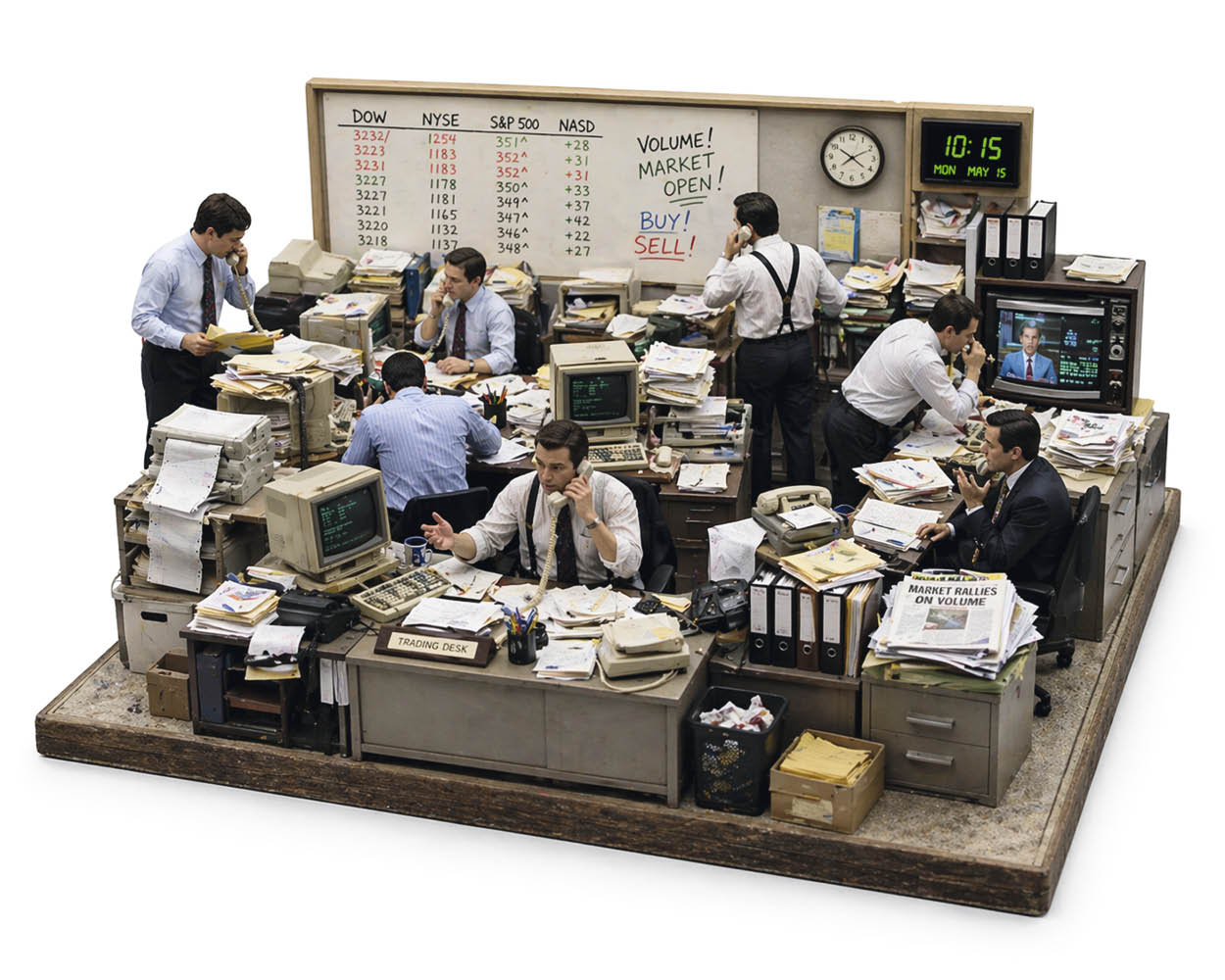
Miniature reconstruction of a brokerage office from the 1990s, before the era of online and mobile trading.
Illustration: ChatGPT
2000s: Expanding Access and the First Online Tools
At the beginning of the 21st century, the situation gradually began to change. The spread of the internet and the development of financial infrastructure made investing more accessible. Online brokers and trading terminals emerged, allowing clients to execute trades independently.
Increased competition among intermediaries led to lower commission fees. However, investing still required a significant time commitment and relevant expertise — although the pool of participants expanded notably.
2020s: The Rise of the Mass Investor
In recent years, a qualitative shift has occurred in stock trading technologies. Opening a brokerage account now takes just a few minutes and is done entirely online in most countries. The minimum entry threshold has virtually disappeared: you can start investing with as little as $10 in your account.
According to the World Federation of Exchanges, the number of retail investors worldwide surged after the pandemic year of 2020, and trading volumes involving retail participants reached record highs. In several developed countries, the share of the population participating in the stock market now exceeds 50%.
Stock trading has ceased to be the preserve of specialists and has become an everyday practice. This is the key change of recent decades: the stock market has become mass‑market thanks to technological progress.
In the 1990s, trades were executed through intermediaries, and the process was slow and formalized. In the 2000s, investors gained access to online terminals and began trading directly. According to Deloitte, one of the largest audit firms, digital channels have become the primary way retail investors interact with financial markets, and mobile platforms are the main driver of growth in retail investing.
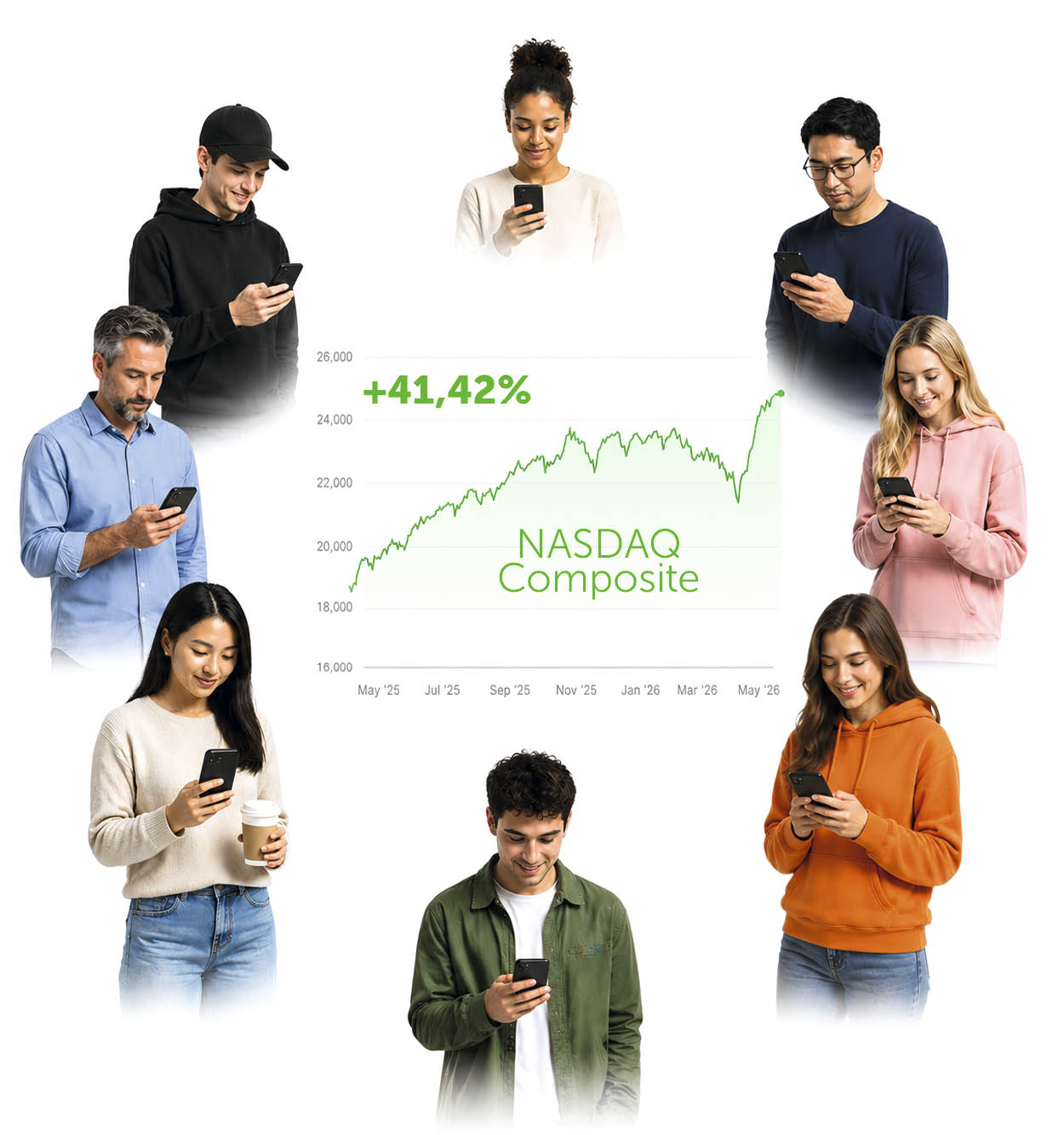
Technologies bring millions of new investors to the exchange.
Illustration: ChatGPT
Information: From Scarcity to Overload
In the 1990s, market participants relied on a limited set of news sources — such as the Bloomberg terminal — which most people couldn’t afford.
Today, the situation is reversed. According to the CFA Institute (a global association of professional investors) and FINRA (a brokerage regulator), retail investors increasingly face the problem of information overload and overestimation of their own knowledge. The flow of news, analysis, and opinions has become continuous, and the impact of information noise has become a notable factor in investment decision‑making.
Instruments: From Individual Stocks to ETFs
Over recent decades, the range of instruments available to market participants has expanded significantly. In the 1990s, investors mainly dealt with individual stocks, and company transparency levels varied widely.
Today, exchange‑traded funds (ETFs) have become a key instrument. According to BlackRock (BLK), the global ETF market has exceeded $10 trillion — a more than 100‑fold increase over the past two decades. These instruments allow investors to gain a diversified portfolio by purchasing just one asset: a fund share. As a result, diversification has become accessible even with small investments, and portfolio construction has been greatly simplified.
Strategies: Shift toward Long‑Term Investing
The approach to investing has also evolved. In the 1990s, the market was largely seen as a space for short‑term trades. Today, there’s a clear shift toward long‑term operations. The validity of this approach is supported by statistics. Data from Morningstar shows that over long horizons, diversified equity‑heavy strategies are more profitable than traditional conservative ones. As a result, more investors are focusing on regular investments and risk allocation.
Accessibility: From High Costs to Commission‑Free Trading
In the 1990s, brokerage commissions were dozens of times higher than today and represented one of the most significant investor expenses. Investors had to pay $100 or more for a voice trade through an operator for a standard lot of 100 shares. With the rise of the internet, the first “discount” brokers emerged — such as Charles Schwab and Fidelity — offering better terms than traditional players if clients executed trades via their online platforms.
Price wars in the second half of the 1990s led, 15 years later, to the “commission‑free revolution” initiated by the young U.S. broker Robinhood. By eliminating brokerage markups on client transactions, it made stock trading economically viable for investors with even small amounts.
Closing the Loop
Over the past 30 years, investing has evolved from a closed and complex field for most people into a mass phenomenon. New technologies have simplified market access, expanded the choice of assets, and accelerated trade execution. If in the past, the main challenge for beginners was finding that “entry door,” today’s key challenge is how to choose the right development vector in the ocean of opportunities that lies beyond it.
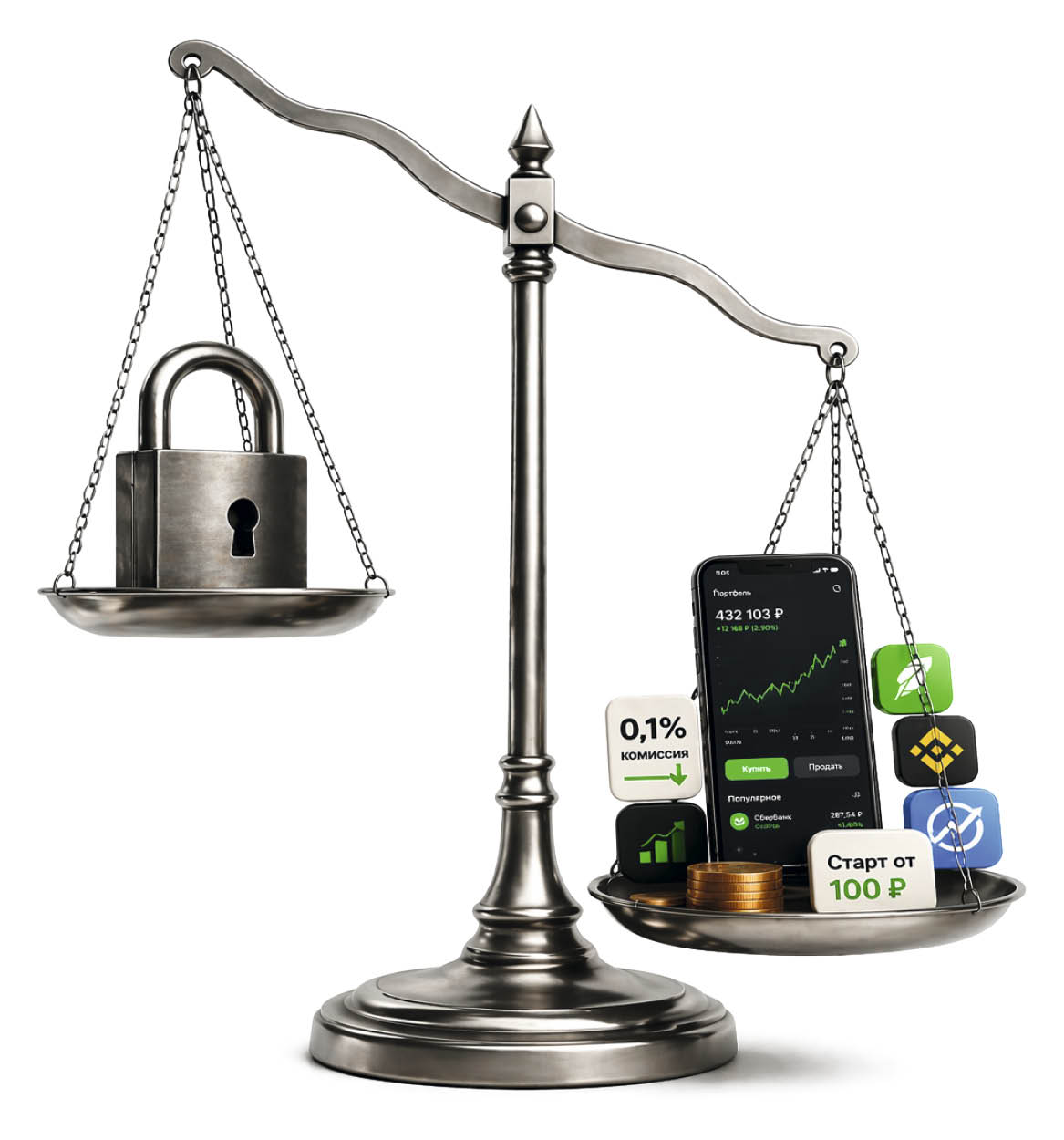
Investment accessibility has outweighed previous limitations.
Illustration: ChatGPT