
Financier №2 (42) 2026
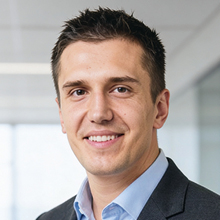
Valery Zolotukhin
venture capitalist and founder of Impact Capital
Interview: Valery Zolotukhin (Impact Capital venture capital fund)
“Every Investment Should Have the Potential to Become Larger Than the Entire Portfolio”
Valery, how did you get into venture investments?
I entered the world of investments from entrepreneurship: before that, I had built three businesses. The first was in the gadgets sector, but I quickly realized that high turnover with low margins didn’t interest me. Then came VIVO — a company selling starter cultures for making fermented dairy products. It grew successfully until the 2014–2015 crisis. Then the devaluation of the rouble and high tariffs made this project unprofitable. That was a turning point: I raised investments for the business for the first time.
At that time, we found a new model — exporting luxury cars from Russia to Africa, China, and the Middle East. This helped us survive the crisis and preserve the core business of selling starter cultures. During that period, I saw the power of attracting investments: I was able to provide investors with a return of 30–40% per annum. As a result, a scope of people formed — people ready to invest in the same companies as I did.
An important role was played by the blog I started, following the example of Fyodor Ovchinnikov (founder of Dodo Pizza — Ed.). In the end, I sold VIVO and earned my first million dollars. Then I invested in Dodo Pizza: first with my own money, then I arranged a collective deal. The company grew exponentially.
The idea for Impact Capital was born after studying the works of Warren Buffett. I wanted to create a structure that invests like a company, not a fund, and can grow its capitalization. In the end, we managed to raise about $70 million through it and complete more than 40 deals.
How do you know a project is promising?
The key is a product that gets recommended. Next come a strong team with experience, a large market, high margins, and repeatable revenue. Even if a startup has no revenue, it’s important that its unit economics* are better than the market average. For example, the dating service Twinby had no revenue when we came in as investors. We achieved a download cost of 10 cents through advertising. Now the service leads in the CIS — it has already been downloaded 15 million times.
The founder’s ambitions are also important: if they’re ready to stop at a comfortable level, a global business won’t happen. Every investment should have the potential to become larger than the entire portfolio. This is a long‑term game where it doesn’t matter how many companies “burn out” — what matters is how much the single most successful investment brings you.
*Unit economics is the calculation of profit or loss per unit of business
What investment strategy do you follow?
I’ve tried various instruments and over time arrived at a combination: public stocks as the liquid part of the portfolio and venture for growth. In the venture, I mainly invest at the seed stage (when the product is ready and the company is aiming for the break‑even point — Ed.) and Series A (the company has already proven its business model but hasn’t yet scaled up — Ed.), avoiding investments at the idea stage only.
I also single out deals with troubled companies, where you can participate in management and change the situation. The world’s best investors also combine public and private assets. This is the global standard.
What’s the difference between young venture investors and the older generation?
Venture capital is getting younger overall. The older generation is used to greater confidentiality and control, whereas venture capital requires trust in the team. Young investors are more tolerant of risk and often make investments not just for returns, but also to gain experience, expand their network, and learn. Venture investments in someone else’s business build market savviness — and this is a kind of practical equivalent of an MBA for entrepreneurs.
What common mistakes do investors make?
The main mistake is overpaying for an asset. If the entry price is inflated many times over, then an initially good investment ends up being a bad one. Hype‑driven investments in overheated topics — where a person doesn’t really understand the field — are dangerous. Money moves in the market from the impatient to the patient. It’s important to invest in quality companies, understand their business, and think long‑term. Concentration is also key: strong ideas should take up a large share of the investment portfolio. At the same time, you shouldn’t automatically sell assets that have grown in value or hold on to those that are falling — you need to look at the business’s fundamental metrics.