
Financier №2 (42) 2026
Vadim Merkulov
Director Analytical Department Freedom Finance Global
Legacy of Forebears
Who Will Inherit the Largest Wealth in Human History?
In 1937, the first billion‑dollar inheritance was transferred. After the death of the legendary founder of Standard Oil and the richest person on Earth, John Davison Rockefeller, his assets passed to his son. Although the latter failed to multiply his father’s capital, the fortune continued to be held in family trusts and passed from generation to generation.
Standard Oil, founded by John Rockefeller, controlled 10% of US oil production and was estimated at approximately 1–1.5 % of US GDP (about $300 billion in today’s prices).
Fathers and Money
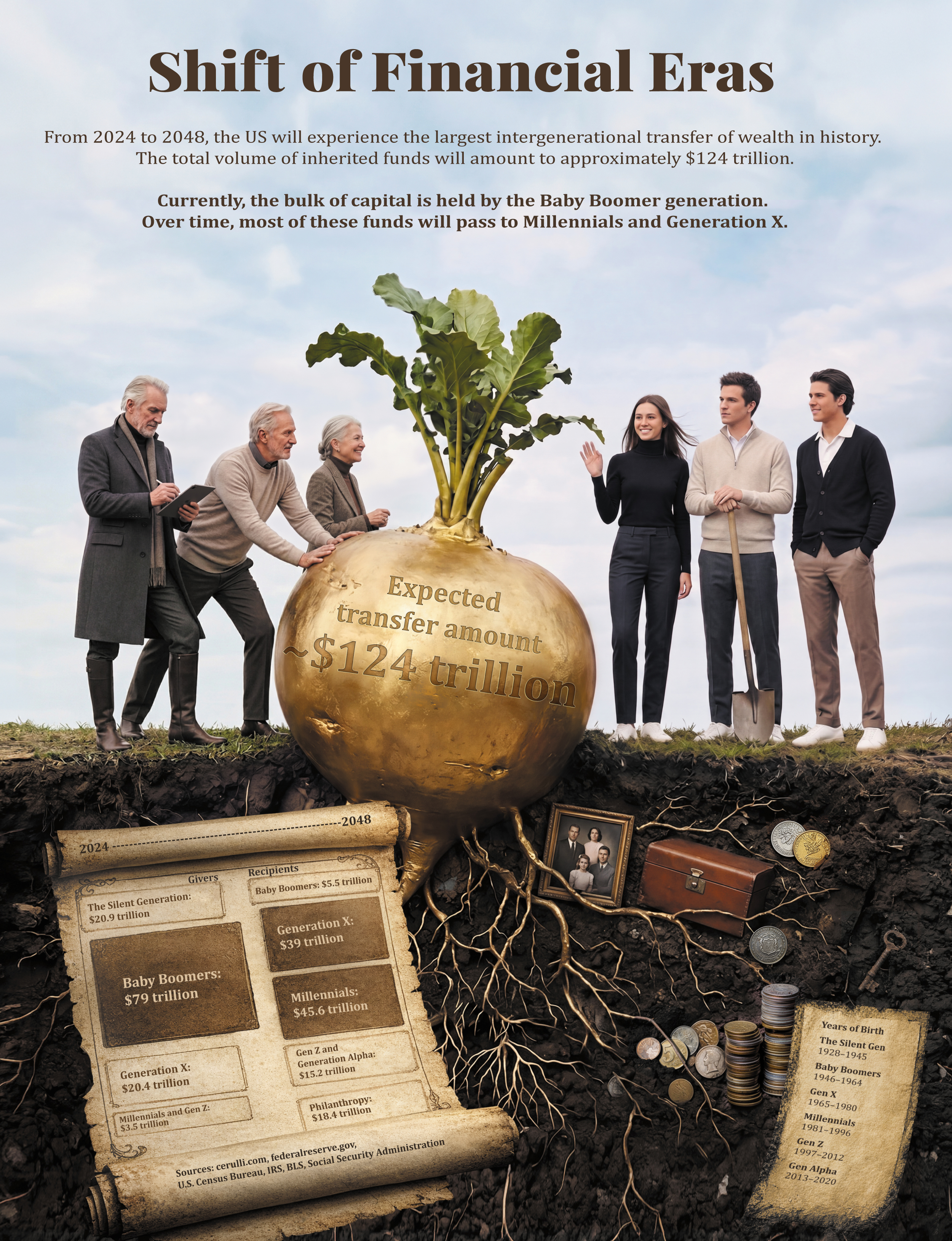
Nearly a century later, the issue of inheriting global assets is more relevant than ever. The American analytical company Cerulli has dubbed this phenomenon the Great Wealth Transfer — the largest redistribution of private capital in history, from Baby Boomers to younger generations. This process is expected to unfold over the next two to three decades.
According to Cerulli’s estimates, around $84.4 trillion in accumulated wealth will be transferred from owners in the US by 2045. Of this amount, $72.6 trillion will go to heirs and approximately $11.9 trillion will be allocated to charitable organisations. More than $53 trillion (about 63% of all transfers) will come from Baby Boomer households. Another $15.8 trillion will be passed on by the Silent Generation and its predecessors. Some more recent estimates, accounting for inflation and rising asset prices, raise the projected scale of the transfer to $120 trillion in the US alone.
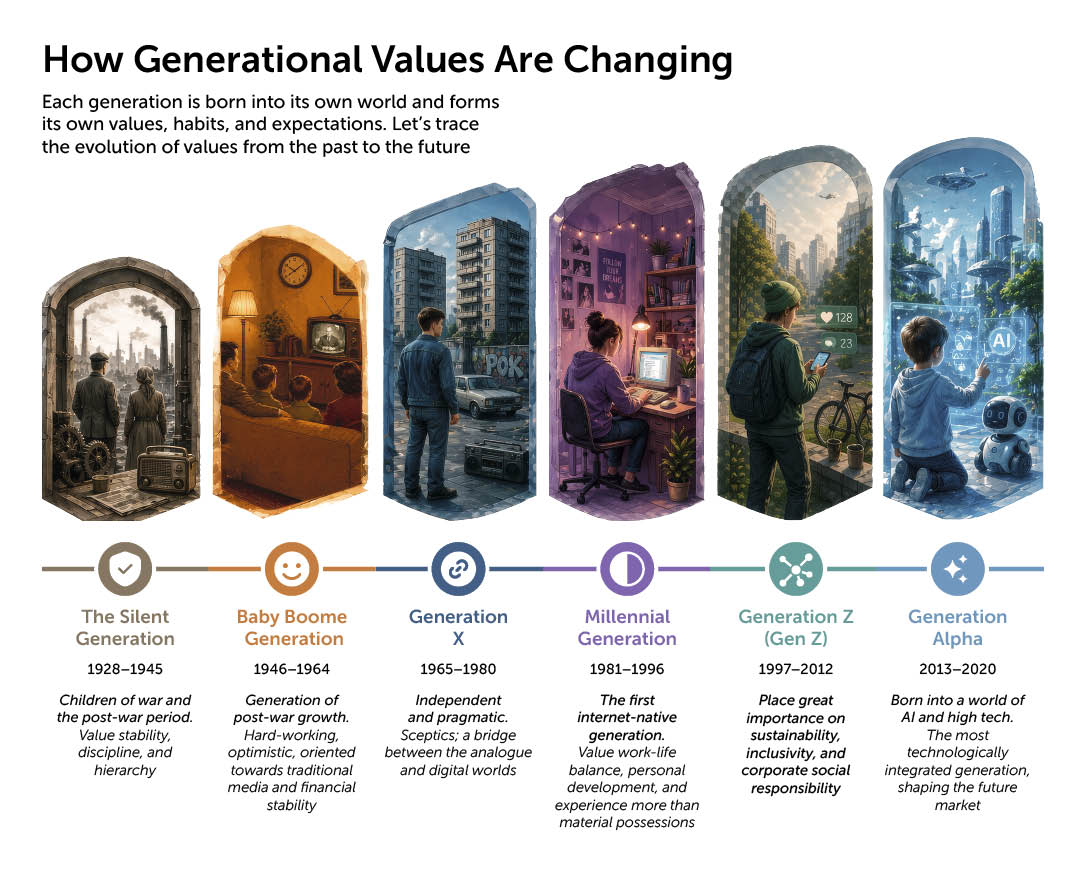
The Next Generation of Heirs - Millennials, who are currently aged 30–45, are expected to become five times richer by 2030 - primarily due to inherited wealth. They could receive more than $68 trillion as part of the Great Wealth Transfer. Generation X (currently aged 46–61) will also receive a significant share. Cerulli forecasts cumulative inheritances of approximately $29.6 trillion over 25 years, with peak inflows of around $1.5 trillion per year by the mid‑2030s. This means the profile of global capital will dramatically youthen, although its concentration will remain high. In this scenario, the lion’s share of these funds will go to the children of wealthy parents.
The new heirs will reap the benefits of post‑war changes in the global economy: the US abandonment of the gold standard, globalisation, the rise of the internet, and the technological leap of recent decades. Global stock indexes are near historic highs, which significantly affects the global valuation of transferred wealth.
Investment banks and funds are paying close attention to these trends. Their main concerns are how heirs will choose to manage their fathers’ and grandfathers’ money and how they will subsequently redistribute these assets. Young investors tend to be more risk‑tolerant, while older generations prefer conservative investments.
Are heirs ready to manage sudden wealth fallen upon them and do they intend to continue developing their parents’ business? In a recent study, UBS found that only 43% of entrepreneurs expect their children to continue their business. More than half hope their heirs will use the capital for the benefit of society. Two‑thirds believe their descendants will prefer to develop their own projects. Founders of large companies recognize the risks associated with transferring significant capital to children who, for various reasons, may not be able to manage it properly.
These concerns resulted in the emergence of an informal movement called The Giving Pledge, whose followers have committed to donate at least half of their wealth to charity.
This movement marks an important cultural shift: large fortunes are increasingly seen not just as family resources, but as public assets requiring responsible stewardship. In the long term, this could increase the share of capital flowing into foundations and non‑profit organisations (NPOs), partially reducing the volume of direct inheritance of super‑wealth by children.
Corporate governance rules protect the stock market from risks associated with business succession. Relatives of a company’s owner may receive shares, but not executive positions. Anyone seeking a senior role must gain shareholder approval and have proven managerial experience. Moreover, large public companies are usually not part of family businesses, so the problem of appointing inexperienced CEOs rarely arises.
Currently, the average age of companies valued at over $500 million and planning an IPO is 11 years. Given that the boom in unicorn listings occurred in the 2010s, the tradition of generational leadership transitions has not yet fully formed in these firms. Therefore, it is possible that family‑owned businesses may become more common in the near future.
The Struggle for Capital
According to Cerulli experts, the Great Wealth Transfer will have significant consequences for the global economy. First, increased inequality. The bulk of wealth will remain concentrated in the hands of a minority. Second, governments, seeing the scale of transferred assets, may revise property and capital gains taxes to address the imbalance and fund aging populations. Younger generations with large net worth may either exert pressure on businesses and governments or relocate capital to jurisdictions with lower risks and more favorable tax systems.
Of course, some of the inheritance will be lost. Some recipients, lacking the necessary competencies or overall discipline, may quickly squander their wealth or make ineffective investment decisions. This has been observed repeatedly in wealthy dynasties of the past. Therefore, financial education and a long-term capital management strategy become critical elements of the success of the Great Wealth Transfer.
Source: Pew Research Center